
Analyzing Arguments Worksheets
These worksheets help students break down claims, evidence, and reasoning in real-world texts. These free, ready-to-print PDF format worksheets are perfect for immediate classroom use or at-home learning. Students build skills in evaluating evidence, identifying claims, and analyzing multiple perspectives aligned to key standards.
About This Collection of Worksheets
This collection is designed to help middle school students move beyond simply understanding a text and into truly thinking about what an author is trying to prove. Each worksheet presents a real-world topic that students can relate to, making the reading experience more meaningful and engaging. As students read, they practice identifying the author’s main claim and noticing how evidence is used to support different points of view.
You’ll find a wide variety of topics here, from technology and school policies to environmental issues and social debates. This variety keeps students interested while also showing them that arguments are everywhere in everyday life. The passages are carefully written to include both supporting and opposing viewpoints, helping students learn how to weigh ideas rather than just accept them at face value.
These worksheets are especially helpful for building strong reading and writing connections. Students are asked to explain their thinking in complete sentences, which strengthens their ability to communicate clearly. Over time, they become more confident in analyzing arguments, spotting weak evidence, and forming thoughtful responses based on what they read.
Paul’s Teacher Tip
When teaching argument analysis, slow it down and model your thinking out loud. Show students how you identify a claim, then physically underline or highlight the evidence that supports it. I always recommend having students annotate the text first before answering any questions-it makes a huge difference in their accuracy. Another helpful strategy is to have students explain why a piece of evidence works, not just point it out. You can even turn this into a quick discussion where students defend their answers. Over time, this builds stronger reasoning skills and helps them become more independent readers.
Worksheet Collection Skill Spotlights
Beyond the Numbers
- What Kids Do:
Students read a thoughtful passage about academic ranking systems and work through both sides of the argument presented. They identify the main claim, examine how different viewpoints are supported, and explain their understanding in writing. As they respond, they connect ideas across the passage and organize their thinking clearly. - Target Skill:
Students strengthen their ability to evaluate how authors build arguments using both logical reasoning and emotional appeals. This includes identifying claims, distinguishing between strong and weak evidence, and recognizing opposing viewpoints, all aligned with Grade 8 standards for argument analysis.
Game On Campus
- What Kids Do:
Students explore a debate about e-sports in schools and carefully read to determine the central argument. They analyze examples that support both sides and explain how these examples connect to the author’s reasoning. Their responses require thoughtful interpretation and clear written explanations. - Target Skill:
This activity builds skill in analyzing how real-world examples support claims within an argument. Students learn to evaluate relevance and strength of evidence while also considering counterarguments, supporting deeper comprehension and critical thinking.
Homes or Hotels?
- What Kids Do:
Students examine a passage about short-term rentals and housing issues, identifying key claims and supporting data. They compare different perspectives presented in the text and explain how facts and statistics contribute to the argument. Writing responses helps them clarify their understanding. - Target Skill:
Students develop the ability to interpret data as evidence and connect it to specific claims. They also practice analyzing multiple viewpoints and evaluating how effectively each side supports its position.
Money Matters
- What Kids Do:
Students read about financial literacy in schools and identify the main argument while considering both benefits and concerns. They analyze how real-life examples and research findings support different ideas and explain their thinking in structured written responses. - Target Skill:
This worksheet focuses on identifying claims and evaluating how well evidence supports them. Students practice connecting examples to arguments and recognizing how real-world data strengthens persuasive writing.
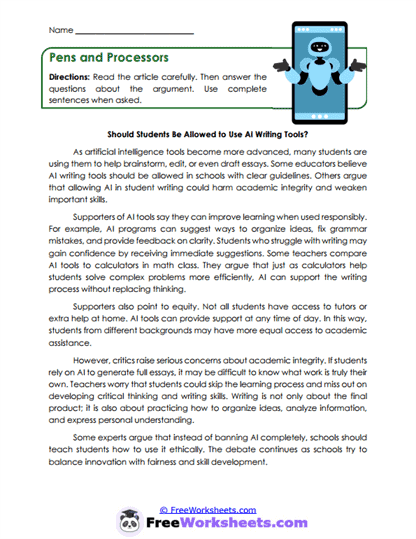
Pens and Processors
- What Kids Do:
Students explore a passage about AI writing tools and analyze how the author presents both advantages and concerns. They identify the main claim and explain how specific examples support each side. Their written responses require clear reasoning and attention to detail. - Target Skill:
Students build skills in distinguishing between claims, supporting reasons, and counterarguments. They also learn to evaluate how examples function as evidence within a balanced argument structure.
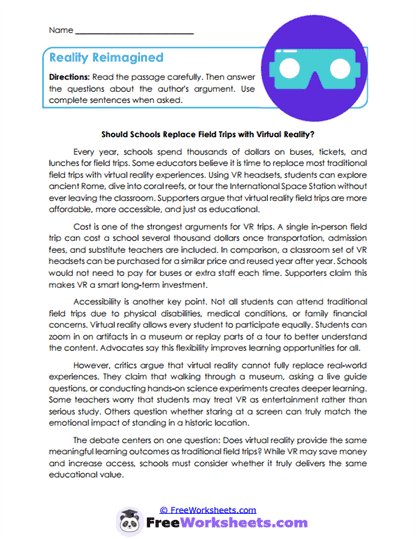
Reality Reimagined
- What Kids Do:
Students read about virtual reality replacing field trips and analyze both sides of the discussion. They identify key arguments, compare perspectives, and explain how evidence supports each viewpoint. Their responses reflect careful reading and thoughtful interpretation. - Target Skill:
This activity strengthens students’ ability to analyze balanced arguments and evaluate how evidence supports different claims. It reinforces critical thinking and helps students understand how authors present multiple viewpoints.
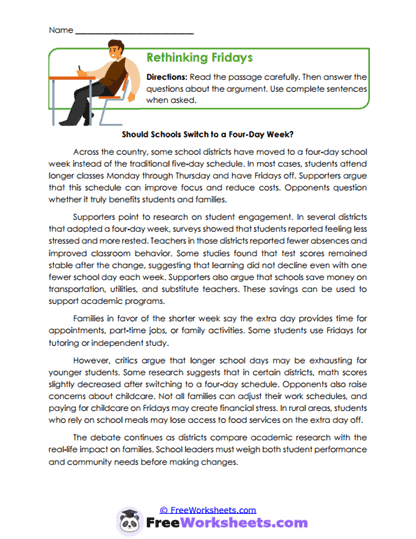
Rethinking Fridays
- What Kids Do:
Students examine a passage about a four-day school week and identify the central argument. They explore how research and examples support both benefits and concerns, then explain their understanding through written responses that connect ideas from the text. - Target Skill:
Students practice evaluating how evidence supports claims about real-world issues. They also learn to consider multiple perspectives and analyze how reasoning is used to build a convincing argument.
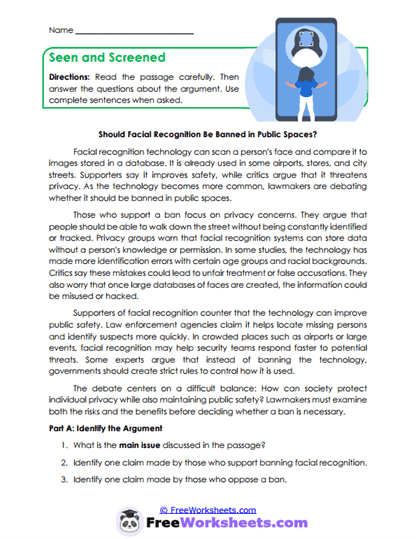
Seen and Screened
- What Kids Do:
Students read a passage about facial recognition technology and analyze the debate surrounding privacy and safety. They identify claims from both sides and explain how examples and evidence support each viewpoint in clear written responses. - Target Skill:
This worksheet builds skill in distinguishing facts from opinions and evaluating how evidence supports competing claims. Students also develop a deeper understanding of how arguments are structured in informational texts.
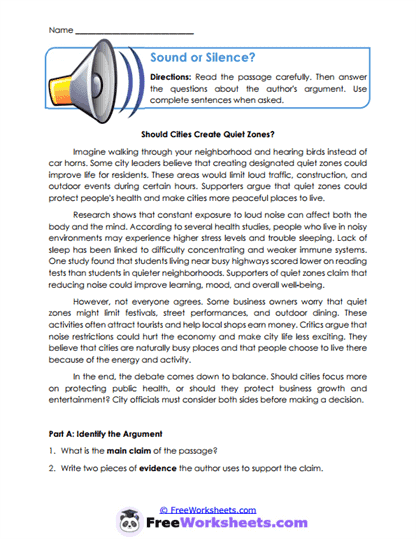
Sound or Silence?
- What Kids Do:
Students analyze a passage about city quiet zones, identifying the author’s main claim and supporting evidence. They locate key details in the text and explain how those details strengthen the argument, using complete sentences to show their thinking. - Target Skill:
Students develop the ability to identify central claims and evaluate how evidence supports them. This aligns with RI.8.8, focusing on analyzing argument structure and determining the strength of supporting details.
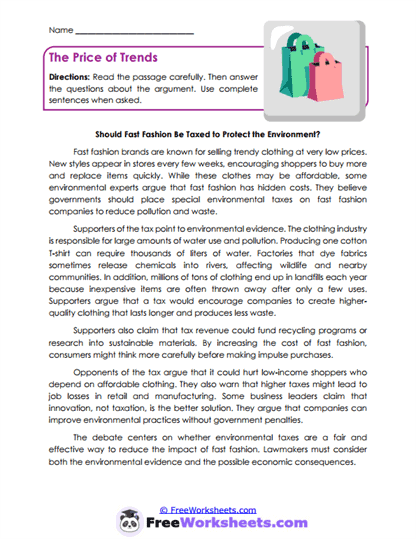
The Price of Trends
- What Kids Do:
Students read about fast fashion and environmental impact, identifying the main argument and analyzing supporting data. They consider both environmental and economic viewpoints and explain how evidence supports each perspective in their responses. - Target Skill:
Students strengthen their ability to interpret statistics and evaluate how data supports claims. They also practice analyzing multiple viewpoints and understanding how evidence is used in persuasive texts.
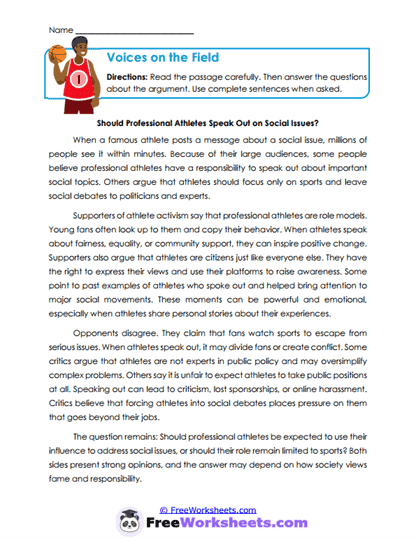
Voices on the Field
- What Kids Do:
Students explore a debate about athletes speaking on social issues, identifying the main argument and supporting examples. They analyze how real-world situations are used as evidence and explain their understanding in thoughtful written responses. - Target Skill:
This worksheet helps students evaluate how examples function as evidence within an argument. It also builds skill in identifying claims and analyzing how different perspectives are presented and supported.
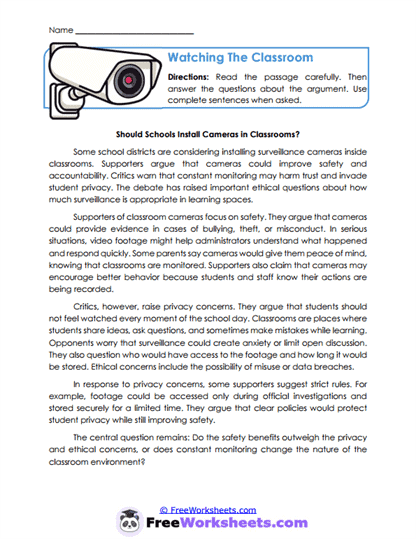
Watching the Classroom
- What Kids Do:
Students read a passage about classroom surveillance and analyze both safety and privacy arguments. They identify key claims, evaluate supporting evidence, and explain how each side is presented through clear, complete sentence responses. - Target Skill:
Students develop skills in evaluating arguments by identifying claims, supporting details, and counterarguments. This aligns with RI.8.8 and supports deeper understanding of how evidence shapes persuasive texts.