
Author's Purpose And Tone Worksheets
These worksheets help students understand why texts are written and how authors express attitude. These free, ready-to-print PDF format worksheets are ideal for immediate classroom use or at-home practice. Students build skills in identifying tone, analyzing purpose, and evaluating language choices aligned to key standards.
About This Collection of Worksheets
This collection is designed to help students clearly understand not just what a text says, but why it was written and how it sounds. Each worksheet gives students focused practice with tone, purpose, and how language shapes meaning. As they work through the activities, students begin to notice how word choice can completely change the message.
The passages cover topics that feel real and relevant to middle school students, from social media habits to environmental issues. This keeps students engaged while helping them connect classroom skills to everyday reading. Each activity encourages close reading and thoughtful thinking about how authors communicate ideas.
As students practice these skills, they also become stronger writers. They start to understand how tone can influence a reader and how purpose shapes the structure of a text. Over time, they gain confidence in analyzing language, recognizing bias, and explaining their thinking with clear evidence.
Paul’s Teacher Tip
When teaching tone and purpose, I always tell students to “listen” to the author’s voice. Encourage them to reread key sentences and ask, “How does this sound?” Highlighting powerful words can really help them notice tone more clearly. Another great strategy is to compare two tones side by side so students can see the difference. You can also ask students how the tone helps achieve the author’s goal. This connection between tone and purpose is where deeper understanding really starts to click.
Worksheet Collection Skill Spotlights
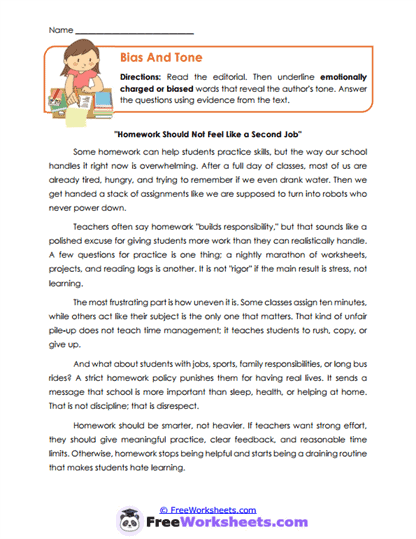
Bias And Tone
- What Kids Do:
Students read an editorial about homework and actively search for words that reveal strong opinions. As they underline key phrases, they begin to notice how certain word choices push the reader toward a specific viewpoint and shape the overall message. - Target Skill:
Students strengthen their ability to identify bias and analyze tone by examining emotionally charged language. This supports understanding of how authors influence readers through word choice and persuasive techniques.
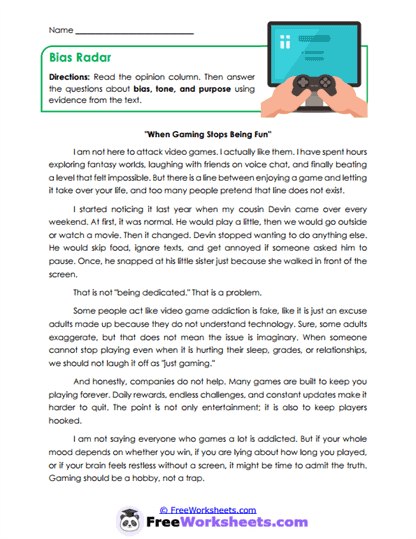
Bias Radar
- What Kids Do:
Students read an opinion column about gaming and answer questions that require them to analyze bias, tone, and purpose together. They look closely at how the author presents ideas and use text evidence to support their conclusions. - Target Skill:
This activity builds skill in evaluating arguments by connecting tone, bias, and purpose. Students learn to recognize how language shapes perspective and how evidence supports or weakens a claim.
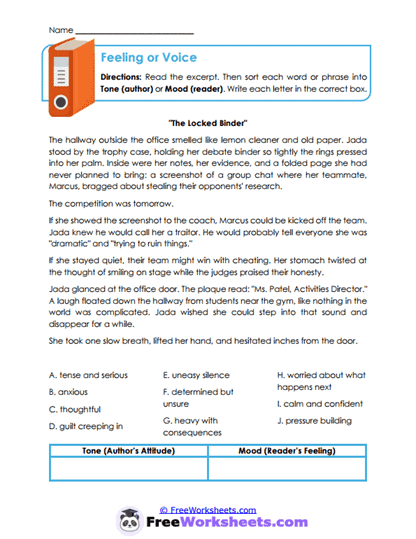
Feeling or Voice
- What Kids Do:
Students read a narrative passage and sort words into tone or mood categories. As they work, they compare how the author’s voice differs from the reader’s emotional response and explain their reasoning using details from the text. - Target Skill:
Students develop the ability to distinguish between tone and mood by analyzing word choice and context. This supports deeper understanding of how authors create meaning and emotional impact.
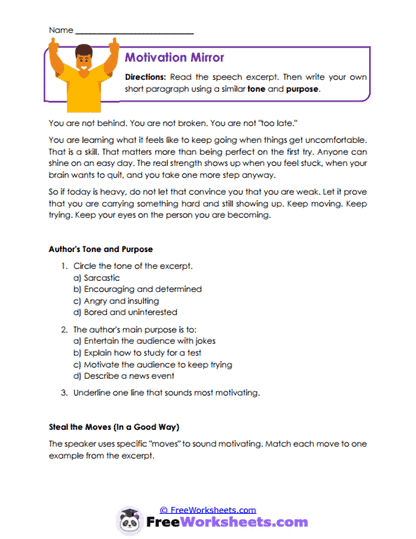
Motivation Mirror
- What Kids Do:
Students read a motivational speech and identify both the tone and the author’s purpose. They select key lines that represent the message and explain how the language encourages and inspires the reader. - Target Skill:
Students build skill in analyzing how tone supports purpose, especially in persuasive texts. This includes identifying uplifting language and understanding how it motivates an audience.
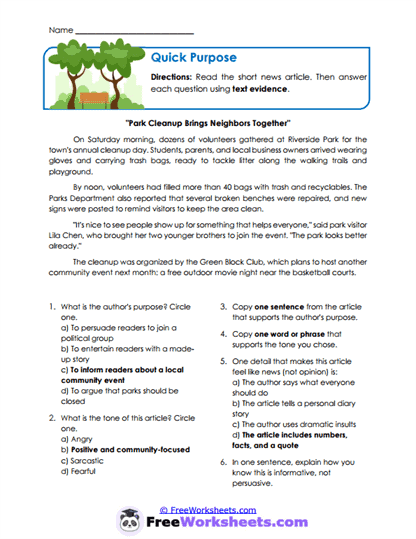
Quick Purpose
- What Kids Do:
Students read a short informational article and determine why it was written. They identify the author’s purpose and tone, then explain their thinking using specific evidence from the passage. - Target Skill:
Students strengthen their ability to identify author’s purpose and connect it to tone. This helps them understand how texts are structured to inform, persuade, or entertain.
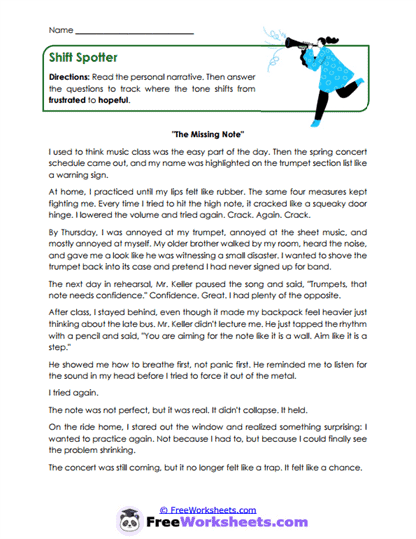
Shift Spotter
- What Kids Do:
Students read a narrative about a student musician and track how the tone changes throughout the story. They identify key moments where the tone shifts and explain what causes those changes. - Target Skill:
Students develop the ability to analyze tone shifts and understand how they reflect changes in character or situation. This supports deeper comprehension of narrative development.
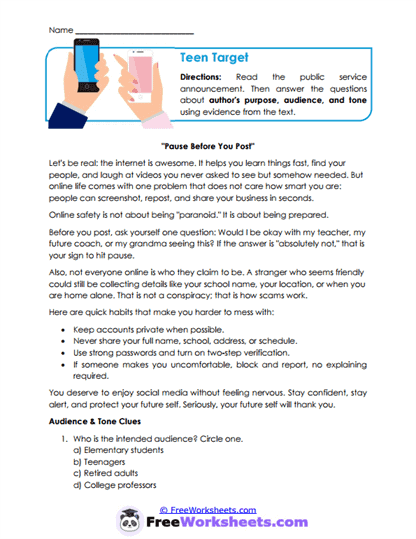
Teen Target
- What Kids Do:
Students read a public service message about online safety and identify the intended audience, tone, and purpose. They use clues from the text to explain how the message is designed for a specific group. - Target Skill:
Students build understanding of how audience, purpose, and tone work together. This supports analysis of how authors tailor language and ideas to reach readers effectively.
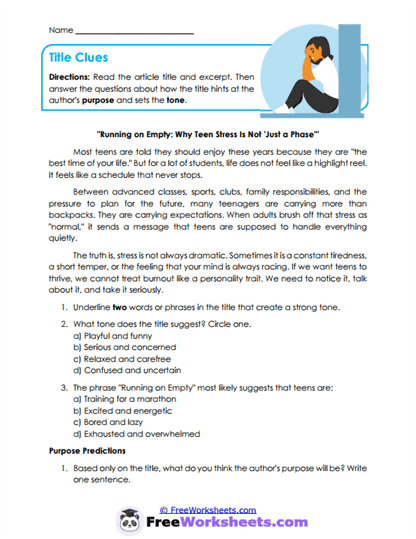
Title Clues
- What Kids Do:
Students examine a title and passage about teen stress and analyze how the title hints at tone and meaning. They connect specific words in the title to ideas in the text and explain their thinking. - Target Skill:
Students strengthen their ability to analyze how titles reveal tone and purpose. This helps them make predictions and better understand how authors guide reader expectations.
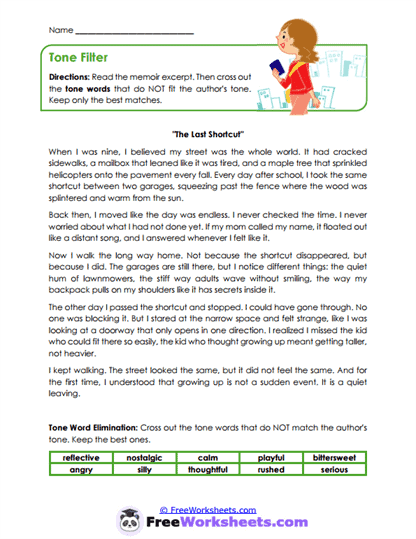
Tone Filter
- What Kids Do:
Students read a reflective passage and eliminate tone words that do not fit. They carefully evaluate language to decide which tone words best match the text, refining their understanding of subtle tone differences. - Target Skill:
Students develop precision in identifying tone by comparing and evaluating multiple options. This supports deeper analysis of word choice and emotional nuance in texts.
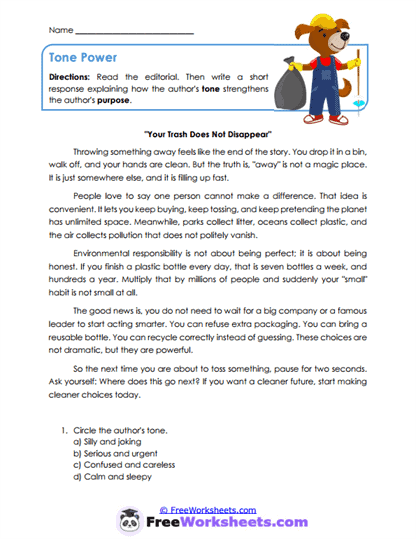
Tone Power
- What Kids Do:
Students read an editorial about environmental responsibility and identify the author’s tone. They then explain how that tone strengthens the message and influences the reader’s thinking. - Target Skill:
Students build skill in connecting tone to purpose by analyzing how language supports a message. This helps them understand how tone makes writing more effective and persuasive.
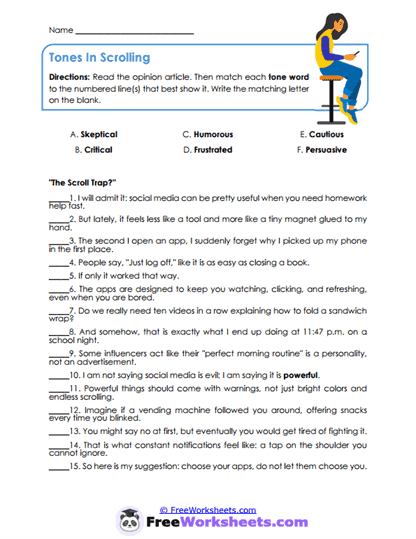
Tones In Scrolling
- What Kids Do:
Students read a passage about social media and match tone words to specific sentences. They look closely at word choice to decide which tone best fits each part of the text. - Target Skill:
Students strengthen their ability to identify tone through close reading of language. This supports understanding of how specific words reveal an author’s attitude.
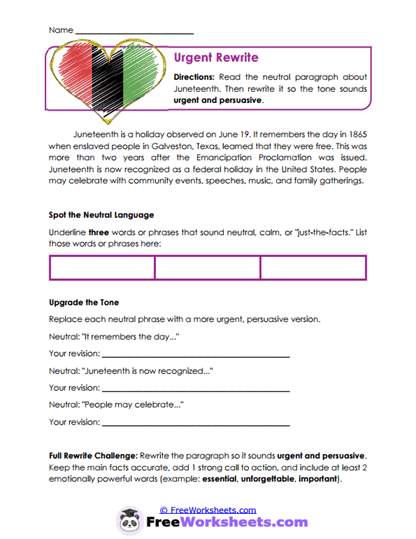
Urgent Rewrite
- What Kids Do:
Students read a neutral paragraph and rewrite it to create a more urgent and persuasive tone. They experiment with word choice and revise sentences to change how the message feels. - Target Skill:
Students develop writing skills by applying tone intentionally. This helps them understand how word choice affects meaning and supports a specific purpose in communication.