
Analyzing Literature Worksheets
These worksheets help students dig deeper into stories, characters, and meaning through close reading. These free, ready-to-print PDF format worksheets are ideal for immediate classroom use or at-home learning. Students build skills in analyzing theme, character development, and text structure aligned to key standards.
About This Collection of Worksheets
This collection helps students move beyond just reading stories and into truly understanding how literature works. Each worksheet focuses on a key skill, such as character motivation, tone, or plot structure, giving students a chance to practice thinking more deeply about what they read. The passages are engaging and relatable, making it easier for students to connect with the material while building strong analytical habits.
You’ll notice that each activity targets a specific literary concept while still encouraging students to use evidence from the text. This helps bridge the gap between reading and writing, as students learn to support their ideas clearly. The variety of topics and story types also keeps students interested, while reinforcing important skills across different contexts.
These worksheets are especially useful for building confidence in middle school readers. Students practice explaining their thinking, identifying patterns in stories, and understanding how authors make choices. Over time, they become more comfortable analyzing literature and expressing their ideas with clarity and purpose.
Paul’s Teacher Tip
When teaching literary analysis, encourage students to slow down and really notice the small details. I like to have students underline or highlight key moments before answering questions-it helps them stay focused on the text. Another powerful strategy is to ask “why” after every answer to push deeper thinking. For example, if a student identifies a theme, ask them why that theme matters in the story. You can also model strong responses so students see what clear, evidence-based answers look like. Over time, this builds independence and stronger analytical skills.
Worksheet Collection Skill Spotlights
Changing Streets
- What Kids Do:
Students read a descriptive passage about a changing neighborhood and focus on identifying vivid language. They search for sensory details and figurative expressions, then explain how these details shape meaning. As they respond, they connect specific words to the overall feeling of the story. - Target Skill:
Students build the ability to analyze imagery and figurative language by identifying sensory details and interpreting their meaning. This supports deeper understanding of how word choice affects tone and message in a literary text.
Dinner Tension
- What Kids Do:
Students read a tense family scene and carefully examine dialogue and actions to uncover hidden emotions. They gather clues from character behavior and explain how those clues reveal feelings that are not directly stated in the text. - Target Skill:
This worksheet strengthens students’ ability to infer character emotions using context clues. It supports analysis of how dialogue and actions reveal deeper meaning, aligning with character development standards.
Memory Doorway
- What Kids Do:
Students read a story that moves between past and present events, identifying moments where the narrative shifts into flashbacks. They explain how these memories connect to the character’s current thoughts and actions. - Target Skill:
Students develop understanding of text structure by identifying flashbacks and analyzing their purpose. This helps them see how authors use structure to build meaning and develop characters.
Midnight Ride
- What Kids Do:
Students read a reflective passage and identify both tone and mood by examining descriptive language. They select specific words and phrases from the text and explain how those choices create an emotional response. - Target Skill:
Students build skill in distinguishing tone from mood while analyzing how word choice influences reader experience. This strengthens their ability to interpret emotional meaning in literature.
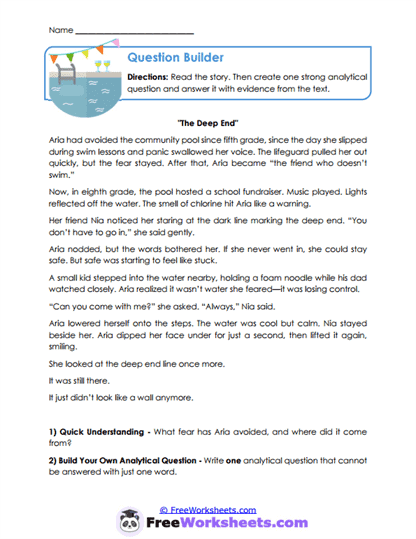
Question Builder
- What Kids Do:
Students read a short story, answer a question, and then create their own deeper question about the text. They must support their answer with evidence, encouraging both comprehension and independent thinking. - Target Skill:
This activity develops higher-order thinking by teaching students how to ask and answer analytical questions. It reinforces the use of textual evidence to support ideas and deepen understanding.
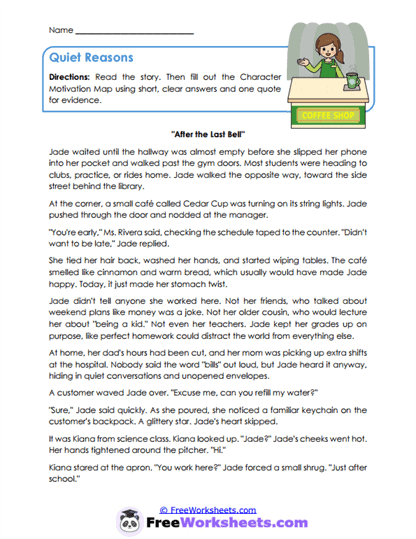
Quiet Reasons
- What Kids Do:
Students read a story about a character balancing responsibilities and identify what motivates the character’s decisions. They use details from the text to explain why the character acts in certain ways. - Target Skill:
Students strengthen their ability to analyze character motivation by connecting actions to underlying reasons. This supports deeper understanding of character development and narrative meaning.
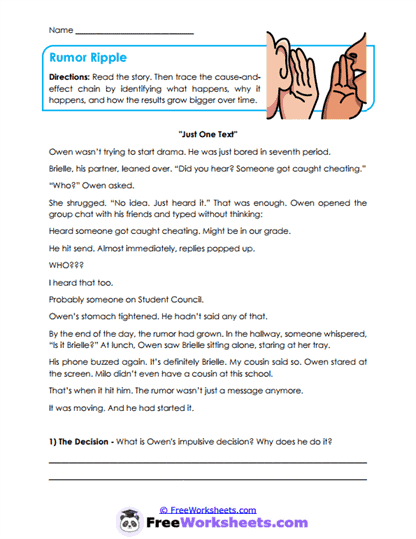
Rumor Ripple
- What Kids Do:
Students follow a story about how a rumor spreads and trace how one event leads to another. They identify key moments and explain how each action causes a reaction in the story. - Target Skill:
Students build skill in analyzing cause-and-effect relationships within a narrative. This helps them understand how events are connected and how stories develop over time.
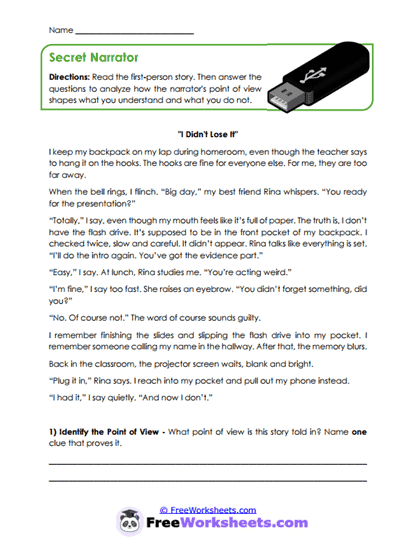
Secret Narrator
- What Kids Do:
Students read a first-person narrative and identify the point of view by examining pronouns and perspective. They explain how the narrator’s limited viewpoint shapes what the reader knows. - Target Skill:
Students develop the ability to analyze point of view and its impact on a story. This includes understanding how perspective influences meaning and reader interpretation.
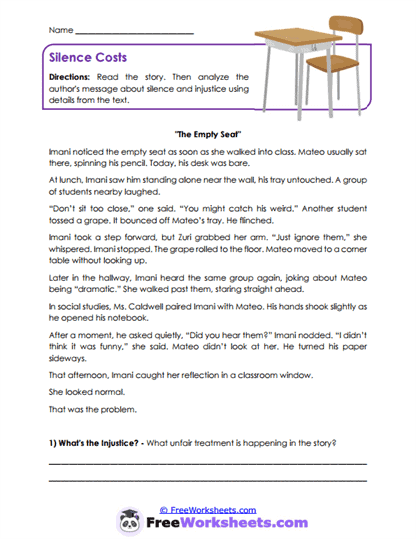
Silence Costs
- What Kids Do:
Students read a story about social exclusion and identify the deeper message about fairness. They analyze character actions and events to explain how the theme develops throughout the text. - Target Skill:
Students strengthen their ability to identify and explain theme using text evidence. This supports deeper interpretation of literary meaning and connections to real-world ideas.
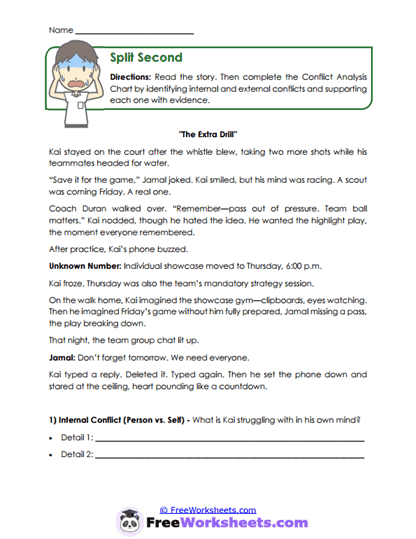
Split Second
- What Kids Do:
Students read a story about a student-athlete and identify both internal and external conflicts. They organize their findings and explain how each type of conflict affects the character. - Target Skill:
Students build understanding of conflict by distinguishing between internal and external struggles. This supports analysis of character development and narrative structure.
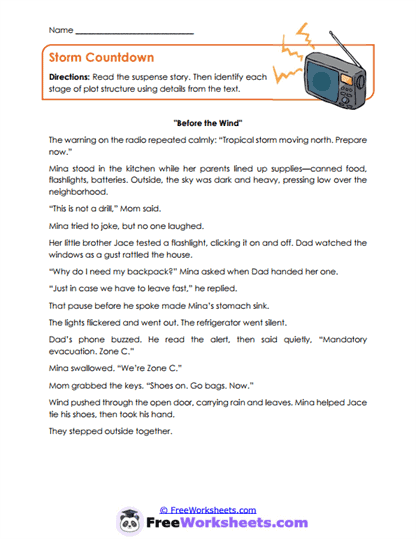
Storm Countdown
- What Kids Do:
Students read a suspenseful story and identify key stages of the plot, including rising action and climax. They explain how each event builds tension and contributes to the story. - Target Skill:
Students develop the ability to analyze plot structure and understand how events are organized. This supports comprehension of how structure shapes meaning in literature.
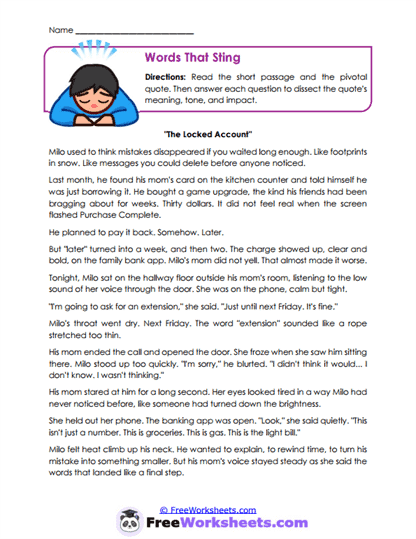
Words That Sting
- What Kids Do:
Students focus on a key quote in a story and analyze its meaning, tone, and impact. They explain how the language in the quote affects the overall message of the passage. - Target Skill:
Students strengthen their ability to analyze word choice and tone by interpreting how specific language shapes meaning. This supports deeper understanding of author’s craft in literature.