
8th Grade Reading Comprehension Worksheets
These worksheets help students strengthen deep understanding of both informational and literary texts. These free, ready-to-print PDF worksheets are designed for middle school readers who need practice citing evidence, analyzing central ideas, evaluating arguments, and explaining author craft. Topics connect to real-world issues-technology, climate, privacy, and civic action-to keep students engaged while practicing rigorous standards.
About This Collection of Worksheets
In 8th Grade, students are expected to analyze texts with more independence and precision. That means moving beyond summary to explain how ideas develop, how structure supports meaning, and how authors use evidence, quotations, and word choice to influence readers. Students also begin doing more cross-text work, combining information from multiple sources and evaluating perspective, bias, and assumptions.
This collection supports that progression with passages and prompts that require text-dependent reasoning. Students practice identifying central ideas, tracking development across paragraphs, and citing strong evidence. They also evaluate argument quality, analyze how quoted sources strengthen claims, and study tone shifts in speeches and opinion writing. Several worksheets bridge reading and writing by asking students to revise for focus or craft a synthesized paragraph from paired texts.
Each printable PDF is classroom-ready and built for low-prep instruction. Clear directions, structured prompts, and ample response space support complete, evidence-based answers. Use these worksheets for close reading routines, small-group analysis, independent practice, assessment prep, and intervention.
Paul’s Teacher Tip
At this level, students need repeated practice explaining their thinking, not just finding answers. Push them to always answer with both a claim and a piece of evidence-even in discussion. When possible, have students compare answers with a partner and defend their reasoning to deepen understanding. For struggling readers, chunk texts into smaller sections and focus on one skill at a time before combining them. Over time, encourage students to ask their own analytical questions as they read to build independence.
Worksheet Collection Skill Spotlights
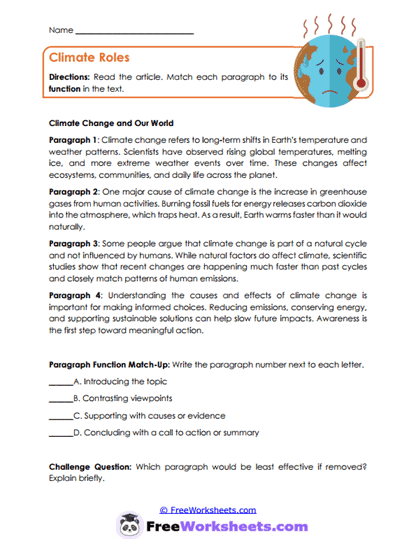
Climate Roles
• What Kids Do – Students read an article and match each paragraph to its role, then explain which one is least essential.
• Target Skill – Builds analysis of text structure and paragraph purpose.
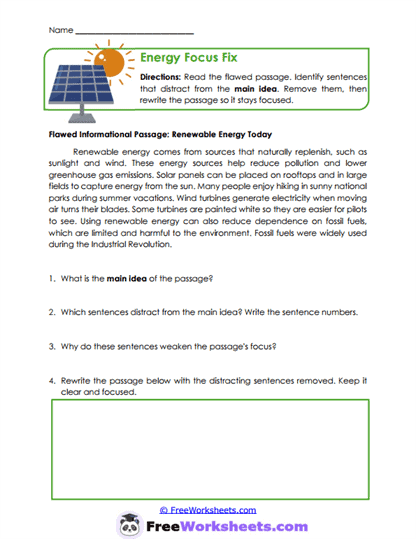
Energy Focus Fix
• What Kids Do – Students identify off-topic sentences in a passage and revise it to improve clarity and focus.
• Target Skill – Develops revision skills and understanding of cohesion.
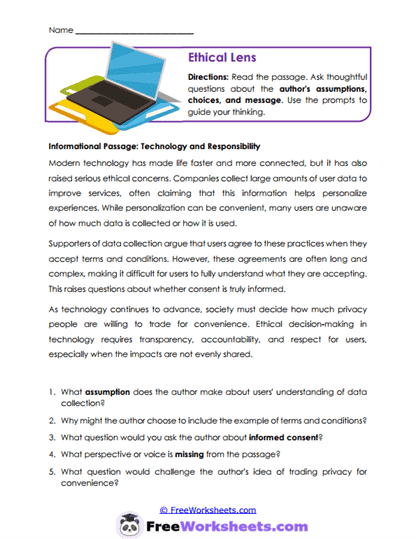
Ethical Lens
• What Kids Do – Students analyze a text to identify assumptions and consider missing perspectives.
• Target Skill – Builds critical thinking about author bias and viewpoint.
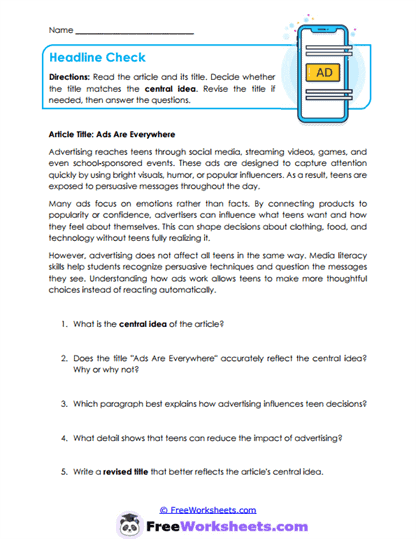
Headline Check
• What Kids Do – Students evaluate whether a title matches the central idea and write a better one if needed.
• Target Skill – Develops central idea identification and text alignment.
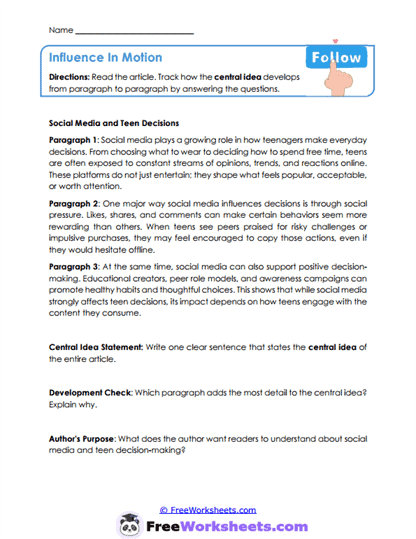
Influence In Motion
• What Kids Do – Students track how the central idea develops across paragraphs and identify key supporting sections.
• Target Skill – Builds analysis of central idea development.
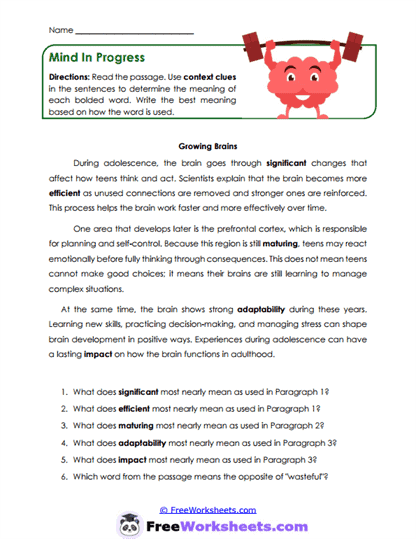
Mind In Progress
• What Kids Do – Students use context clues to define vocabulary and explain how they figured out each meaning.
• Target Skill – Strengthens context-based vocabulary and reading comprehension.
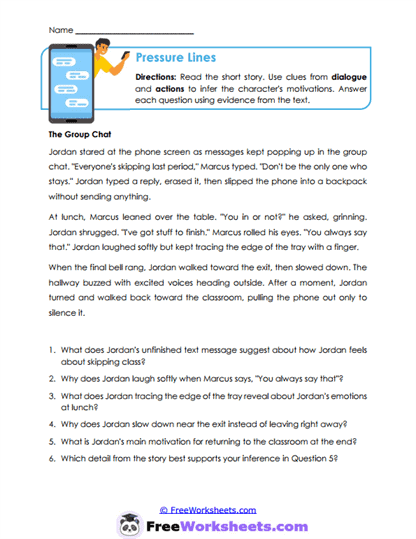
Pressure Lines
• What Kids Do – Students read a story and infer character emotions and decisions using specific text evidence.
• Target Skill – Develops inference and evidence-based reasoning.
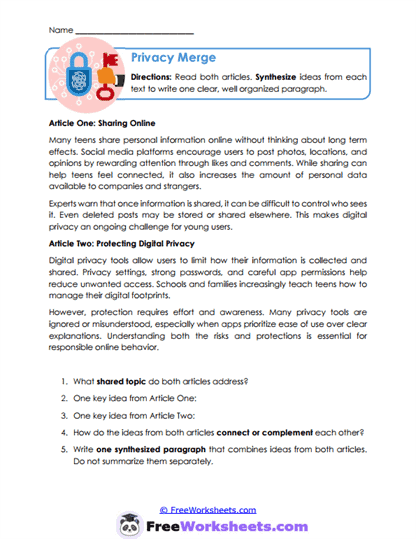
Privacy Merge
• What Kids Do – Students read two texts, connect their ideas, and write one combined paragraph.
• Target Skill – Builds synthesis and integration of multiple sources.
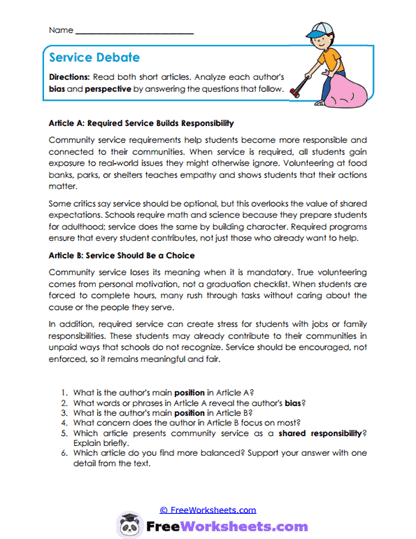
Service Debate
• What Kids Do – Students compare two arguments, identify claims and bias, and analyze word choice.
• Target Skill – Develops evaluation of perspective and bias.
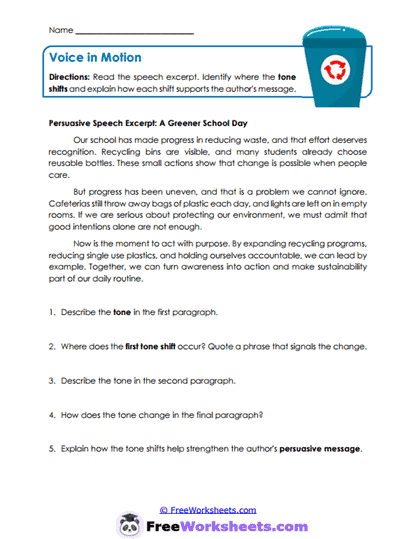
Voice in Motion
• What Kids Do – Students identify tone shifts in a speech and explain how they affect the message.
• Target Skill – Builds tone analysis and understanding of persuasive impact.
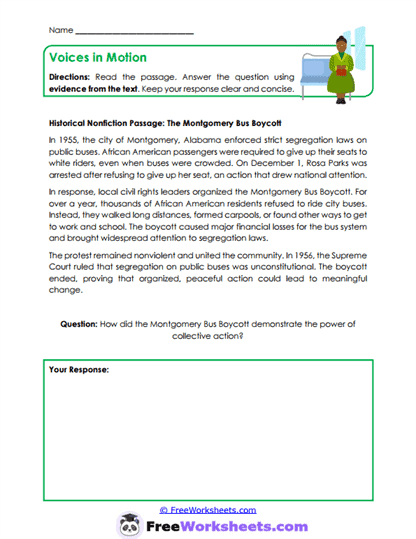
Voices in Motion
• What Kids Do – Students read a historical passage and explain its significance using specific evidence.
• Target Skill – Develops evidence-based historical analysis.
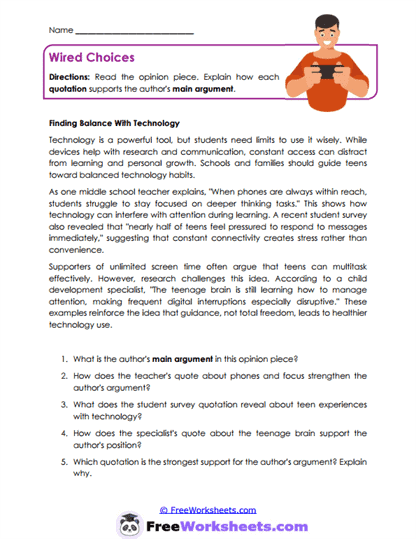
Wired Choices
• What Kids Do – Students analyze how quotations support an argument and evaluate their effectiveness.
• Target Skill – Builds understanding of evidence use in persuasive writing.