
Probability Worksheets
These worksheets help students calculate chances, organize sample spaces, analyze events, and apply probability concepts to practical situations. These free, ready-to-print worksheets come in PDF format for immediate classroom use, homework assignments, intervention support, or independent review. Students strengthen reasoning skills involving outcomes, compound events, conditional probability, simulations, counting methods, and probability models through structured practice activities and applied problem solving.
About This Collection of Worksheets
This collection of probability worksheets gives students meaningful practice interpreting outcomes, building sample spaces, calculating probabilities, and analyzing event relationships. Students work with coins, dice, cards, spinners, surveys, simulations, tree diagrams, permutations, combinations, and conditional probability situations while strengthening both conceptual understanding and procedural fluency. The activities help learners connect probability language to mathematical reasoning and real-world decision making.
The worksheets include simple probability calculations, compound event analysis, tree diagrams, two-way tables, counting principles, simulation models, and real-world probability scenarios. Students practice identifying independent and dependent events, calculating conditional probabilities, organizing outcomes systematically, comparing theoretical and experimental probabilities, and determining whether situations involve permutations or combinations. The progression of activities supports both foundational probability understanding and more advanced analytical reasoning.
Teachers can use these printable PDF worksheets for guided instruction, independent practice, review lessons, enrichment, intervention, homework, or assessment preparation. The layouts provide organized workspaces for calculations, tables, diagrams, written explanations, and probability models. The variety of real-world themes also helps students see how probability connects to science, technology, social media, sports, games, and everyday decision-making situations.
Paul’s Teacher Tip
Students often understand probability more clearly when they focus on organizing outcomes before calculating anything. Encourage learners to build sample spaces carefully and check that no possible outcomes are missing before solving probability questions. Many mistakes happen because students rush into fractions without understanding what the denominator represents. Tree diagrams, tables, and lists can help students visualize complex events and reduce confusion during compound probability problems. It is also helpful to remind students that theoretical probability predicts long-run behavior, while experimental results can vary from trial to trial. Asking students to explain probability situations in words before solving often improves both reasoning and accuracy.
Worksheet Collection Skill Spotlights
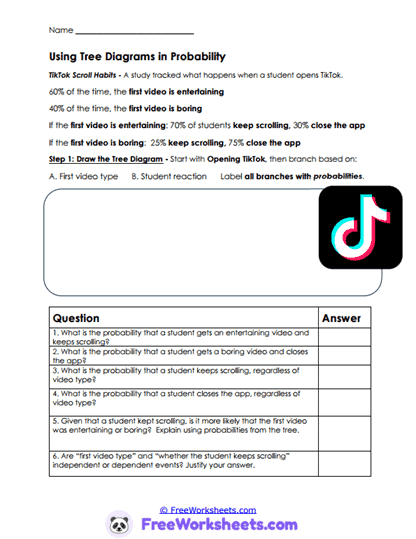
Branch Paths
- What Kids Do:
Students complete probability tree diagrams, label branches with probabilities, and calculate combined event outcomes involving multi-step situations and conditional reasoning. - Target Skill:
Students strengthen compound probability and probability-modeling skills by organizing events visually and calculating branch probabilities accurately.
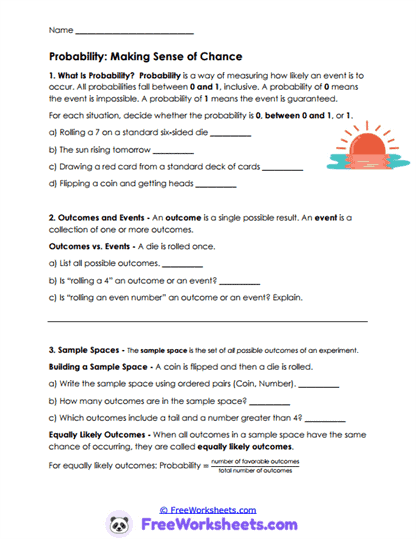
Chance Basics
- What Kids Do:
Students classify events as impossible, certain, or likely while building sample spaces and calculating simple probabilities using coins, dice, and basic outcomes. - Target Skill:
Students develop foundational probability understanding by identifying outcomes, interpreting events, and calculating theoretical probabilities correctly.
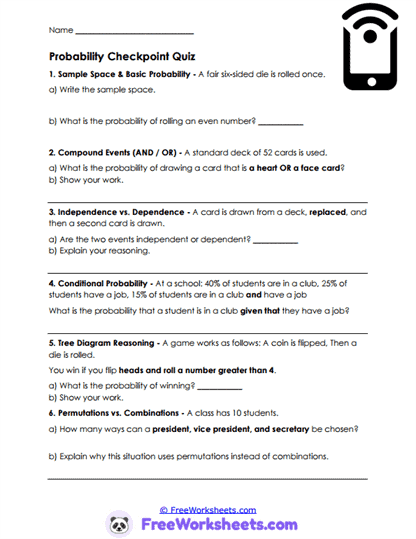
Chance Check
- What Kids Do:
Students complete mixed review problems involving sample spaces, conditional probability, tree diagrams, independence, and counting methods across varied probability situations. - Target Skill:
Students reinforce overall probability fluency by combining probability calculations, event analysis, and counting strategies within comprehensive review practice.
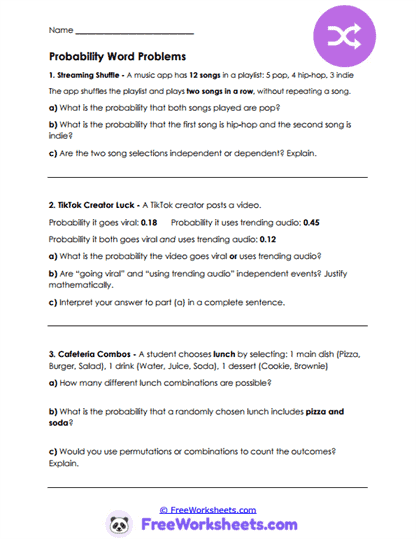
Chance Stories
- What Kids Do:
Students solve real-world probability word problems involving playlists, social media, meal combinations, and event relationships using probability reasoning. - Target Skill:
Students improve applied probability reasoning by interpreting practical situations, identifying appropriate probability methods, and explaining mathematical conclusions clearly.
Counting Choices
- What Kids Do:
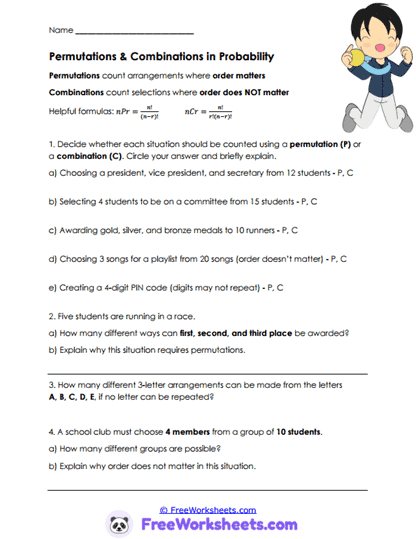
Students classify situations as permutations or combinations and calculate arrangements and selections using counting principles and factorial reasoning. - Target Skill:
Students strengthen counting-method understanding by distinguishing when order matters and applying permutation or combination reasoning accurately.
Event Links
- What Kids Do:
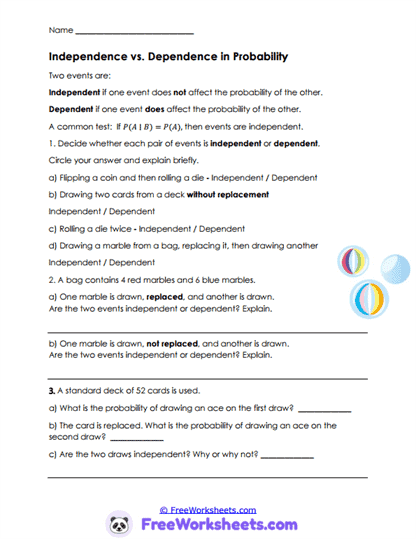
Students analyze probability situations involving cards, marbles, and replacement scenarios while determining whether events are independent or dependent. - Target Skill:
Students improve understanding of event relationships by analyzing how probabilities change or remain constant after earlier outcomes occur.
Event Mixes
- What Kids Do:
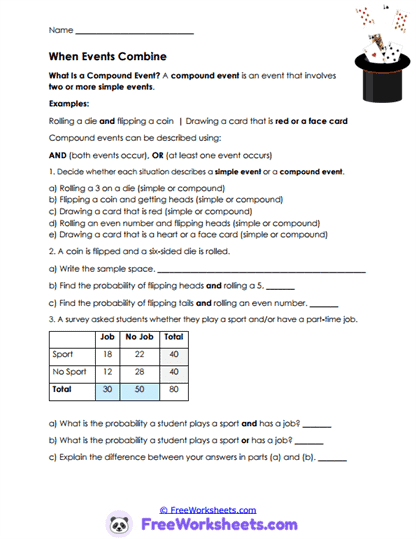
Students calculate probabilities involving compound events using AND and OR reasoning with coins, dice, cards, and real-world data situations. - Target Skill:
Students strengthen compound probability skills by organizing favorable outcomes carefully and distinguishing between combined-event probability types.
Feed Numbers
- What Kids Do:
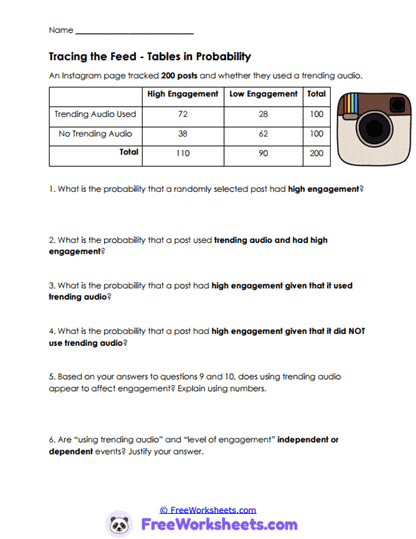
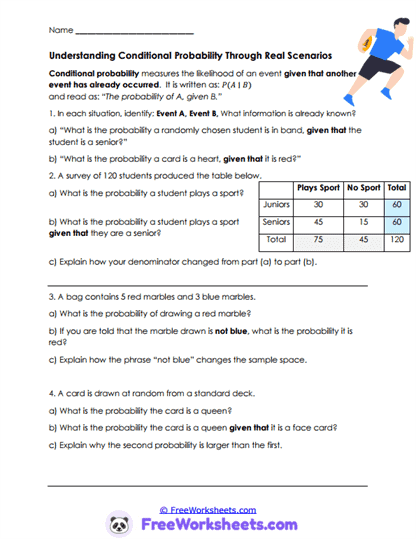
Students calculate probabilities and conditional probabilities using two-way tables involving social media engagement and organized data analysis. - Target Skill:
Students develop table-analysis and conditional probability skills by interpreting organized data and identifying correct sample spaces accurately.
Given Chances
- What Kids Do:
Students solve conditional probability problems involving cards, marbles, and survey data while comparing regular and conditional probability situations. - Target Skill:
Students strengthen conditional probability reasoning by analyzing reduced sample spaces and interpreting probabilities with given conditions.
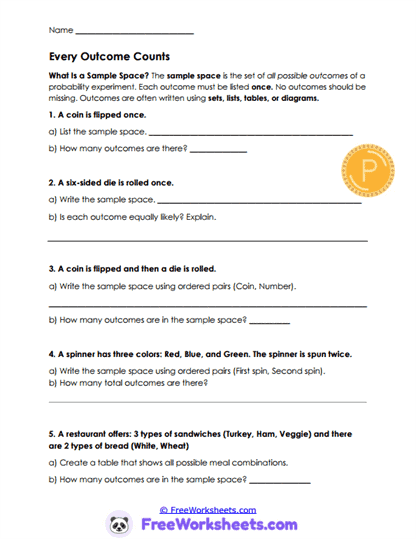
Outcome Spaces
- What Kids Do:
Students create sample spaces using coins, dice, spinners, and ordered pairs while organizing all possible outcomes systematically. - Target Skill:
Students improve probability organization skills by building complete sample spaces and interpreting compound outcomes accurately.
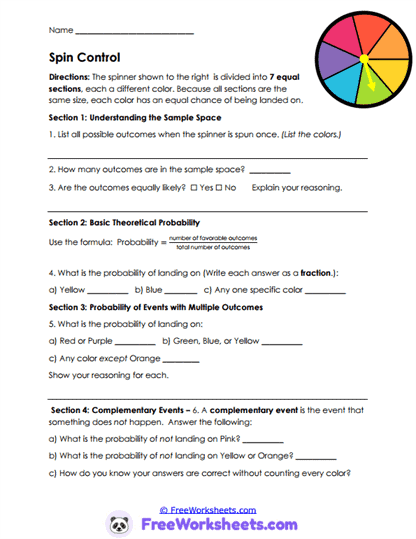
Spinner Odds
- What Kids Do:
Students calculate probabilities from spinner models involving single events, complementary events, and color-based outcome analysis. - Target Skill:
Students strengthen visual probability reasoning by connecting equally likely outcomes to fractions and theoretical probability calculations.
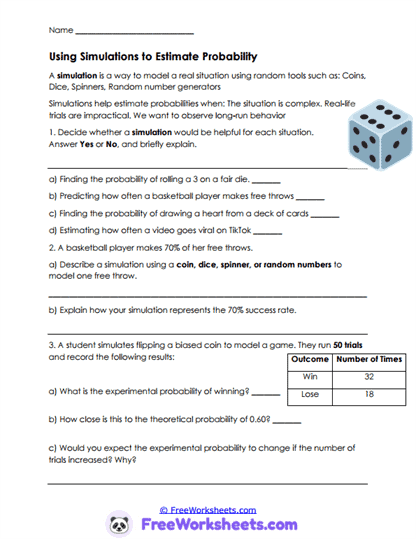
Trial Models
- What Kids Do:
Students design simulations using coins, dice, random numbers, and spinners while comparing theoretical and experimental probability results. - Target Skill:
Students improve probability-modeling and experimental reasoning skills by analyzing simulations and interpreting long-run probability behavior.