
Analyzing Informational Texts Worksheets
These worksheets help students break down complex ideas, evaluate arguments, and think critically about real-world issues. These free, ready-to-print PDF worksheets are designed for immediate classroom use or easy at-home learning. Students strengthen skills like analyzing author's purpose, evaluating evidence, identifying bias, and understanding how arguments are constructed. Focused for 11th grade students.
About This Collection of Worksheets
This collection is designed to help students move beyond basic comprehension and into deeper analysis of informational texts. Each worksheet focuses on real-world topics like healthcare, technology, public policy, and social issues, making reading meaningful and relevant. Students learn how authors present ideas, build arguments, and influence readers through language and structure.
Students are guided to evaluate information carefully instead of simply accepting it. Many activities ask them to identify claims, analyze rhetorical appeals, distinguish fact from opinion, and judge the strength of evidence. They also practice explaining their thinking clearly using evidence from the text. This builds strong habits for both reading and writing.
The worksheets are designed to build skills step-by-step, starting with identifying purpose and structure, then moving toward evaluating arguments, analyzing bias, and making inferences. Students also learn to distinguish between summary and deeper analysis, which prepares them for advanced essays and research tasks. These resources align with Grade 11 standards and support critical thinking across subjects.
Paul’s Teacher Tip
At this level, students need to shift from just understanding texts to questioning them. Encourage them to ask, “Is this convincing?” and “What evidence supports this?” as they read. It also helps to compare multiple viewpoints on the same topic so students can see how arguments are built differently. If students struggle, guide them to break the text into smaller parts and analyze one piece at a time. Over time, this builds stronger and more independent readers.
Worksheet Collection Skill Spotlights
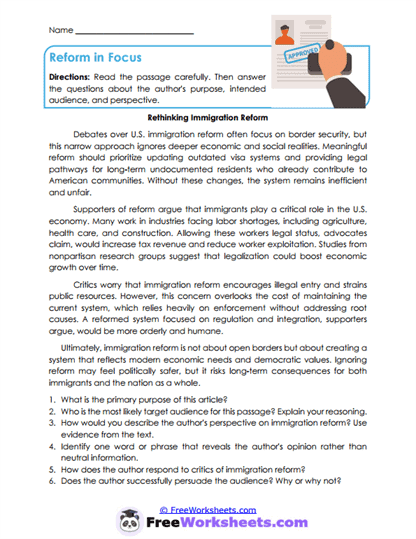
Reform in Focus
- What Kids Do:
Students read about immigration reform and analyze the author’s purpose and point of view. They look for clues that show opinion versus fact and explain what the author wants readers to believe. This helps them move beyond surface reading. - Target Skill:
Students build skills in identifying author’s purpose, audience, and perspective. They learn how to distinguish between opinion and fact. This supports deeper comprehension and analysis.
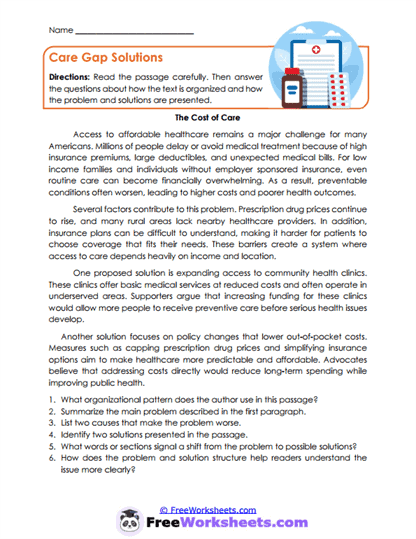
Care Gap Solutions
- What Kids Do:
Students read a passage about healthcare challenges and identify the problem, its causes, and possible solutions. They organize ideas to better understand how the text is structured. This builds clarity when reading complex information. - Target Skill:
Students strengthen their ability to analyze problem-and-solution text structure. They learn how organization supports meaning. This supports comprehension and reasoning.
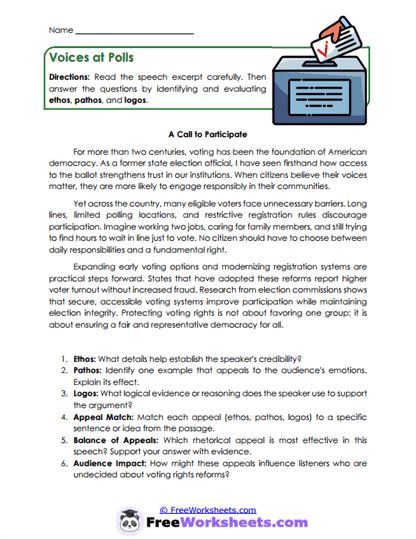
Voices at Polls
- What Kids Do:
Students analyze a speech about voting and identify rhetorical appeals like ethos, pathos, and logos. They explain how each appeal influences the audience. This builds awareness of persuasion. - Target Skill:
Students develop skills in analyzing rhetorical strategies. They learn how arguments are built to influence readers. This supports critical thinking.
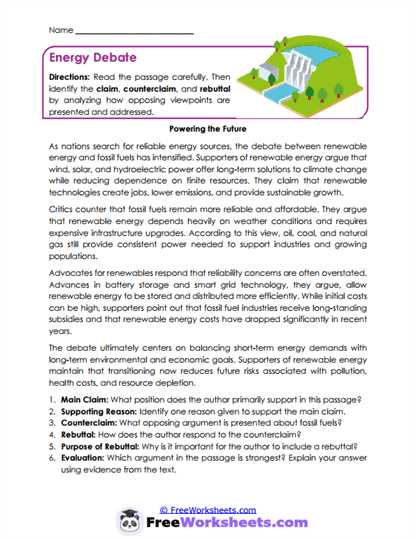
Energy Debate
- What Kids Do:
Students read about energy sources and identify claims, evidence, and counterclaims. They evaluate which side is stronger and explain why. This builds analytical thinking. - Target Skill:
Students strengthen their ability to evaluate arguments and evidence. They learn how to compare viewpoints. This supports advanced reading skills.
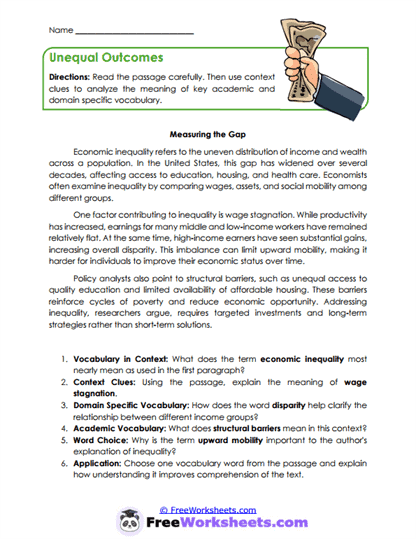
Unequal Outcomes
- What Kids Do:
Students use context clues to determine the meaning of vocabulary in a passage about economic inequality. They explain how these words connect to the overall message. This builds independence in reading. - Target Skill:
Students improve vocabulary skills using context clues. They learn how word meaning supports comprehension. This supports understanding of complex texts.
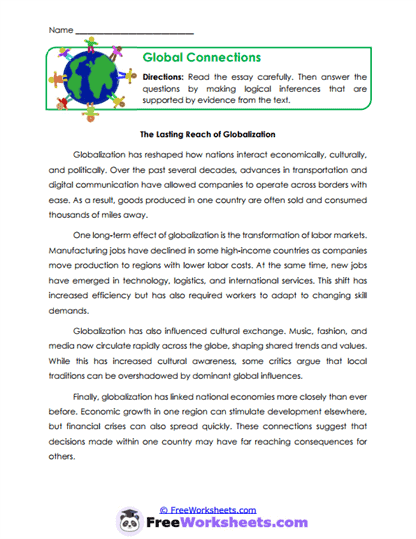
Global Connections
- What Kids Do:
Students read about globalization and make inferences using evidence from the text. They explain how ideas connect and what is implied. This builds deeper understanding. - Target Skill:
Students develop inference skills by combining evidence with reasoning. They learn to read between the lines. This supports critical reading.
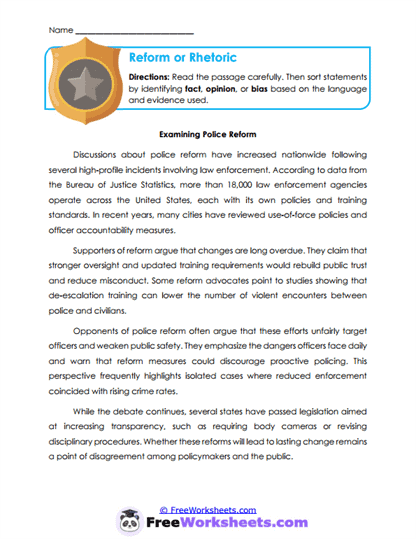
Reform or Rhetoric
- What Kids Do:
Students identify statements as fact, opinion, or bias in a passage about public issues. They analyze how language shapes meaning. This builds awareness of how texts influence readers. - Target Skill:
Students strengthen their ability to analyze language and bias. They learn how word choice affects interpretation. This supports media literacy.
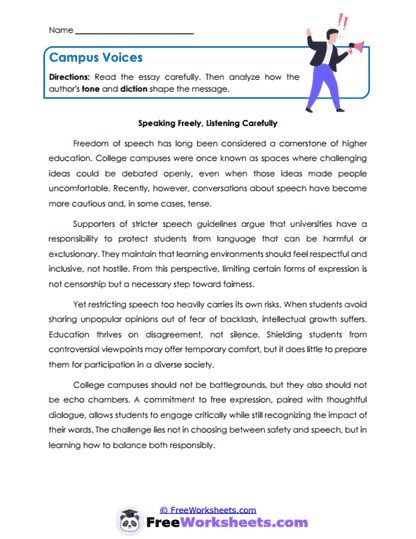
Campus Voices
- What Kids Do:
Students analyze tone and diction in an essay about free speech. They identify words that show tone and explain how meaning is shaped. This builds deeper understanding of writing style. - Target Skill:
Students develop skills in analyzing tone and word choice. They learn how language shapes meaning and reader response. This supports comprehension and writing.
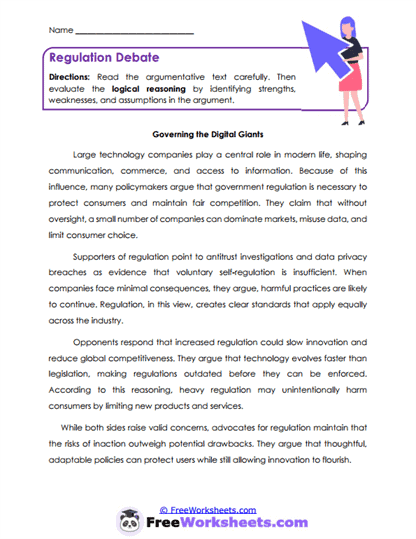
Regulation Debate
- What Kids Do:
Students evaluate the strengths and weaknesses of an argument about technology regulation. They identify gaps in reasoning and unsupported claims. This builds critical thinking. - Target Skill:
Students improve their ability to evaluate arguments and reasoning. They learn how to judge the quality of evidence. This supports advanced analysis.
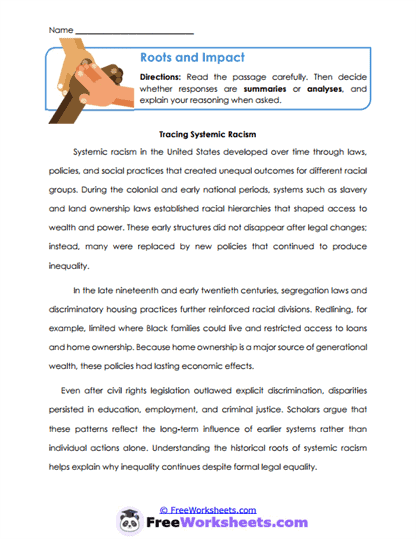
Roots and Impact
- What Kids Do:
Students distinguish between summary and analysis in responses to a historical passage. They explain what makes an answer deeper or more thoughtful. This builds strong writing habits. - Target Skill:
Students develop skills in distinguishing summary from analysis. They learn to explain ideas beyond surface-level understanding. This supports essay writing.
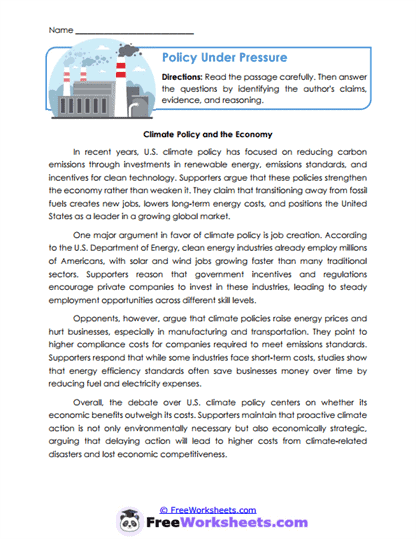
Policy Under Pressure
- What Kids Do:
Students identify claims, evidence, and reasoning in a passage about climate policy. They explain how these elements work together. This builds structured thinking. - Target Skill:
Students strengthen their ability to analyze arguments and support ideas with evidence. They learn how reasoning connects ideas. This supports comprehension.
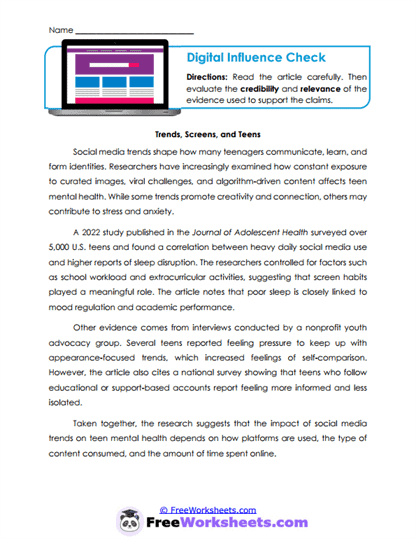
Digital Influence Check
- What Kids Do:
Students evaluate the credibility and relevance of evidence in a passage about social media. They decide which information is trustworthy. This builds real-world reading skills. - Target Skill:
Students develop skills in evaluating sources and evidence. They learn how to judge credibility and relevance. This supports research and critical thinking.