
11th Grade Reading Comprehension Worksheets
This collection helps students strengthen analysis using passages that demand evidence-based thinking. These free, ready-to-print PDF worksheets are built for immediate classroom use with rigorous, structured prompts. Students practice central idea development, argument evaluation, inference, vocabulary in context, and synthesis writing.
About This Collection of Worksheets
Grade 11 comprehension requires students to read complex texts with precision, trace how ideas develop, and evaluate how evidence and reasoning function in arguments. This collection reflects Common Core expectations for citing strong evidence, determining central ideas, analyzing relationships among ideas, and assessing claims (including RI.11-12.1, RI.11-12.2, RI.11-12.3, RI.11-12.4, RI.11-12.5, RI.11-12.6, RI.11-12.8, and RL.11-12.1). Across informational articles, editorials, commentaries, and literary narratives, students move beyond summary into interpretation, critique, and synthesis.
These worksheets work well for close reading days, discussion-driven seminars, literacy centers, and small-group instruction because questions are designed to prompt annotation and text-dependent reasoning. Many tasks support argument and writing preparation-students practice evaluating evidence strength, identifying reasoning gaps, crafting CER paragraphs, and producing objective summaries. They also fit naturally into cross-curricular units such as civics, media literacy, science/ethics, economics, and government.
Each printable PDF is classroom-ready and designed for low-prep implementation with clear layouts and space for organized written responses. Prompts are structured to guide students from comprehension into higher-order analysis, making it easier to differentiate or scaffold without lowering rigor. The collection supports consistent routines: cite, explain, evaluate, and connect ideas across a text.
Paul’s Teacher Tip
At the Grade 11 level, students need to consistently practice the full thinking cycle: cite → explain → evaluate → extend. Don’t stop at “What does the text say?” Push into “How well does it say it?” and “What’s missing?” One powerful routine is to have students add a final sentence to every response that begins with “This matters because…”-this helps them connect analysis to bigger ideas and strengthens their academic voice.
Worksheet Collection Skill Spotlights
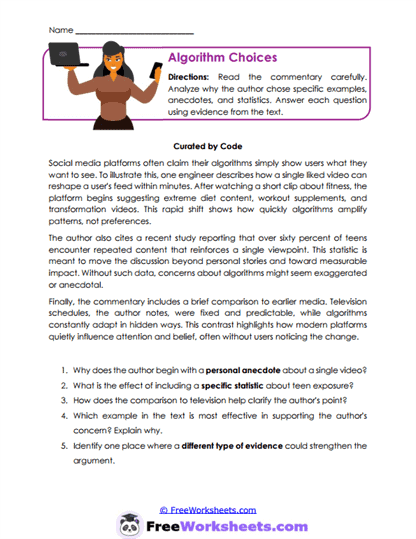
Algorithm Choices
• What Kids Do – Students analyze different types of evidence and evaluate which is most effective.
• Target Skill – Builds evaluation of how evidence strengthens persuasion.
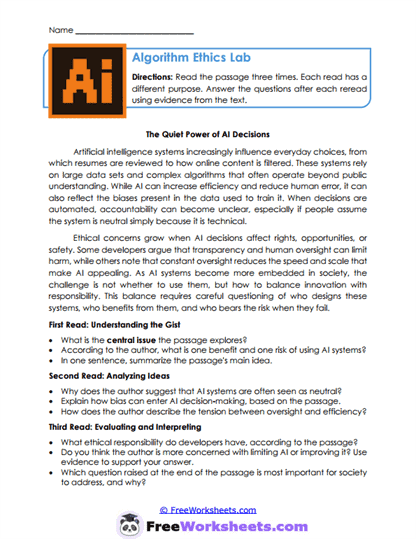
Algorithm Ethics Lab
• What Kids Do – Students reread a text to analyze central ideas, assumptions, and ethical implications.
• Target Skill – Develops deep analysis and synthesis of complex issues.
Breaking Boundaries
• What Kids Do – Students track how a central idea develops across paragraphs and analyze structure and tone.
• Target Skill – Builds understanding of idea development and author’s purpose.
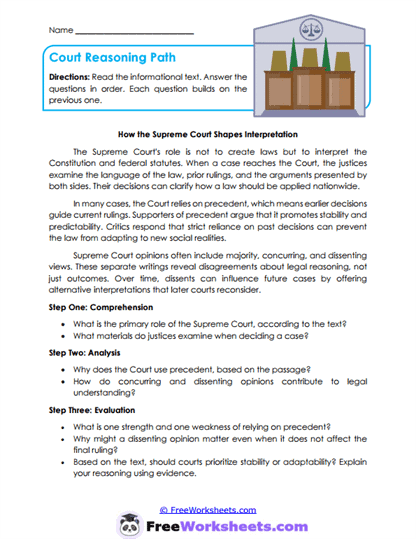
Court Reasoning Path
• What Kids Do – Students analyze legal reasoning and evaluate how arguments are structured.
• Target Skill – Develops step-by-step reasoning analysis in complex texts.
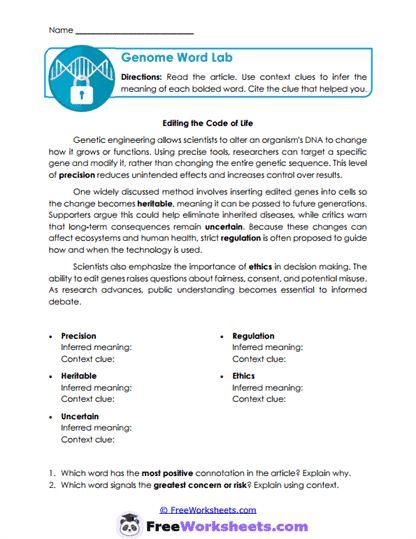
Genome Word Lab
• What Kids Do – Students determine meanings and connotations of academic vocabulary using context clues.
• Target Skill – Builds vocabulary analysis and understanding of word choice impact.
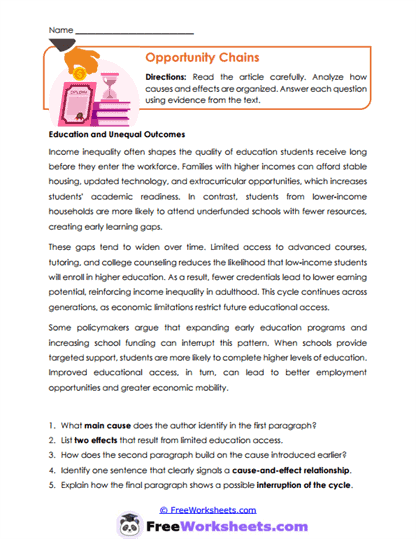
Opportunity Chains
• What Kids Do – Students trace cause-and-effect relationships across a text and connect them to solutions.
• Target Skill – Develops analysis of complex cause-and-effect structures.
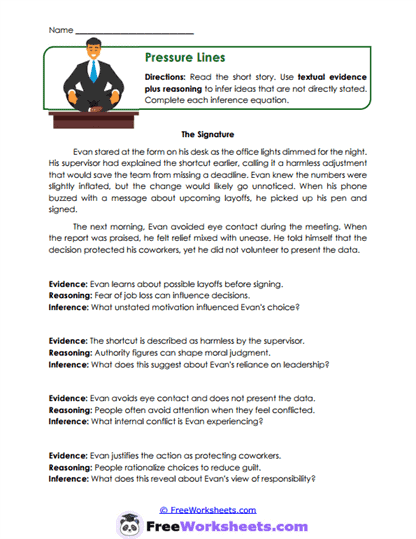
Pressure Lines
• What Kids Do – Students infer character motivations using textual evidence and analyze internal conflict.
• Target Skill – Builds evidence-based inference and psychological analysis.
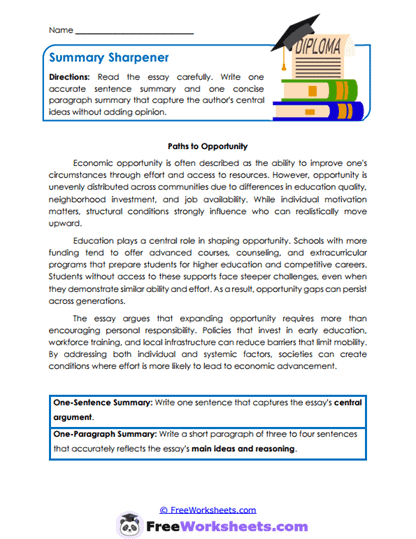
Summary Sharpener
• What Kids Do – Students write a concise, objective summary of a text’s central idea and reasoning.
• Target Skill – Develops precise summarizing and neutral tone.
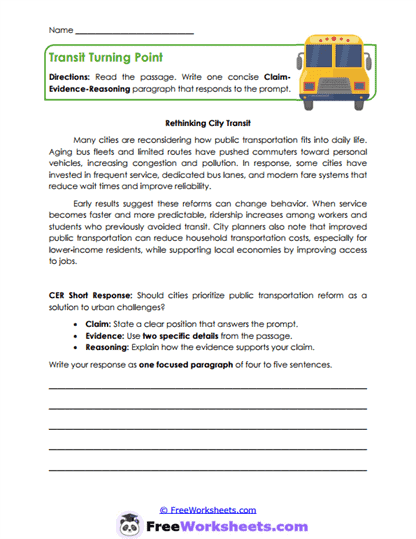
Transit Turning Point
• What Kids Do – Students write a CER paragraph using evidence from the text.
• Target Skill – Builds argument writing with clear claim, evidence, and reasoning.
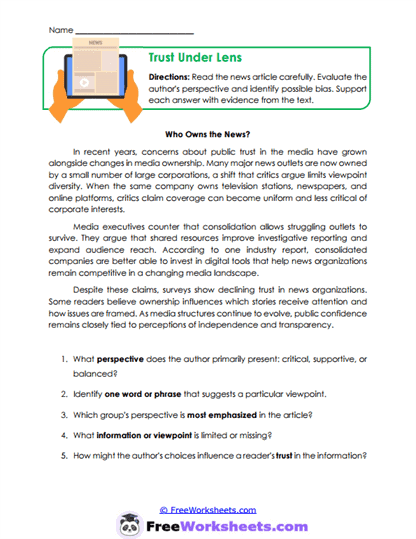
Trust Under Lens
• What Kids Do – Students evaluate perspective, bias, and credibility in a news-style text.
• Target Skill – Develops analysis of author perspective and media literacy.
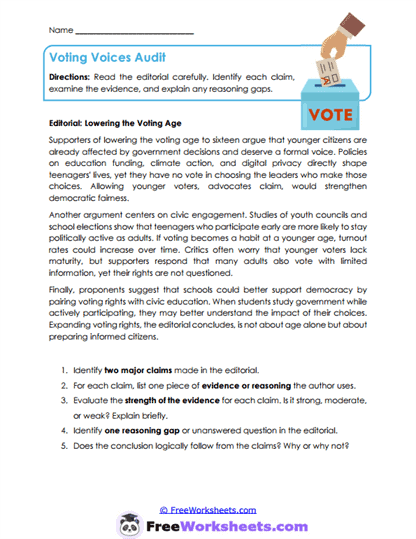
Voting Voices Audit
• What Kids Do – Students critique an argument by analyzing claims, evidence, and reasoning gaps.
• Target Skill – Builds evaluation of argument strength and logical consistency.
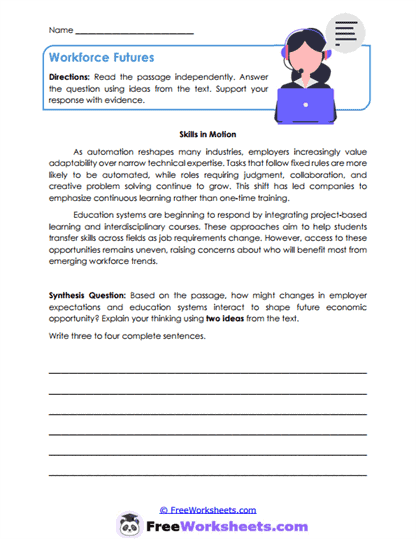
Workforce Futures
• What Kids Do – Students synthesize multiple ideas into a cohesive, evidence-based explanation.
• Target Skill – Develops synthesis and connection of complex informational ideas.