
Literary Devices Worksheets
These worksheets with printable PDFs designed to strengthen analysis skills. Free worksheets in ready-to-print PDF format support immediate classroom use and easy lesson planning. Build skills in analyzing tone, identifying figurative language, and evaluating how literary techniques shape meaning aligned to the curriculum.
About This Collection of Worksheets
This collection of 11th Grade literary devices worksheets is designed to help students move beyond simple identification and into deeper analysis of how authors craft meaning. Each worksheet presents a focused task that asks students to examine language choices, structure, and technique in a purposeful way. Students work with a variety of texts, including fiction, poetry, speeches, and nonfiction passages, to build flexible reading skills.
The worksheets gradually increase in complexity, guiding students from recognizing individual devices to analyzing how multiple techniques interact within a text. Activities include close reading, evidence-based responses, and short written explanations that connect devices to tone and theme. This progression helps students develop confidence in handling more challenging texts and prepares them for upper-level assessments and discussions.
Teachers will find these worksheets useful for whole-class instruction, small group work, or independent practice. The structure of each activity supports clear thinking and encourages students to explain their reasoning using text evidence. With consistent practice, students begin to see how literary devices are not just decorative but essential to understanding meaning and author intent.
Paul’s Teacher Tip
When teaching literary devices at this level, it helps to slow down and focus on how one small detail can shape the entire meaning of a passage. Encourage students to always answer two questions: “What is the device?” and “Why did the author use it here?” Model your thinking out loud so students can hear how you connect evidence to interpretation. It’s also helpful to revisit the same passage more than once, each time looking for a different device or effect. This repeated exposure builds confidence and depth. Finally, remind students that strong analysis is not about finding the “right” answer but about clearly explaining their thinking with evidence.
Worksheet Collection Skill Spotlights
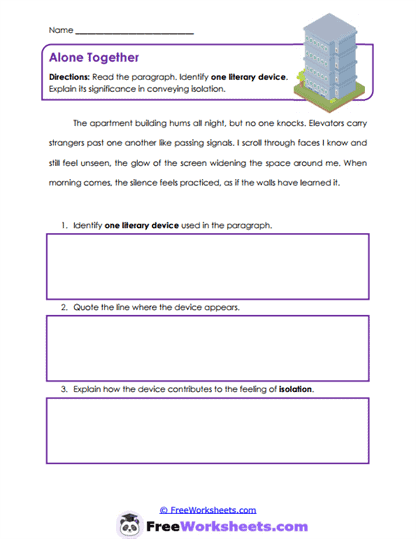
Alone Together
- What Kids Do:
Students read a short passage about isolation and carefully identify a single literary device that shapes the mood. They locate the exact line, think about how the language creates feeling, and explain their reasoning. This focused activity helps them slow down and notice how even one detail can carry meaning across a text. - Target Skill:
Students strengthen their ability to identify and explain literary devices with precision, aligning to Common Core expectations for analyzing word choice and tone. They practice citing textual evidence and connecting it directly to meaning, building foundational skills for deeper literary analysis in complex texts.
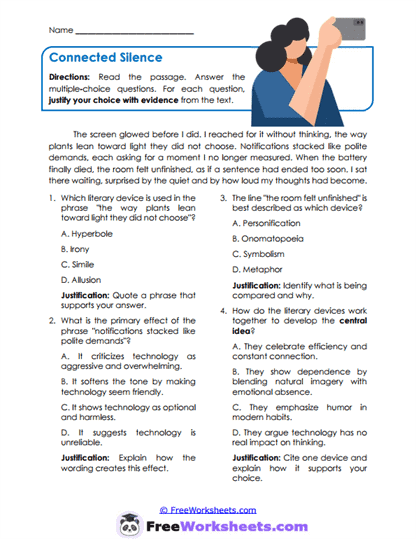
Connected Silence
- What Kids Do:
Students read a short passage and answer multiple-choice questions that ask them to identify literary devices and explain how those choices shape meaning. They justify their answers with text evidence, helping them move beyond guessing and into thoughtful reasoning about how language works in context. - Target Skill:
This activity builds test-readiness by reinforcing skills in identifying devices, analyzing tone, and supporting answers with evidence. It aligns with Common Core standards focused on close reading and textual analysis, helping students apply their understanding in structured assessment-style formats.
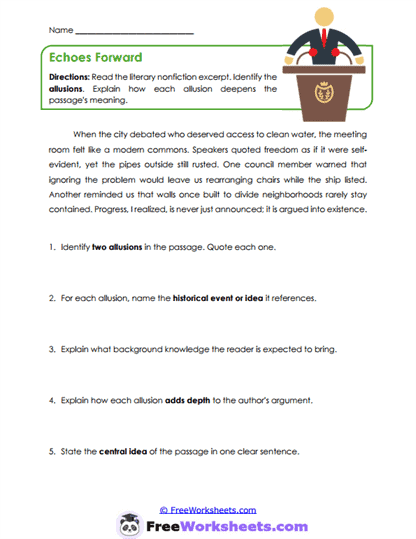
Echoes Forward
- What Kids Do:
Students read a nonfiction passage and identify allusions that connect the text to historical or cultural references. They explain what each reference means and how it adds depth to the author’s message. This encourages students to think beyond the text and consider background knowledge. - Target Skill:
Students develop the ability to interpret allusions and analyze how they contribute to meaning, supporting Common Core goals for understanding complex texts. They practice connecting prior knowledge to new reading, strengthening comprehension and analytical thinking.
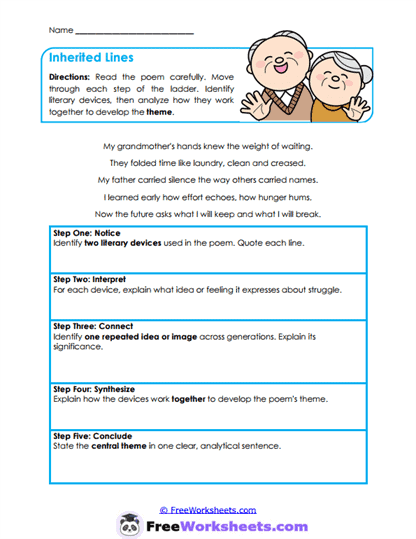
Inherited Lines
- What Kids Do:
Students read a poem and identify multiple literary devices across lines, such as imagery, repetition, and symbolism. They explain what each device suggests and then connect those ideas to show how meaning builds across the entire poem. This helps them see patterns and deeper themes. - Target Skill:
This worksheet targets synthesis skills by asking students to analyze how multiple literary elements work together. It aligns with Common Core standards focused on theme development and integration of ideas, helping students move from isolated analysis to deeper interpretation.
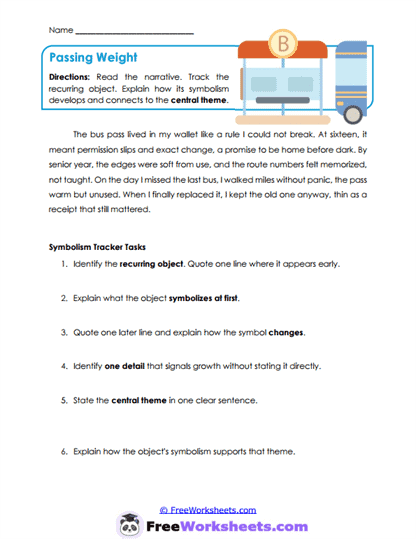
Passing Weight
- What Kids Do:
Students track a recurring object in a narrative and analyze how its meaning changes over time. They identify what the object represents at different points and explain how it connects to the story’s theme. This process helps them notice development within a text. - Target Skill:
Students build skills in analyzing symbolism and theme, aligning with Common Core expectations for tracking central ideas across a text. They practice using evidence to support interpretations and understanding how meaning evolves through repeated details.
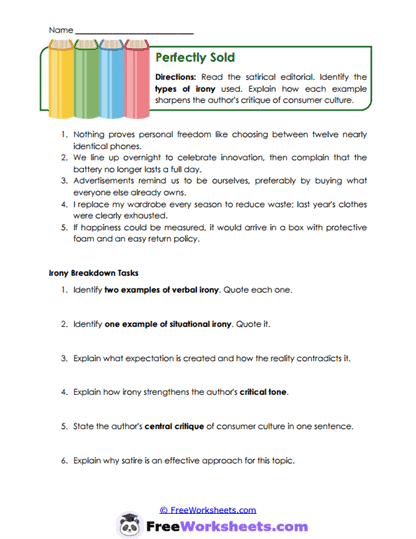
Perfectly Sold
- What Kids Do:
Students read a satirical editorial and identify examples of verbal and situational irony. They explain how expectations are set and then reversed, and how this contrast creates meaning. This helps them recognize how authors use humor to make serious points. - Target Skill:
This activity develops students’ ability to analyze tone and author’s purpose through irony and satire. It aligns with Common Core standards focused on evaluating how language shapes meaning and supports critical thinking about persuasive and argumentative texts.
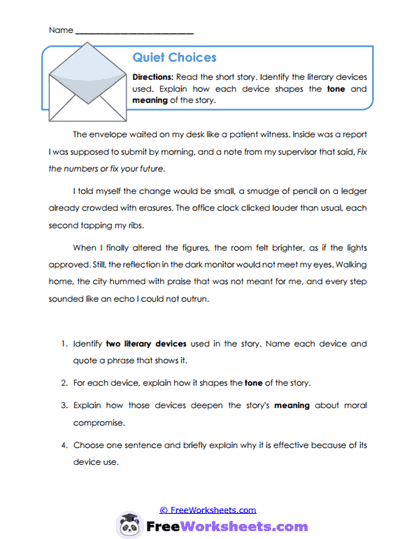
Quiet Choices
- What Kids Do:
Students read a narrative passage and identify two literary devices, such as metaphor or imagery. They quote specific examples and explain how each one shapes the tone of the story. They then connect those devices to the overall meaning of the text. - Target Skill:
Students strengthen their ability to analyze how literary techniques influence tone and meaning. This aligns with Common Core standards for interpreting figurative language and evaluating how specific word choices contribute to a text’s overall effect.
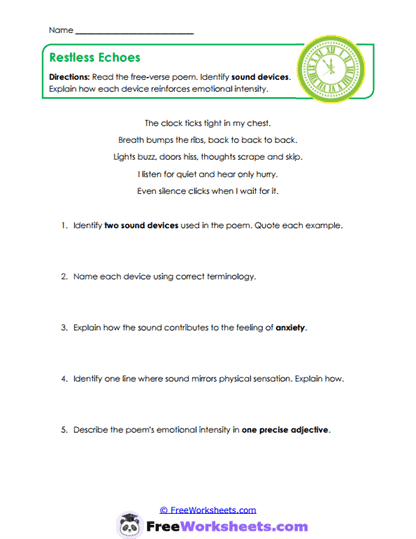
Restless Echoes
- What Kids Do:
Students read a poem and identify sound devices like repetition or rhythm that create a feeling of tension or anxiety. They explain how the sounds contribute to the emotional tone and describe the overall mood using precise language. - Target Skill:
This worksheet focuses on analyzing how sound devices shape tone and meaning in poetry. It supports Common Core goals for interpreting figurative and structural elements, helping students connect auditory patterns to emotional impact.
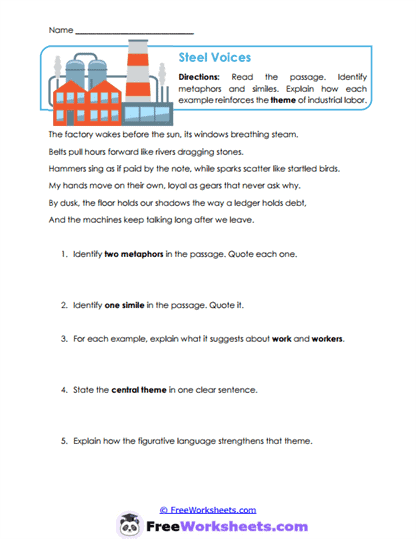
Steel Voices
- What Kids Do:
Students read a descriptive passage and identify metaphors and similes that describe factory work. They explain what each comparison suggests about labor and life, then connect those ideas to determine the central theme of the passage. - Target Skill:
Students develop skills in analyzing figurative language and connecting it to theme. This aligns with Common Core standards for interpreting meaning and understanding how comparisons deepen a reader’s understanding of complex ideas.
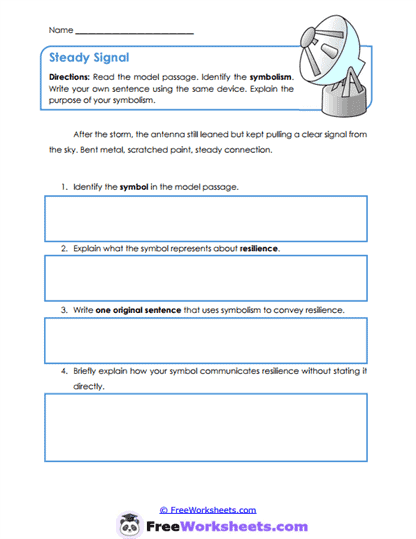
Steady Signal
- What Kids Do:
Students read a model passage and identify a symbol, then explain what it represents. After that, they create their own sentence using symbolism and explain their thinking. This blends reading analysis with creative application. - Target Skill:
This activity supports both reading and writing standards by helping students understand and use symbolism effectively. It aligns with Common Core goals for analyzing meaning and producing clear, purposeful writing.
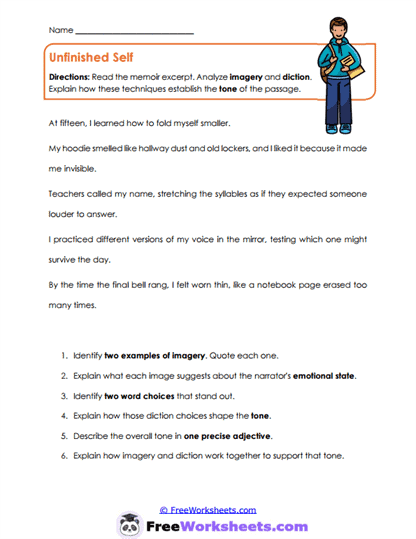
Unfinished Self
- What Kids Do:
Students read a reflective passage and identify examples of imagery and strong word choices. They explain how these details create a specific emotional tone and describe the overall feeling of the text using evidence. - Target Skill:
Students build skills in analyzing diction and imagery, focusing on how language shapes tone. This aligns with Common Core standards for interpreting word choice and understanding how descriptive details influence meaning.
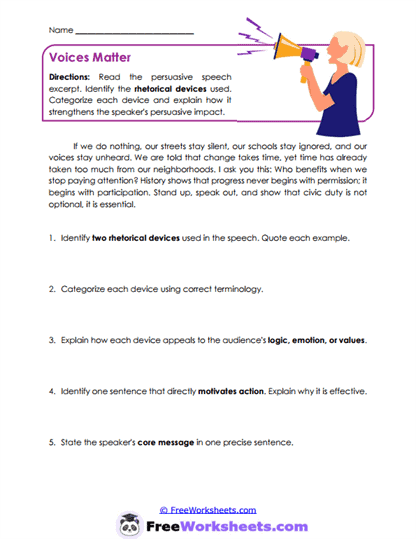
Voices Matter
- What Kids Do:
Students read a persuasive speech and identify rhetorical devices used to influence the audience. They categorize each device and explain how it appeals to emotion, logic, or values, then identify a line that motivates action. - Target Skill:
This worksheet strengthens students’ understanding of rhetoric and argument analysis, aligning with Common Core standards for evaluating persuasive techniques. It helps students recognize how language is used to influence and engage an audience.