
About This Worksheet
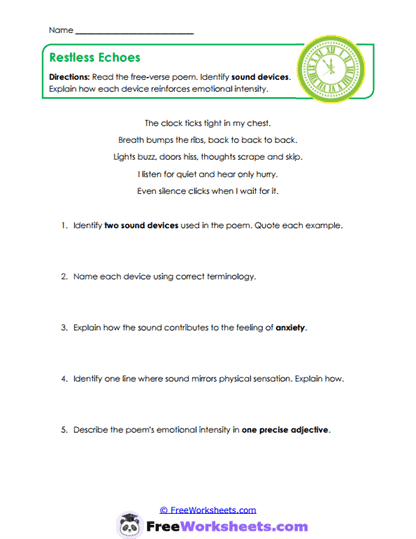
This worksheet is about sound devices, which means how authors use repetition, rhythm, and sound to create feeling. It is designed for Grade 11 students analyzing poetry. Students learn how sound can reflect emotion and intensity. For example, “clock ticks tight in my chest” uses sound to show anxiety. This helps students understand how poetry creates mood.
Curriculum and Grade Alignment
This worksheet supports Grade 11 standards focused on analyzing poetic techniques. The main goal is helping students identify sound devices and their effects. Students should already understand basic figurative language. After this, they will analyze how sound contributes to theme. It aligns with Common Core RL.11-12.4 and TEKS ELA.11.9D.
Student Tasks
On this worksheet, students will read a free-verse poem. They identify two sound devices used in the text. Students name each device correctly. They explain how sound contributes to the feeling of anxiety. In the final step, they describe the poem’s emotional intensity in one word.
Common Challenges and Misconceptions
Students may confuse sound devices with other literary techniques. Some might struggle to name the devices correctly. Others may describe the feeling without explaining how sound creates it. It can also be difficult to use precise vocabulary. Teachers can help by reviewing common sound devices.
Implementation Guidance
Teachers can use this worksheet during poetry lessons. It works well as a close reading activity. Parents can support by reading the poem aloud together. This worksheet builds listening and analysis skills. It can be used as guided or independent practice.
Details and Features
The worksheet includes a short, engaging poem. Questions guide students through identifying and analyzing sound. The format is simple and easy to follow. It is printable and ready for use. The activity supports comprehension and interpretation.