
Analyzing Literature Worksheets
These worksheets help students dig deeper into how stories are written and what they mean. These free, ready-to-print PDF worksheets are designed for immediate classroom use or easy at-home learning. Students build skills like analyzing character development, interpreting symbolism, evaluating tone, and explaining how authors use language to shape meaning. Made for 11th grade students.
About This Collection of Worksheets
This collection focuses on helping students move beyond surface-level reading and into deeper literary analysis. Each worksheet guides students to look closely at how authors use details like structure, symbolism, and perspective to build meaning. Students explore how small moments-like a character’s decision or a shift in tone-can change the direction of a story.
Students are encouraged to explain their thinking using evidence from the text. Many activities ask them to analyze how characters develop, how themes are revealed, and how literary techniques shape the reader’s experience. They also practice writing clear analytical responses, which helps prepare them for essays and discussions.
The worksheets are designed to build skills step-by-step, from identifying key story elements to analyzing complex ideas like narrator reliability, symbolism, and theme across texts. Students also learn to move from discussion to structured writing, strengthening both comprehension and communication skills. These resources align with Grade 11 standards and support deeper critical thinking.
Paul’s Teacher Tip
At this level, students should start thinking like analysts, not just readers. Encourage them to ask, “Why did the author make this choice?” as they read. It also helps to slow down and focus on small details-word choice, sentence structure, or a single action can reveal a lot. If students struggle, have them talk through their ideas first before writing. Over time, this builds stronger and more confident analysis.
Worksheet Collection Skill Spotlights
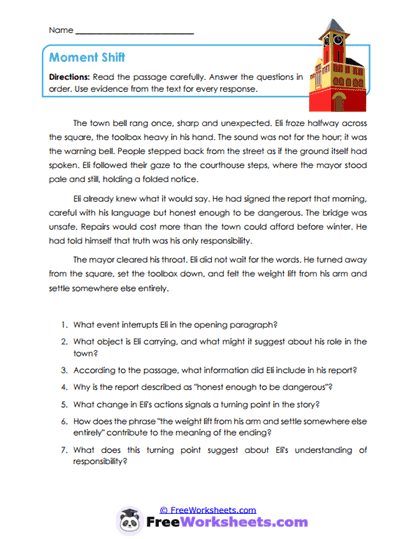
Moment Shift
- What Kids Do:
Students identify the turning point in a story where a character’s thinking or actions change. They explain how that moment shifts the direction of the story. This helps them understand how narratives develop. - Target Skill:
Students build skills in analyzing plot structure and character development. They learn how key moments shape meaning. This supports deeper literary comprehension.
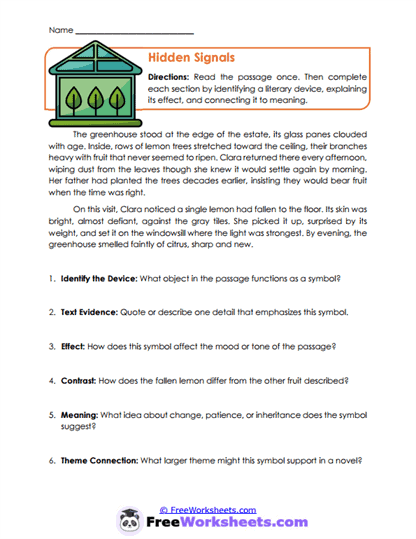
Hidden Signals
- What Kids Do:
Students identify symbolic objects in a passage and explain what they represent. They connect details to deeper ideas like change or loss. This builds interpretive thinking. - Target Skill:
Students strengthen their ability to analyze symbolism and connect it to theme. They learn to move beyond literal meaning. This supports advanced analysis.
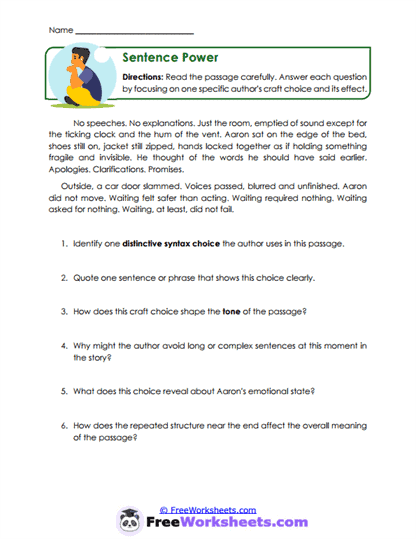
Sentence Power
- What Kids Do:
Students analyze how sentence structure affects tone and meaning. They identify patterns like short or repeated sentences and explain their impact. This builds awareness of writing style. - Target Skill:
Students develop skills in analyzing syntax and its effect on tone. They learn how structure shapes meaning. This supports literary analysis.
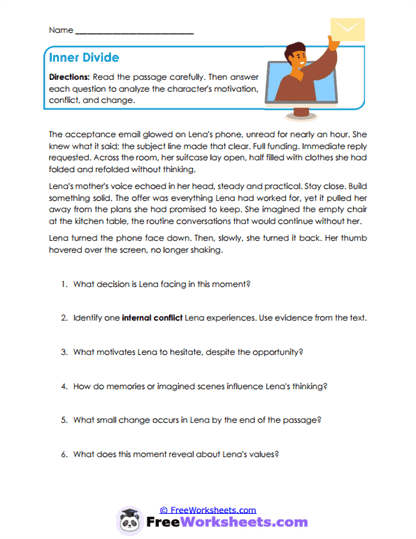
Inner Divide
- What Kids Do:
Students explore a character’s internal conflict by analyzing thoughts and emotions. They explain why the character struggles and how it affects decisions. This deepens understanding of motivation. - Target Skill:
Students strengthen their ability to analyze internal conflict and character development. They learn how emotions drive actions. This supports comprehension and analysis.
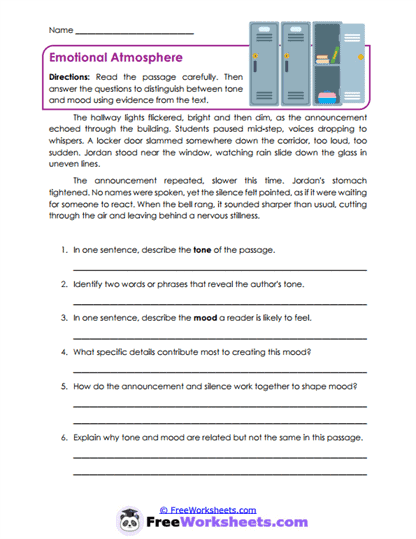
Emotional Atmosphere
- What Kids Do:
Students identify tone and mood in a passage and explain how language creates emotional impact. They connect specific words to feelings. This builds deeper reading skills. - Target Skill:
Students improve their ability to distinguish tone from mood and analyze how both are created. They learn how language shapes reader experience. This supports interpretation.
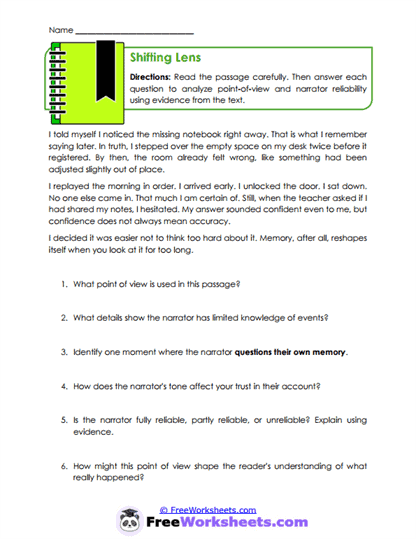
Shifting Lens
- What Kids Do:
Students analyze point of view and decide whether a narrator is reliable. They look for clues that show uncertainty or bias. This encourages critical thinking. - Target Skill:
Students develop skills in analyzing narration and perspective. They learn how point of view shapes meaning. This supports deeper comprehension.
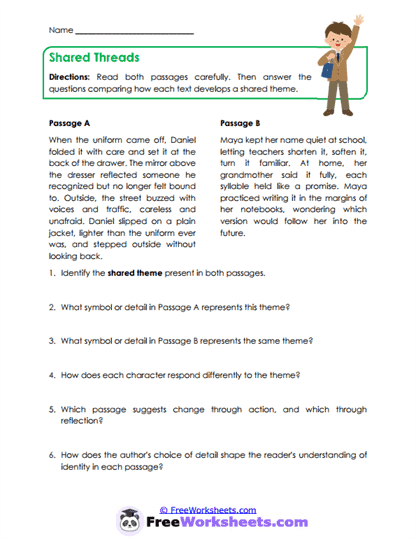
Shared Threads
- What Kids Do:
Students compare two passages and identify a shared theme. They explain how each text presents the idea differently. This builds comparison skills. - Target Skill:
Students strengthen their ability to analyze and compare themes across texts. They learn how different approaches shape meaning. This supports advanced reading.
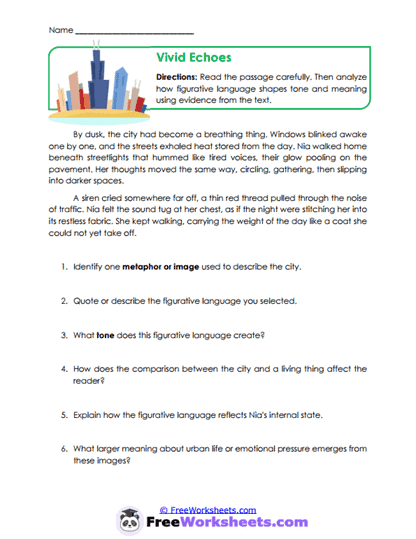
Vivid Echoes
- What Kids Do:
Students analyze figurative language like metaphor and imagery. They explain how these details affect tone and meaning. This builds interpretive skills. - Target Skill:
Students improve their ability to analyze figurative language and its impact. They learn how imagery shapes understanding. This supports literary analysis.
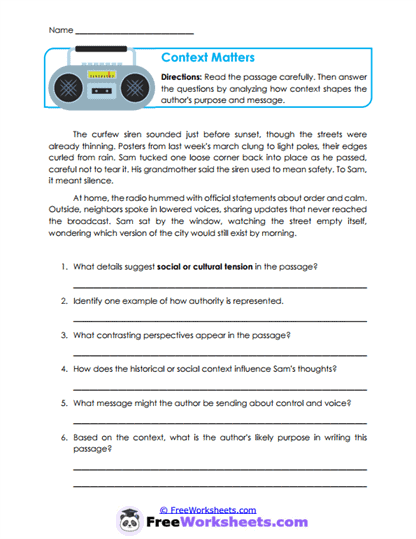
Context Matters
- What Kids Do:
Students examine background details like social or cultural context and explain how they influence the story. They connect these details to larger ideas. This builds deeper understanding. - Target Skill:
Students develop skills in analyzing context and its effect on meaning. They learn how outside factors shape a text. This supports critical thinking.
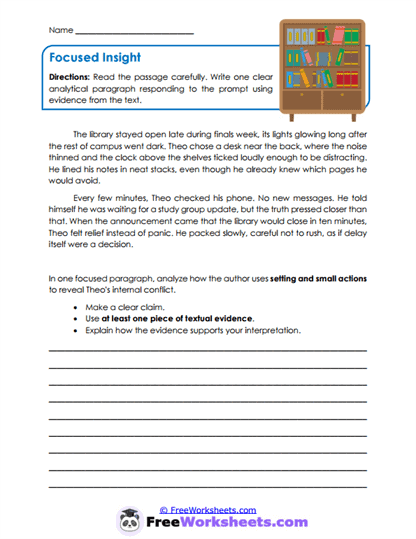
Focused Insight
- What Kids Do:
Students write a short analytical paragraph using evidence from a passage. They focus on explaining how details reveal character or theme. This connects reading and writing. - Target Skill:
Students strengthen their ability to write clear, evidence-based analysis. They learn how to support ideas with text details. This supports academic writing.
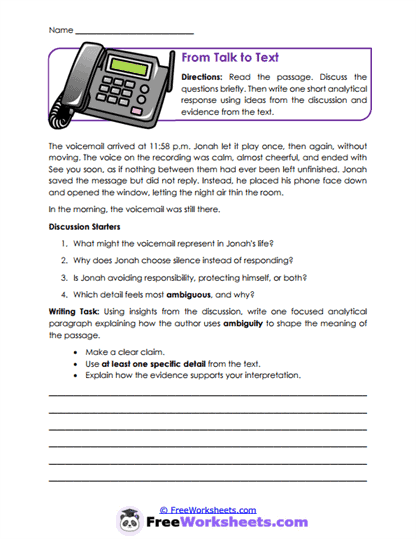
From Talk to Text
- What Kids Do:
Students discuss a passage and then turn their ideas into a written response. They explore multiple interpretations before writing. This builds confidence in analysis. - Target Skill:
Students develop skills in moving from discussion to structured writing. They learn how to organize and support ideas. This supports communication and analysis.
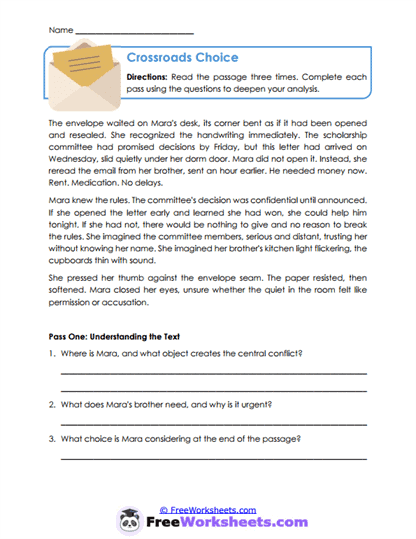
Crossroads Choice
- What Kids Do:
Students analyze a character facing an important decision. They identify the conflict and explain what the character is considering. This helps them understand how choices drive a story. - Target Skill:
Students build skills in close reading and analyzing conflict. They learn how decisions shape plot and meaning. This supports deeper comprehension.