
Business Documents Worksheets
These worksheets help students understand professional texts and workplace communication. These free, ready-to-print PDF worksheets are designed for immediate classroom use or easy at-home learning. Students develop skills like analyzing tone, identifying purpose, evaluating clarity, and understanding how business writing works in real situations. For 11th Grade students and teachers.
About This Collection of Worksheets
This collection focuses on helping students read and understand real-world business documents like memos, emails, reports, and proposals. Each worksheet gives students practice analyzing how information is presented, what the message is, and what action is expected. Students learn how professional communication is structured and why clarity matters.
Students are also guided to think critically about how messages are written. Many activities ask them to evaluate tone, identify audience, and revise unclear or unprofessional language. They practice separating facts from opinions, understanding data, and rewriting complex information in simpler terms. This helps them become more confident readers and communicators.
The worksheets are designed to build skills step-by-step, from identifying purpose and main ideas to analyzing tone, evaluating effectiveness, and improving writing. Students also practice real-world skills like reading policies, interpreting reports, and understanding workplace expectations. These resources align with Grade 11 standards and support both comprehension and career readiness.
Paul’s Teacher Tip
When working with business documents, remind students that these texts are written to get something done-there is always a purpose. Encourage them to ask, “What action is expected?” as they read. It also helps to look closely at tone and word choice, since professional writing often says things in a careful or indirect way. If students struggle, have them rewrite parts in their own words to check understanding. Over time, this builds confidence with real-world reading.
Worksheet Collection Skill Spotlights
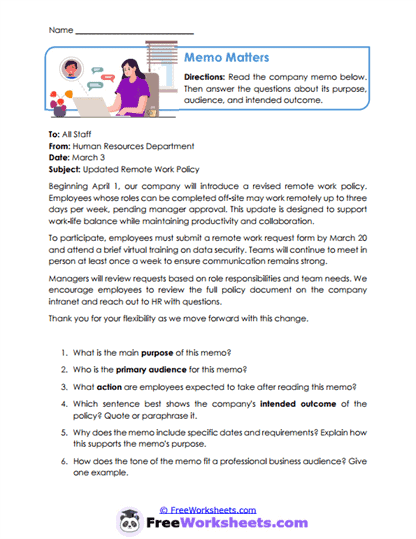
Memo Matters
- What Kids Do:
Students read a workplace memo and identify its purpose, audience, and expected outcome. They analyze what employees are supposed to do after reading it. This helps them understand how professional messages communicate action. - Target Skill:
Students build skills in analyzing purpose and audience in informational texts. They learn how workplace writing communicates expectations clearly. This supports real-world reading comprehension.
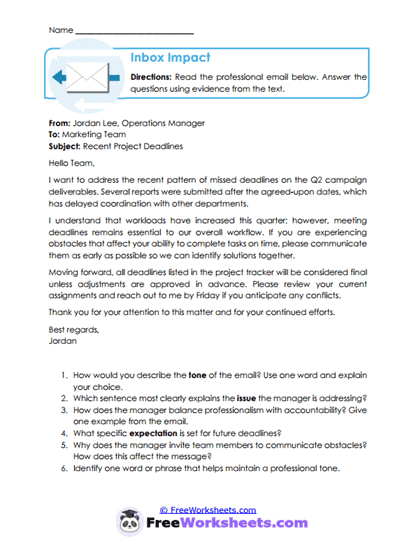
Inbox Impact
- What Kids Do:
Students read a professional email and analyze tone, message, and expectations. They identify how the writer communicates concerns while maintaining professionalism. This builds awareness of workplace communication. - Target Skill:
Students strengthen their ability to analyze tone and purpose in professional writing. They learn how language reflects professionalism. This supports communication skills.
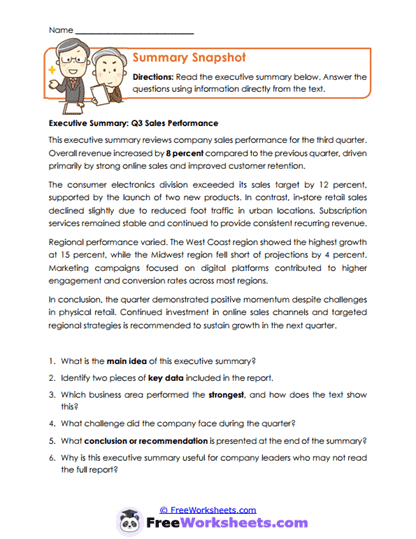
Summary Snapshot
- What Kids Do:
Students read an executive summary and identify the main idea along with key supporting data. They explain what information is most important. This helps them focus on key points. - Target Skill:
Students develop summarizing skills by identifying central ideas and supporting details. They learn how to extract important information from longer texts. This supports comprehension.
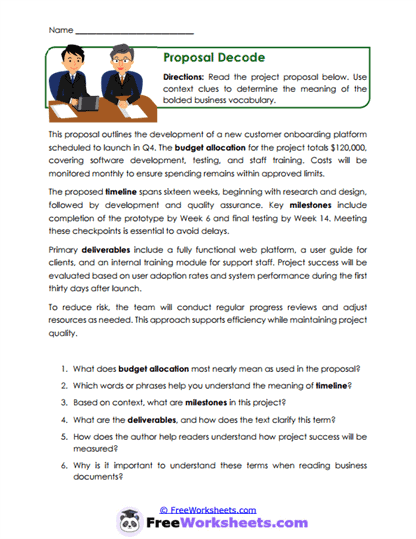
Proposal Decode
- What Kids Do:
Students read a proposal and use context clues to determine the meaning of business vocabulary. They connect word meaning to the overall message. This builds confidence with technical language. - Target Skill:
Students strengthen vocabulary skills by using context clues in real-world texts. They learn how word meaning affects understanding. This supports comprehension.
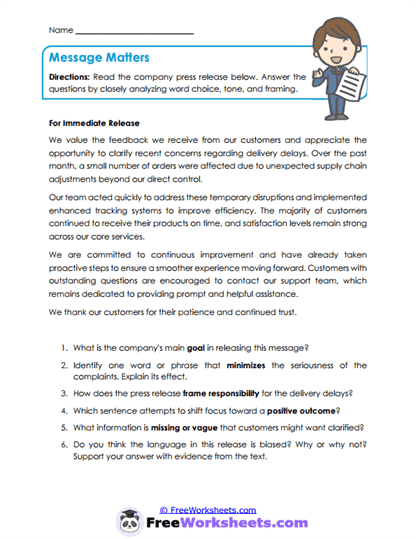
Message Matters
- What Kids Do:
Students analyze a press release and identify how tone and wording shape the message. They evaluate how the company presents information. This builds critical thinking. - Target Skill:
Students develop skills in analyzing tone and framing. They learn how language influences perception. This supports media literacy.
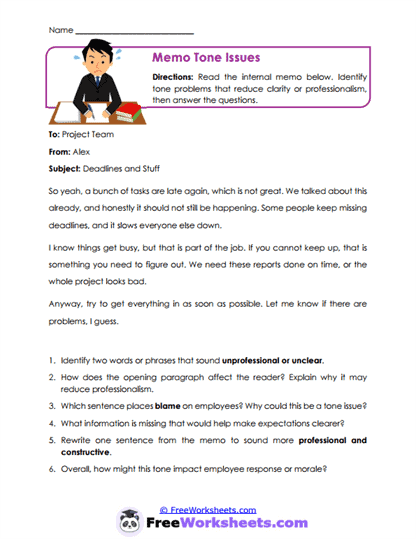
Memo Tone Issues
- What Kids Do:
Students identify informal or unclear language in a memo and revise it to sound professional. They explain how changes improve clarity. This builds writing skills. - Target Skill:
Students improve their ability to revise writing for tone and clarity. They learn how professional language affects communication. This supports writing development.
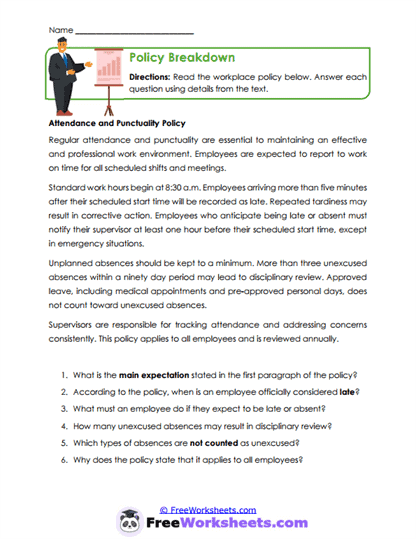
Policy Breakdown
- What Kids Do:
Students read a workplace policy and identify key rules, expectations, and consequences. They explain how the policy applies to employees. This builds practical understanding. - Target Skill:
Students strengthen comprehension skills by analyzing structured informational texts. They learn how to interpret rules and expectations. This supports real-world reading.
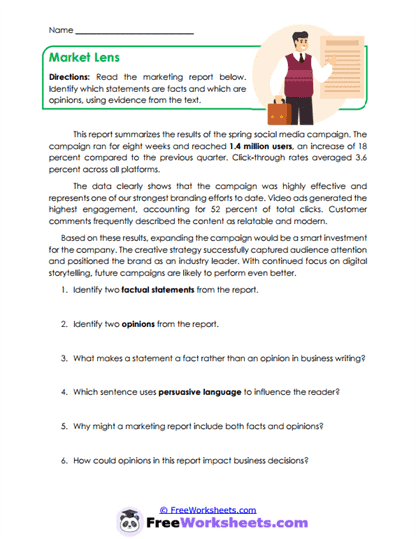
Market Lens
- What Kids Do:
Students distinguish between facts and opinions in a marketing report. They analyze how data and persuasive language are used together. This builds evaluation skills. - Target Skill:
Students develop skills in identifying factual information versus opinion. They learn how persuasive language works. This supports critical thinking.
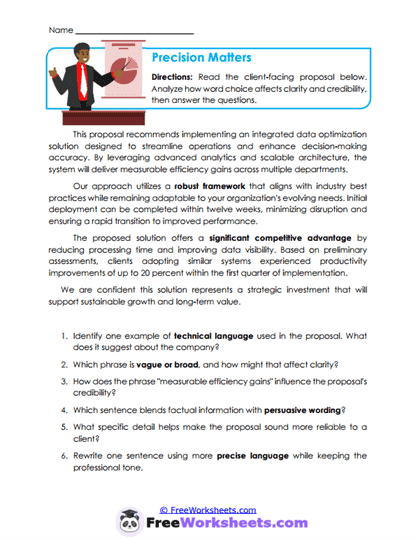
Precision Matters
- What Kids Do:
Students analyze word choice in a proposal and identify vague or unclear language. They rewrite sentences to improve clarity. This builds precision in communication. - Target Skill:
Students strengthen their ability to evaluate and revise language for clarity and credibility. They learn how word choice affects meaning. This supports writing skills.
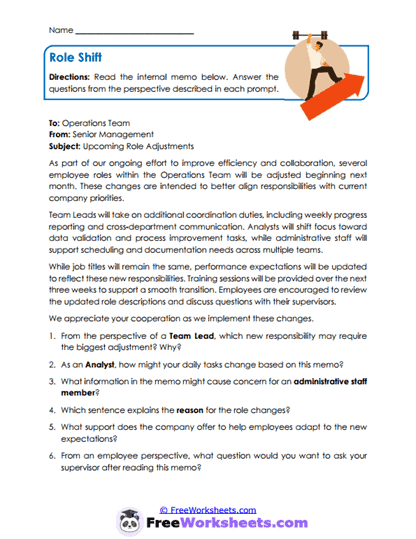
Role Shift
- What Kids Do:
Students analyze how a memo affects different employees based on their roles. They consider multiple perspectives. This builds deeper understanding. - Target Skill:
Students develop skills in analyzing perspective and audience impact. They learn how communication affects different groups. This supports comprehension.
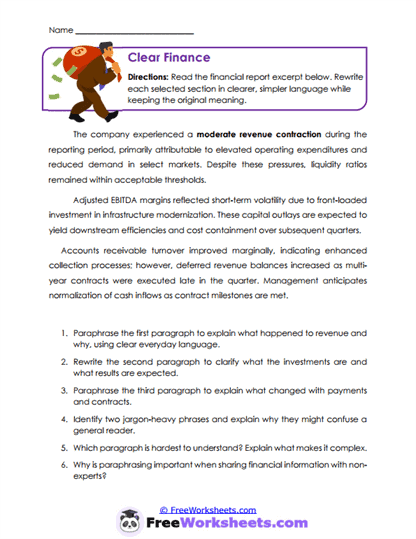
Clear Finance
- What Kids Do:
Students read a financial report and rewrite complex ideas in simpler language. They focus on keeping the meaning accurate. This builds understanding of difficult texts. - Target Skill:
Students improve paraphrasing skills by translating complex information into clear language. They learn to simplify without losing meaning. This supports comprehension and writing.
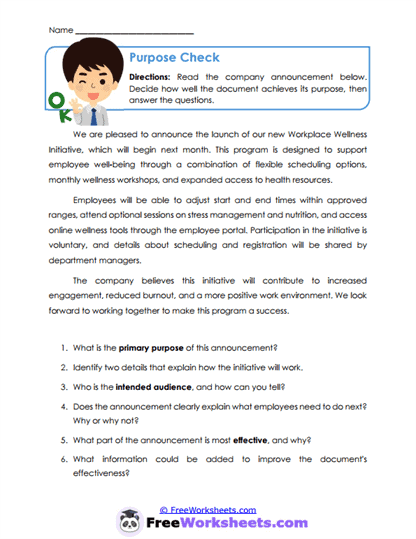
Purpose Check
- What Kids Do:
Students evaluate a workplace announcement and determine its purpose and effectiveness. They explain whether the message clearly communicates next steps. This builds critical thinking. - Target Skill:
Students strengthen their ability to analyze purpose and evaluate effectiveness. They learn how to judge communication quality. This supports real-world literacy.