
Pronouns Worksheets
11th Grade Grammar & Mechanics Pronouns worksheets help students master advanced pronoun usage through meaningful editing, revision, and writing practice. Every worksheet is free, ready-to-print in PDF format, and designed for immediate classroom use in schools, homeschool settings, tutoring sessions, or independent study. Students build curriculum-aligned skills in pronoun agreement, sentence revision, grammar analysis, and clear academic communication.
About This Collection of Worksheets
Strong writing depends on clear, accurate pronoun usage, and this collection gives students extensive practice with the concepts they are expected to master before graduating high school. Rather than isolating a single grammar rule, these printable worksheets expose learners to a wide variety of authentic editing situations that mirror the writing they encounter in essays, research papers, literary analysis, and college-preparatory assignments. Students learn how pronouns function within increasingly sophisticated sentence structures while developing the confidence to recognize and correct common errors independently.
The collection gradually builds from foundational agreement and pronoun case to more advanced topics such as compound antecedents, vague references, point of view consistency, inclusive language, and formal usage of who and whom. Students are encouraged to think critically about sentence meaning instead of relying on memorized rules alone. Many activities ask learners to explain their reasoning, compare possible revisions, or rewrite entire passages, helping them develop editing habits that transfer naturally into everyday academic writing.
Teachers will appreciate the variety of instructional options these worksheets provide. They can be used to introduce new grammar concepts, reinforce classroom lessons, review multiple standards before assessments, support intervention groups, or provide independent practice for students who need additional reinforcement. Because every worksheet emphasizes practical writing situations instead of isolated drills, students quickly recognize how proper pronoun usage improves clarity, strengthens arguments, and creates polished, professional communication across every subject area.
Paul’s Teacher Tip
One of the most effective ways to teach pronouns is to connect every grammar lesson directly to authentic student writing. After completing a worksheet, have students revisit a recent essay or journal entry and highlight every pronoun they used before checking each one for agreement, reference, consistency, and correct case. This simple editing routine helps students transfer isolated grammar practice into meaningful writing habits. You can also encourage partner discussions where students explain why a correction improves the sentence, since verbalizing grammar reasoning often leads to stronger long-term retention than simply identifying the correct answer. Over time, students become much more confident editors because they learn to notice pronoun problems naturally as they write.
Worksheet Collection Skill Spotlights
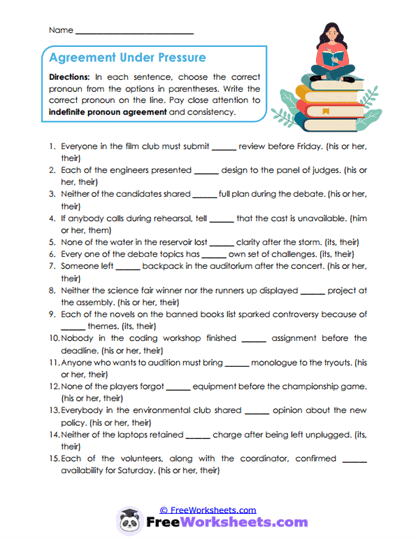
Agreement Focus
What Kids Do:
Students carefully examine sentences containing singular, plural, compound, and indefinite antecedents before selecting the pronoun that correctly matches each one. Instead of relying on instinct, they evaluate sentence structure, identify the controlling noun, and choose the grammatically accurate option while building confidence through realistic academic examples.
Target Skill:
Students strengthen their understanding of pronoun-antecedent agreement by analyzing sentence construction and applying grammar conventions expected in upper-level writing. This Common Core-aligned practice reinforces accurate language use, careful proofreading, and the ability to maintain grammatical consistency throughout formal written communication.
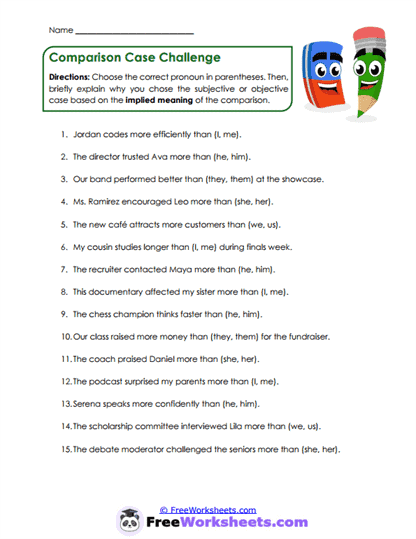
Case Comparison
What Kids Do:
Students analyze comparison sentences that include implied words and determine whether the missing structure requires a subjective or objective pronoun. They think beyond what sounds natural in conversation by expanding the sentence mentally before choosing and explaining the correct answer.
Target Skill:
Students develop advanced understanding of pronoun case while strengthening sentence analysis and logical reasoning. The exercises reinforce formal English conventions by requiring learners to evaluate grammatical function rather than relying on conversational habits, supporting stronger editing and academic writing performance.
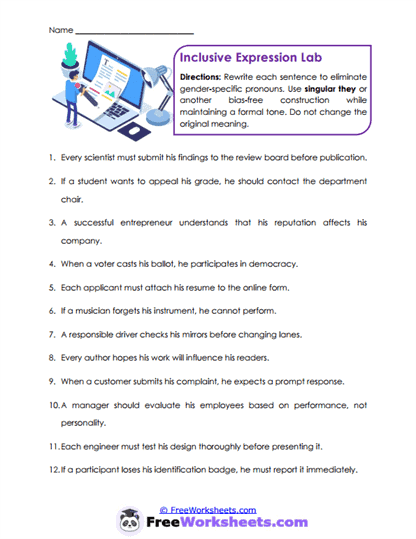
Inclusive Pronouns
What Kids Do:
Students revise sentences that contain gender-specific language by rewriting them with inclusive pronouns or alternative sentence structures that preserve the original meaning. They compare different revision strategies while improving sentence flow, readability, and professionalism.
Target Skill:
Students build effective revision skills by applying modern conventions for inclusive academic writing without sacrificing grammar or clarity. This practice strengthens editing abilities, audience awareness, and flexible sentence construction while reinforcing appropriate pronoun agreement.
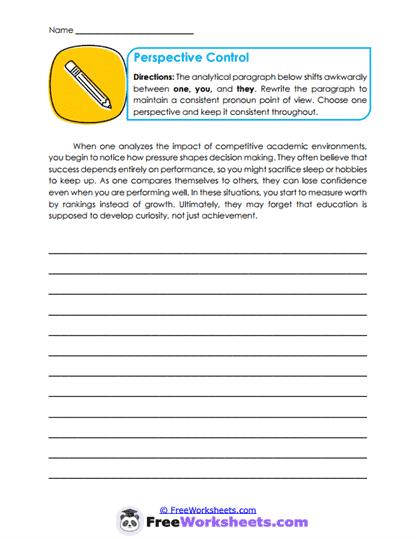
Perspective Control
What Kids Do:
Students read analytical paragraphs that shift awkwardly between first-, second-, and third-person perspectives before rewriting the passages using one consistent point of view. They evaluate how each revision improves readability and creates a more polished final draft.
Target Skill:
Students strengthen paragraph organization and maintain consistent perspective across extended writing. The activity reinforces revision strategies, coherent writing development, and the ability to produce clear academic compositions that follow accepted English language conventions.
Pronoun Complements
What Kids Do:
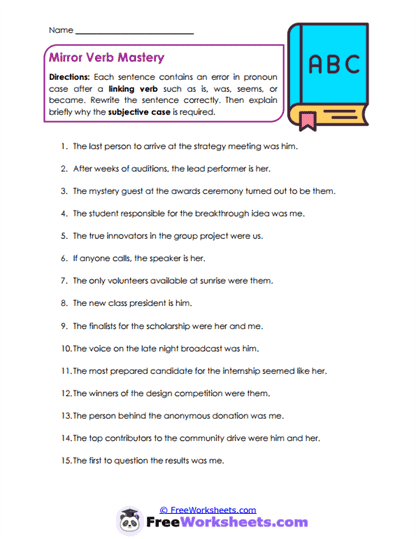
Students identify incorrect pronouns that appear after linking verbs and rewrite each sentence using the proper subject complement. They compare conversational English with formal written English while explaining why each correction is grammatically accurate.
Target Skill:
Students master advanced pronoun case by distinguishing linking verbs from action verbs and recognizing when subjective pronouns function as complements. This reinforces formal grammar knowledge and prepares students for more sophisticated editing tasks.
Pronoun Corrections
What Kids Do:
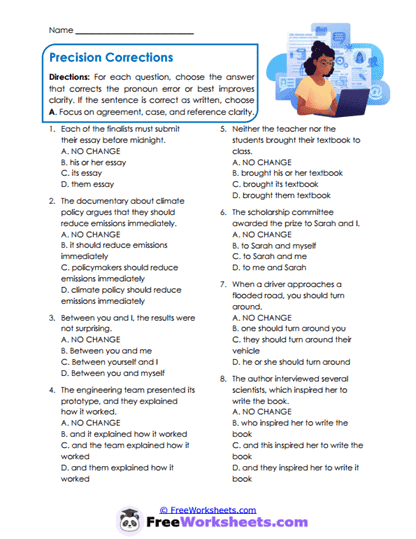
Students work through multiple-choice editing questions that require them to compare several possible revisions before selecting the strongest correction. Each question challenges them to evaluate agreement, reference, clarity, and pronoun case within authentic writing situations.
Target Skill:
Students integrate multiple grammar concepts while strengthening proofreading, editing, and decision-making skills. The cumulative review reinforces Common Core writing expectations by encouraging thoughtful evaluation of sentence effectiveness instead of memorizing isolated rules.
Pronoun Precision
What Kids Do:
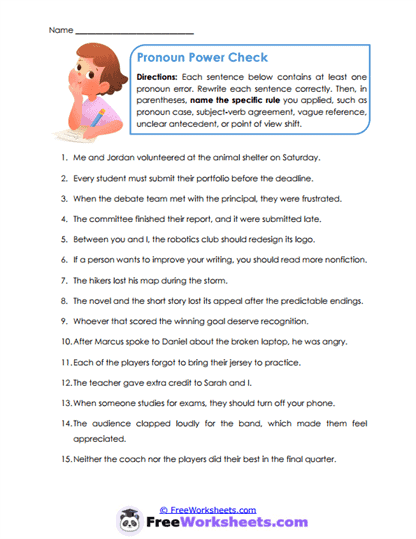
Students edit realistic sentences containing multiple types of pronoun mistakes, including vague references, agreement errors, incorrect case, and inconsistent point of view. They rewrite each sentence while explaining how the correction improves clarity and meaning.
Target Skill:
Students develop comprehensive editing skills by recognizing several categories of pronoun errors within authentic writing. This reinforces grammatical accuracy, analytical thinking, and the ability to revise independently for stronger academic communication.
Reference Credibility
What Kids Do:
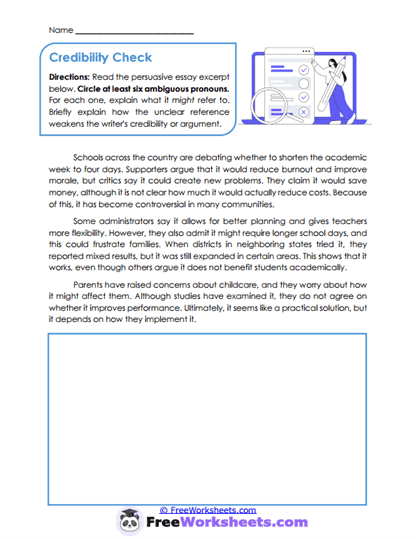
Students examine a persuasive passage, identify ambiguous pronouns, and explain how each unclear reference affects the strength of the author’s argument. They recommend revisions that make the writing more convincing and easier for readers to follow.
Target Skill:
Students connect grammar instruction with persuasive writing by evaluating how pronoun clarity influences credibility and reader understanding. This supports analytical reading, effective revision, and the production of well-organized academic arguments.
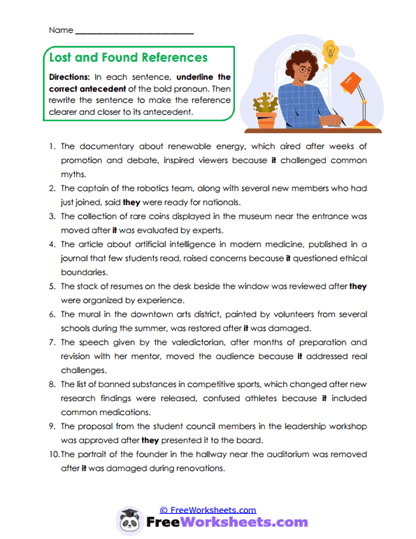
Reference Detective
What Kids Do:
Students investigate complex sentences by locating each pronoun’s correct antecedent before revising confusing references. They compare possible interpretations and determine which wording creates the clearest meaning for readers.
Target Skill:
Students improve sentence analysis by identifying precise antecedents and eliminating ambiguity from written communication. The activity strengthens revision habits, reading comprehension, and accurate use of pronouns in increasingly sophisticated texts.
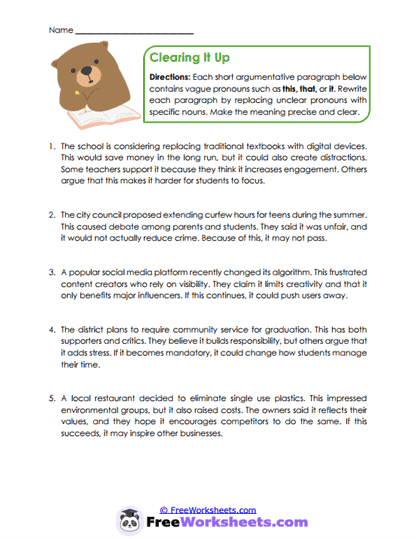
Reference Repair
What Kids Do:
Students revise short argumentative paragraphs by replacing vague pronouns with specific nouns whenever readers might become confused. They focus on preserving the author’s original ideas while improving organization, clarity, and overall readability.
Target Skill:
Students strengthen paragraph-level editing by ensuring every pronoun has a clear and identifiable antecedent. This practice reinforces precise language, coherent writing development, and effective revision strategies expected in advanced academic writing.
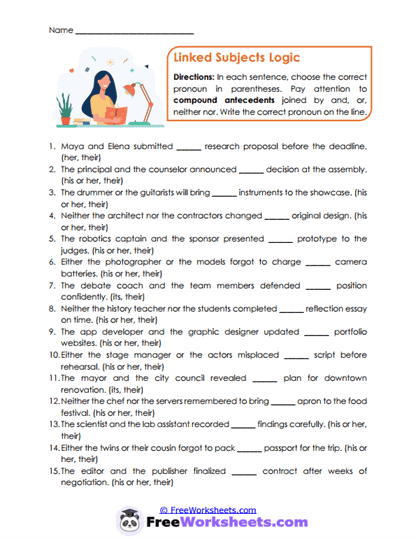
Subject Connections
What Kids Do:
Students analyze compound subjects joined by conjunctions such as and, or, either…or, and neither…nor before selecting the pronoun that correctly agrees with the controlling antecedent. Each activity encourages careful grammatical reasoning instead of quick guessing.
Target Skill:
Students build confidence interpreting complex sentence structures while mastering pronoun agreement involving compound antecedents. This strengthens grammar conventions, sentence analysis, and editing skills that support success in high school and college-level writing.
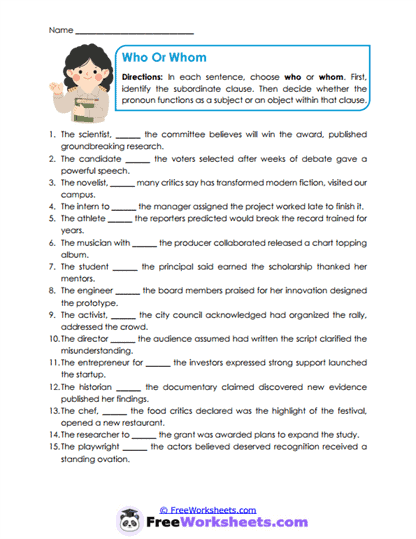
Who Whom
What Kids Do:
Students examine subordinate clauses to determine whether the missing pronoun functions as the subject or object before choosing between who and whom. Each sentence requires careful clause analysis and thoughtful application of formal grammar rules.
Target Skill:
Students reinforce advanced pronoun case by identifying grammatical function within dependent clauses. This Common Core-aligned practice strengthens sentence analysis, formal writing conventions, and the precision needed for college-ready communication.