
11th Grade Reading Passages Worksheets
These worksheets give students meaningful, real-world texts that build strong reading and thinking skills. These free, ready-to-print PDF worksheets are designed for immediate classroom use or easy at-home learning. Students develop skills like analyzing central ideas, evaluating arguments, tracking tone, and comparing perspectives.
About This Collection of Worksheets
This collection focuses on helping students read complex passages with deeper understanding. Each worksheet includes engaging texts on topics like freedom, technology, inequality, and personal growth. Students learn how authors develop ideas, use structure, and shape meaning through tone and language.
Students are guided to go beyond basic comprehension and begin analyzing how texts work. Many activities ask them to revise their thinking, compare viewpoints, and support answers with clear evidence. They also practice writing responses that explain ideas in an organized way. This builds strong habits for both reading and writing.
The worksheets are designed to build skills step-by-step, from identifying central ideas and vocabulary to analyzing arguments, tone shifts, and multiple texts together. Students also practice synthesis, perspective-taking, and evaluating how authors communicate ideas. These resources align with Grade 11 standards and prepare students for advanced academic work.
Paul’s Teacher Tip
At this level, encourage students to slow down and really think about what they are reading. The first read helps them understand the basics, but the second read is where deeper thinking happens. Ask questions like, “How is this idea built?” or “What is the author trying to convince me of?” If students get stuck, have them explain their thinking out loud before writing. Over time, this builds stronger and more confident readers.
Worksheet Collection Skill Spotlights
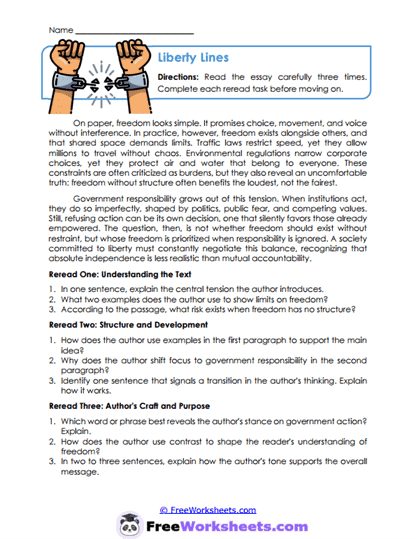
Liberty Lines
- What Kids Do:
Students read an essay and identify the central idea about freedom and responsibility. They analyze how examples and structure support that idea. This helps them understand deeper meaning. - Target Skill:
Students build skills in identifying central ideas and analyzing how they develop across a text. They learn how structure and tone support meaning. This supports advanced comprehension.
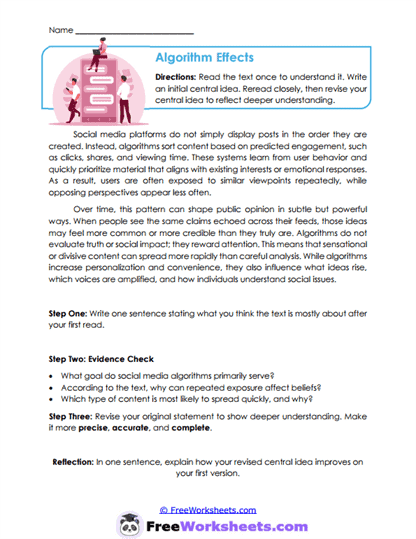
Algorithm Effects
- What Kids Do:
Students read about social media algorithms and revise their central idea after answering questions. They reflect on how their thinking changes with deeper reading. This builds stronger understanding. - Target Skill:
Students strengthen their ability to refine central ideas using evidence. They learn how rereading improves comprehension. This supports critical thinking.
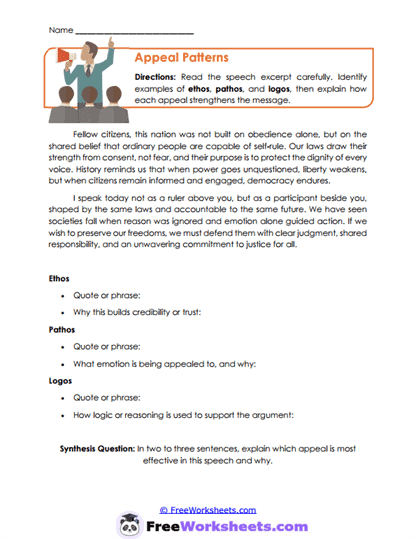
Appeal Patterns
- What Kids Do:
Students read a speech and identify examples of ethos, pathos, and logos. They explain how each appeal influences the audience. This builds awareness of persuasion. - Target Skill:
Students develop skills in analyzing rhetorical appeals and evaluating arguments. They learn how persuasion works in texts. This supports critical reading.
Resilience Arc
- What Kids Do:
Students track tone changes across a passage about personal growth. They identify key words that show emotional shifts. This helps them understand how tone develops. - Target Skill:
Students strengthen their ability to analyze tone shifts and connect them to meaning. They learn how emotions change across a text. This supports deeper comprehension.
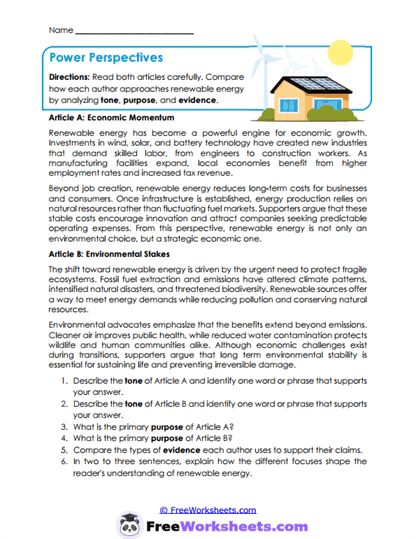
Power Perspectives
- What Kids Do:
Students compare two texts about renewable energy and analyze differences in tone, purpose, and evidence. They explain how each text shapes understanding. This builds comparison skills. - Target Skill:
Students develop skills in comparing texts and evaluating how authors present ideas differently. They learn to analyze multiple viewpoints. This supports advanced reading.
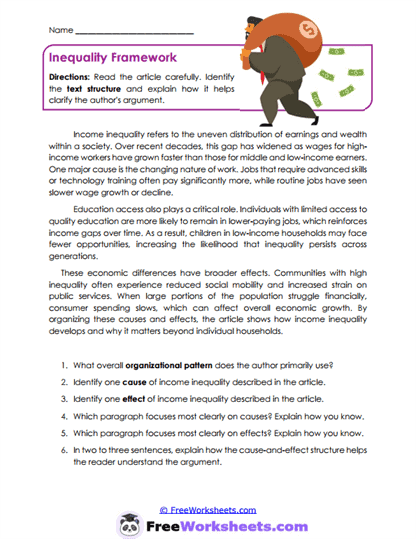
Inequality Framework
- What Kids Do:
Students identify cause-and-effect relationships in a passage about income inequality. They explain how ideas are connected. This helps them understand structure. - Target Skill:
Students build skills in analyzing informational text structure. They learn how cause-and-effect relationships shape meaning. This supports comprehension.
Purpose Pivot
- What Kids Do:
Students analyze how an author’s purpose shifts in an essay. They identify where the change happens and explain why. This builds deeper understanding. - Target Skill:
Students strengthen their ability to analyze author’s purpose and how it develops. They learn how structure supports argument. This supports critical thinking.
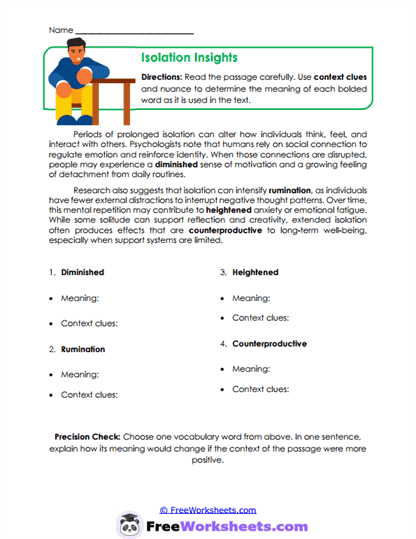
Isolation Insights
- What Kids Do:
Students use context clues to determine the meaning of vocabulary words in a passage. They explain how they found each meaning. This builds independence. - Target Skill:
Students develop vocabulary skills using context clues. They learn how word meaning supports comprehension. This supports reading fluency.
Voices Across Time
- What Kids Do:
Students read two texts about protest movements and combine ideas into a clear explanation. They analyze similarities and differences. This builds synthesis skills. - Target Skill:
Students strengthen their ability to synthesize information across texts. They learn how ideas connect over time. This supports advanced comprehension.
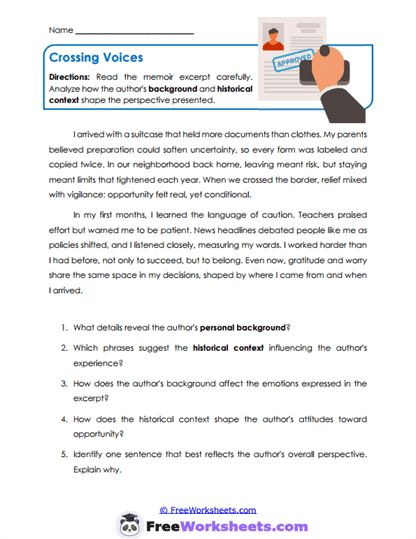
Crossing Voices
- What Kids Do:
Students analyze a memoir passage and explain how background and experience shape perspective. They connect details to emotion. This builds empathy and understanding. - Target Skill:
Students develop skills in analyzing point of view and context. They learn how experience shapes meaning. This supports deeper reading.
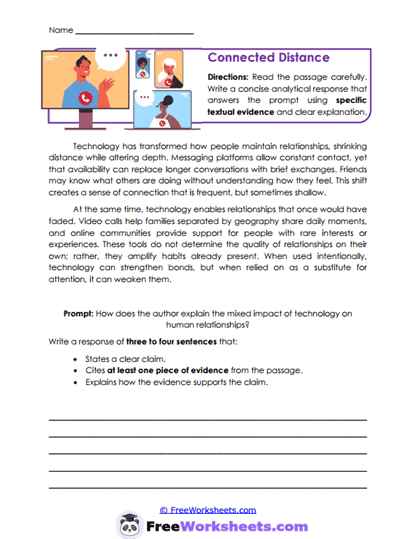
Connected Distance
- What Kids Do:
Students write an evidence-based response about a passage on technology and relationships. They make a claim and support it with details. This builds writing skills. - Target Skill:
Students improve their ability to write analytical responses using evidence. They learn to organize ideas clearly. This supports academic writing.
Shared Authority
- What Kids Do:
Students compare themes across two texts and explain similarities and differences. They support their answers with evidence. This builds higher-level thinking. - Target Skill:
Students develop skills in analyzing and comparing themes across texts. They learn how ideas are presented differently. This supports critical reading and analysis.