
Grade 11 Worksheets
This 11th grade printable worksheet collection is a comprehensive resource designed to support students as they transition into advanced academic work. Each worksheet promotes analytical thinking, structured reasoning, and clear communication across Language Arts, Mathematics, Science, and Social Studies. Carefully crafted to build confidence and independence, this collection helps students strengthen essential skills and prepare for senior-year expectations, college entrance assessments, and post-secondary success.
Grammar and Mechanics
Math
About This Collection of Worksheets
11th Grade is one of the most academically demanding years of high school. Students are expected to manage advanced coursework, analyze complex texts independently, write with stronger depth and precision, and prepare for college entrance exams, dual enrollment classes, and upper-level academic expectations.
This collection focuses on the skills juniors use most throughout the school year: rhetorical analysis, research writing, advanced grammar, Algebra II concepts, data interpretation, source evaluation, and evidence-based argumentation. The worksheets are designed to help students improve analytical thinking, academic writing fluency, and long-form reasoning across multiple subjects.
Students practice evaluating arguments, interpreting primary and secondary sources, analyzing author choices, organizing research-supported responses, and solving higher-level academic problems with greater independence. These printable worksheets help reinforce the discipline, focus, and academic stamina students need before entering senior-level coursework and post-secondary pathways.
Why Teachers Use This Collection
- Rhetorical analysis practice pages
- Evidence-based writing assignments
- Source evaluation skill reinforcement
- Advanced grammar review activities
- Algebra II concept support
- Research and citation practice
- SAT-style reading reinforcement
- Independent classroom work resources
- Low-prep academic review materials
- College readiness skill support
Why Homeschoolers & Parents Use This Collection
- 11th Grade academic reinforcement
- College-prep learning support
- Structured independent study practice
- Advanced writing skill development
- Critical reading skill review
- SAT and test prep support
- Printable daily review activities
- Screen-free academic practice
- Homework and tutoring resources
- Senior year readiness preparation
A Look at the Categories of Worksheets
Grammar and Mechanics
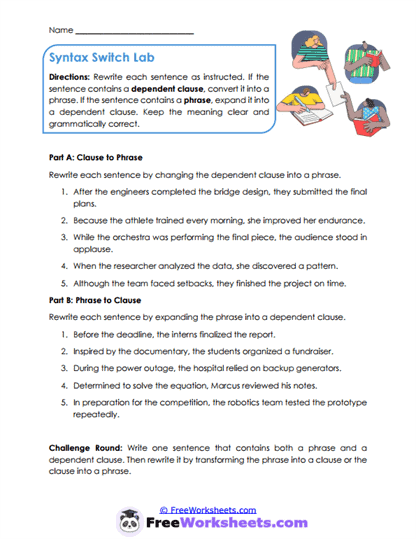
Phrases And Clauses
Understanding phrases and clauses helps students see how sentence parts work together to create clear and complete ideas. Encourage your child to identify the subject and verb first, then decide whether a group of words can stand alone as a complete thought. These worksheets strengthen sentence structure, grammar awareness, and writing clarity.
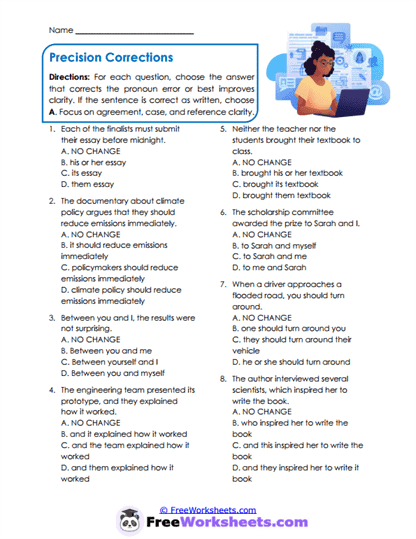
Pronouns
Pronouns help students avoid unnecessary repetition and make sentences sound smoother and more natural. A useful strategy is to have your child check that every pronoun clearly refers to the correct noun and agrees with it in number and person. These activities strengthen grammar accuracy, sentence flow, and editing skills.
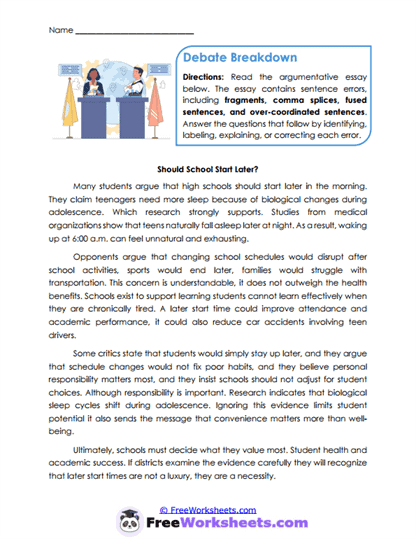
Sentences, Fragments, And Run-ons
Recognizing complete sentences, fragments, and run-ons helps students write ideas that are clear and easy to follow. Encourage your child to look for a complete subject and predicate, then check whether multiple ideas are joined correctly. These worksheets strengthen sentence construction, punctuation, and proofreading skills.
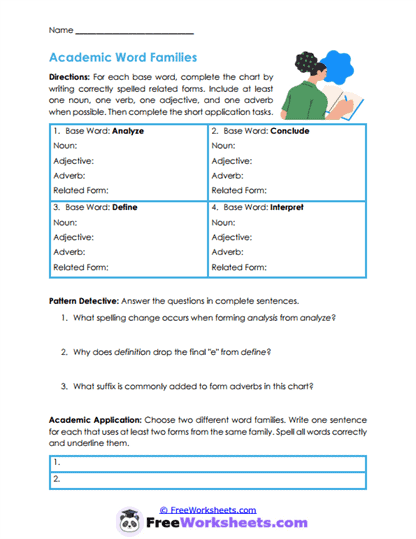
Spelling (Grade 11)
Strong spelling skills help students communicate clearly and present polished work in academic and professional settings. Encourage your child to study unfamiliar words by breaking them into roots, prefixes, suffixes, or smaller sound patterns. These activities strengthen vocabulary, editing accuracy, and overall writing confidence.
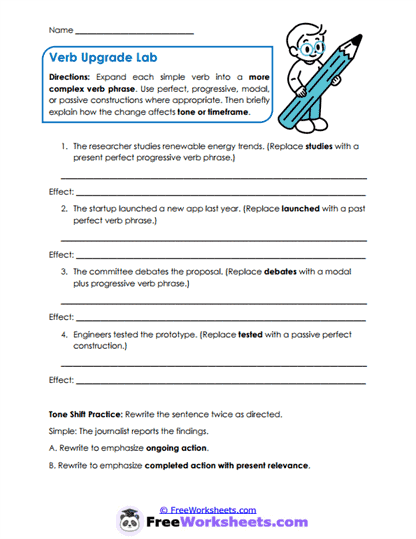
Verb Types
Understanding different verb types helps students recognize how actions, states of being, and helping words function within sentences. A helpful strategy is to have your child identify the main verb first and then look for any helping or linking verbs around it. These worksheets strengthen grammar knowledge, sentence analysis, and writing precision.
Math
Exponential And Logarithmic Equations
Exponential and logarithmic equations help students solve problems involving rapid growth, decay, and changing quantities. Encourage your child to rewrite expressions in equivalent exponential or logarithmic forms when an equation feels difficult to solve. These activities strengthen algebraic reasoning, equation-solving, and advanced function skills.
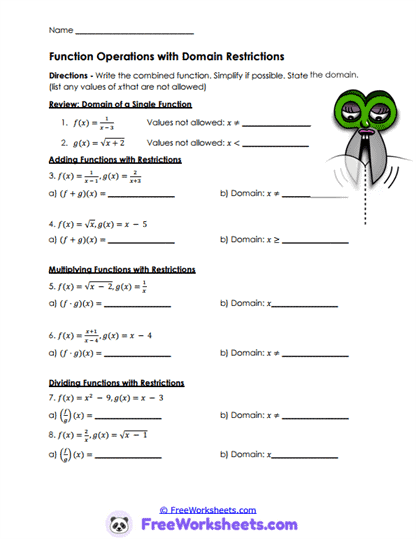
Function Operations
Function operations help students understand how different mathematical relationships can be combined and analyzed together. Encourage your child to work through one operation at a time and carefully track how each function changes. These activities strengthen algebraic reasoning, problem-solving, and advanced function analysis skills.
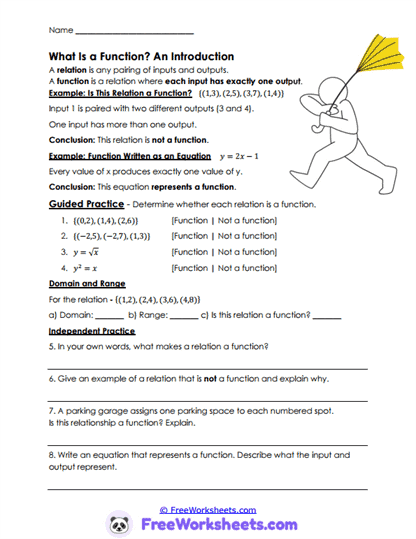
Functions And Relations
Understanding functions and relations helps students recognize how inputs and outputs are connected in mathematical systems. A helpful strategy is to use tables, graphs, and mapping diagrams together so your child can visualize the relationships more clearly. These worksheets strengthen analytical thinking, graph interpretation, and algebra readiness skills.
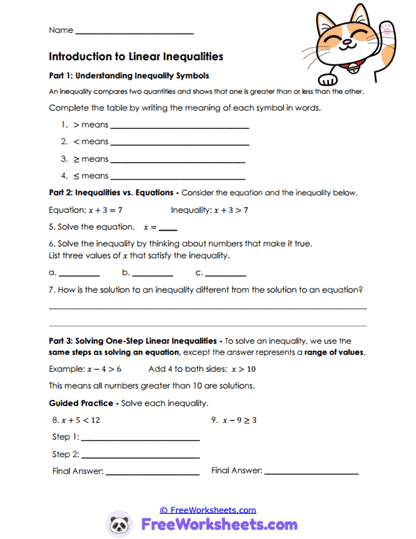
Linear Inequalities
Linear inequalities help students represent ranges of possible solutions and compare mathematical relationships visually. Encourage your child to graph solutions on a number line to better understand which values satisfy the inequality. These activities strengthen algebraic reasoning, graphing skills, and critical thinking abilities.
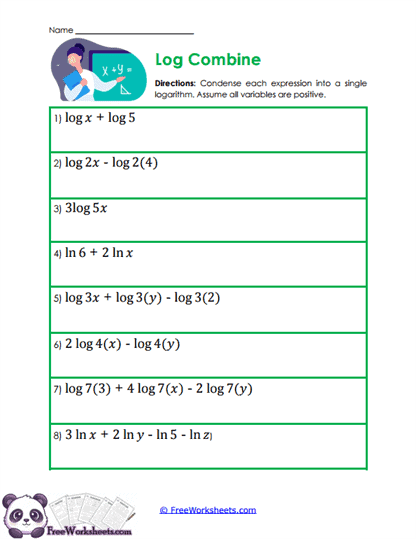
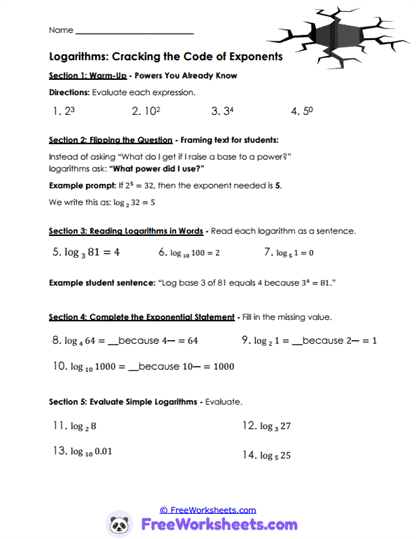
Logarithms
Understanding logarithms helps students work with exponential relationships commonly used in science, finance, and higher-level math. A useful strategy is to connect logarithms back to exponents first so your child can better understand how the operations relate. These worksheets strengthen algebraic thinking, mathematical reasoning, and problem-solving skills.
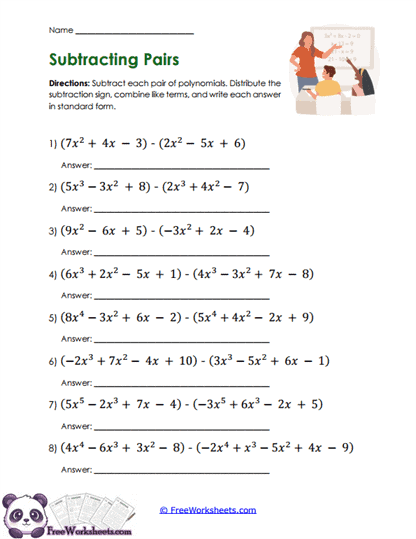
Polynomial Operations
Polynomial operations help students combine, simplify, multiply, and divide algebraic expressions with several terms. A helpful strategy is to work carefully with one term at a time while paying close attention to signs and exponents. These worksheets strengthen algebraic fluency, organization, and problem-solving skills.
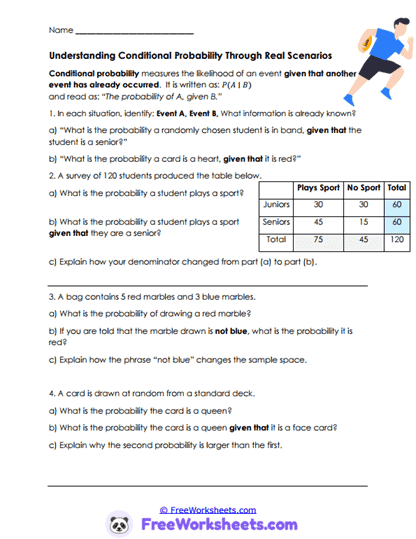
Probability
Probability helps students predict how likely events are to happen using logic and mathematical reasoning. Try discussing everyday examples like weather forecasts, games, or sports statistics to make probability feel more practical and relatable. These activities strengthen analytical thinking, data interpretation, and statistical reasoning skills.
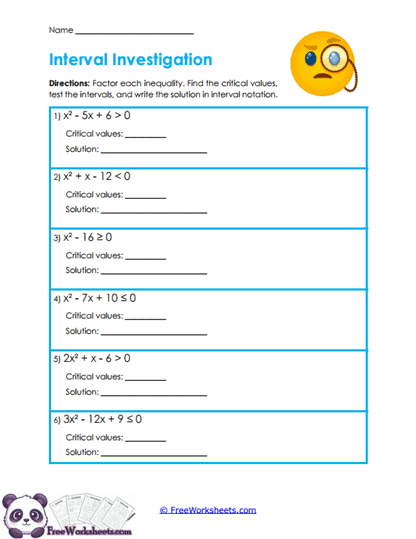
Quadratic Equations and Inequalities
Creating quadratic equations helps students understand how important features such as roots, vertices, and points can be used to build a function. Encourage your child to identify the information given first and then choose the quadratic form that makes the problem easiest to solve. These activities strengthen function modeling, algebraic reasoning, and equation-building skills.
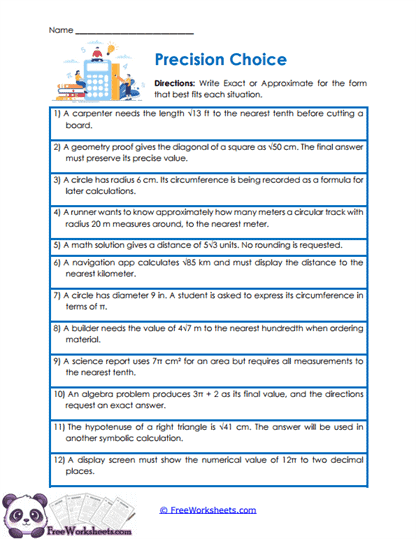
Real Numbers
Real numbers help students understand how rational and irrational numbers fit together within the larger number system. Try having your child classify, compare, and place different values on a number line to make these relationships easier to see. These worksheets strengthen number sense, mathematical reasoning, and skills needed for more advanced algebra.
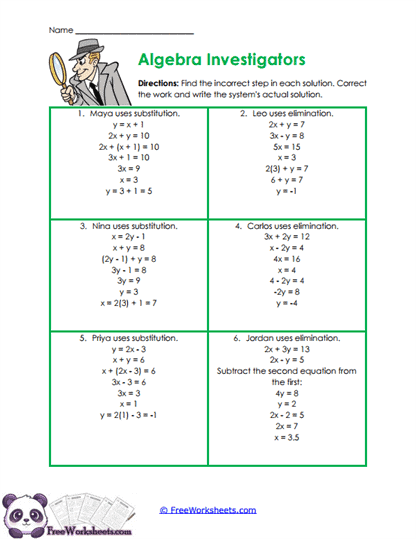
Systems Of Linear Equations
Systems of linear equations help students find values that satisfy two or more equations at the same time. Encourage your child to compare graphing, substitution, and elimination so they can recognize which method works best for a particular problem. These activities strengthen algebraic reasoning, strategic problem-solving, and equation-solving skills.
Reading
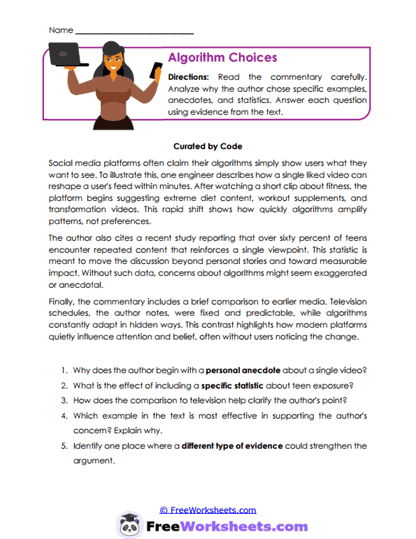
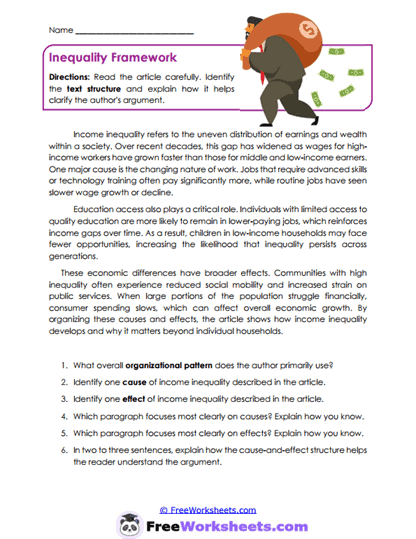
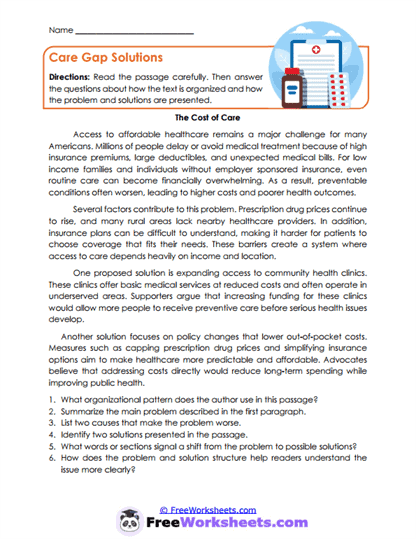
Analyzing Informational Texts
Analyzing informational texts helps students evaluate arguments, evidence, and real-world information more critically. Encourage your child to ask whether the author’s evidence is strong, reliable, and convincing while reading articles or essays. These worksheets strengthen nonfiction comprehension, analytical reasoning, and critical thinking skills.
Analyzing Literature
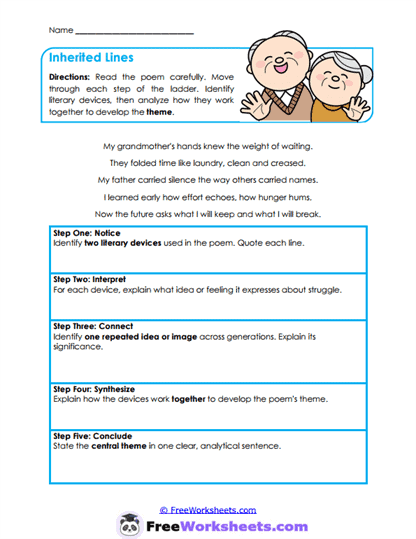
Analyzing literature helps students think more deeply about themes, character development, and author choices in complex texts. A helpful strategy is to ask your child how specific scenes or symbols connect to the overall meaning of the work. These activities strengthen literary analysis, comprehension, and evidence-based reasoning skills.
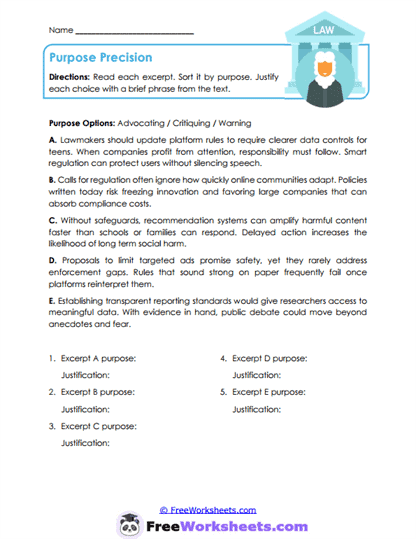
Audience, Purpose, And Tone
Recognizing audience, purpose, and tone helps students better understand how authors shape meaning for different readers and situations. Encourage your child to notice how word choice changes depending on whether a text is formal, persuasive, emotional, or informative. These worksheets strengthen communication awareness, text analysis, and comprehension skills.
Business Documents
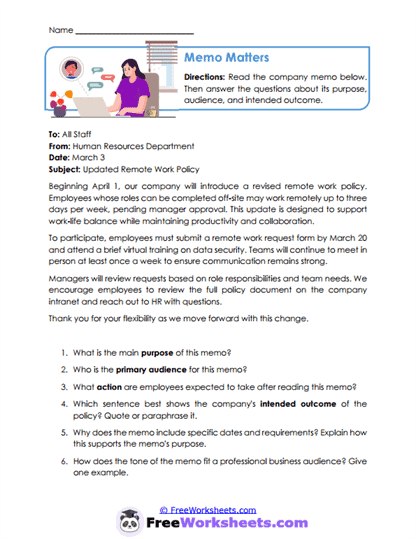
Understanding business documents helps students build practical literacy skills they will use in college, careers, and everyday life. Reviewing real-world examples like reports, emails, or memos together can help your child become more confident with formal communication. These activities strengthen workplace literacy, informational reading, and communication skills.
Grade 11 Reading Comprehension
Strong comprehension skills help students analyze complex ideas, draw conclusions, and support answers with evidence from the text. Encourage your child to underline key details and explain how they support the author’s message while reading. These worksheets strengthen analytical thinking, evidence-based reasoning, and advanced comprehension skills.
Grade 11 Reading Passages
Reading challenging passages helps students build stamina and confidence with a variety of writing styles and topics. A great strategy is to pause after each section and summarize the main point before moving on. These activities strengthen vocabulary, comprehension, and critical reading skills.
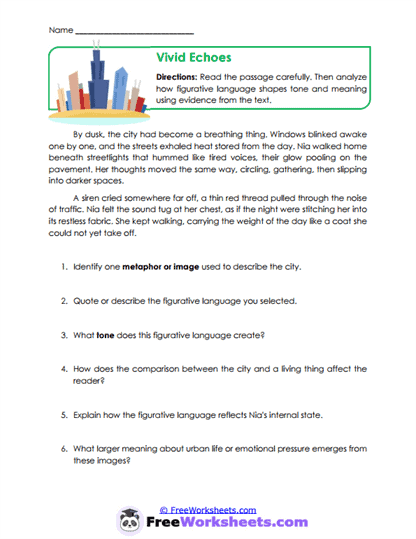
Literary Devices
Understanding literary devices helps students recognize how authors create symbolism, emotion, and deeper meaning in writing. Point out examples of irony, imagery, or figurative language while reading together to make these concepts easier to understand. These worksheets strengthen literary analysis, figurative language, and comprehension skills.
Main Idea
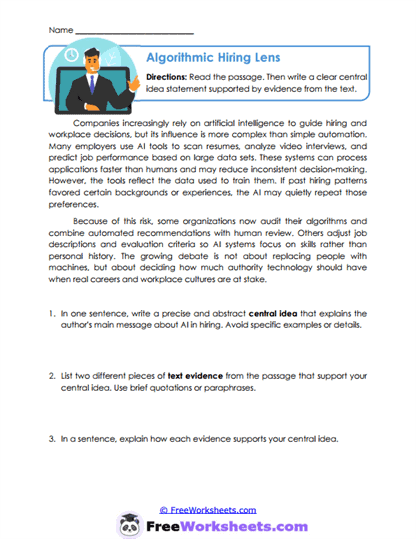
Finding the main idea helps students focus on the author’s central argument or message instead of getting lost in details. Ask your child, “What is the author mainly trying to explain, prove, or communicate here?” after reading each section. These activities strengthen summarizing, comprehension, and organizational thinking skills.
Nonfiction Book Study
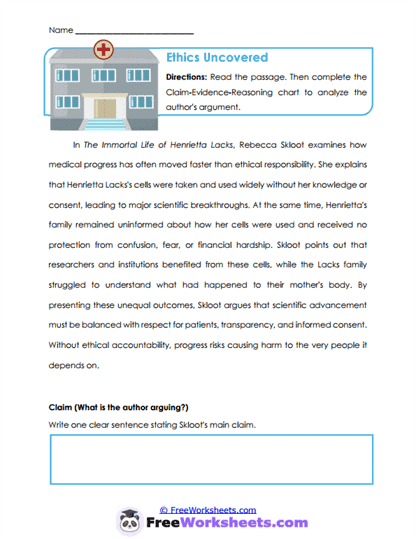
Studying nonfiction books helps students evaluate ideas, analyze arguments, and better understand complex real-world topics. Encourage your child to take notes on important claims and supporting evidence while reading. These worksheets strengthen nonfiction comprehension, research, and analytical thinking skills.
Novel Study
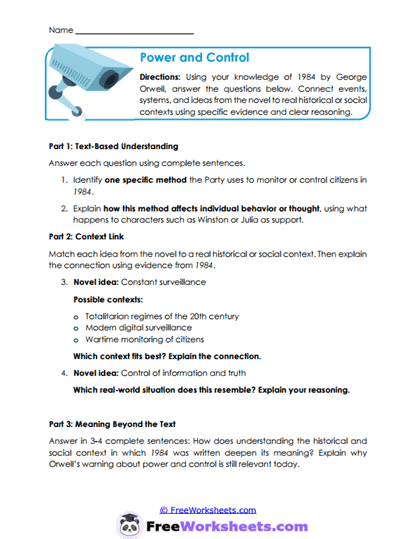
Novel studies help students explore character development, themes, and important story events across longer texts. A helpful strategy is to discuss how characters change over time and what larger message the author may want readers to understand. These activities strengthen literary analysis, comprehension, and discussion skills.