
About This Worksheet
This worksheet is a great opportunity for students to practice sequencing and really understanding how events unfold over time. A teacher might explain to a parent, “We’re helping students see that stories and informational texts both follow a path-and understanding that path makes everything clearer.” It’s designed for Grade 6 students to track the order of events and explain how each step connects. For example, students follow a journey and explain what happened first, next, and last.
Curriculum and Grade Alignment
This activity aligns with CCSS.ELA-LITERACY.RI.6.3, focusing on analyzing how events develop over time. A teacher might say, “Students are learning that understanding sequence helps them understand meaning.” This builds strong comprehension and organization skills. It also supports both narrative and informational reading.
Student Tasks
On this worksheet, students will read a passage about a long journey or process. A teacher might explain, “They’ll identify key events and place them in the correct order.” Students also explain how one event leads to the next. This helps them connect ideas logically.
Common Challenges and Misconceptions
Students may list events without putting them in the correct order. A teacher might note, “They’ll remember details but not organize them correctly.” Another challenge is explaining connections between steps. Teachers can support students by asking, “What happened because of this?”
Implementation Guidance
In the classroom, this worksheet works really well with graphic organizers. A teacher might say, “We often map the sequence visually before writing.” At home, parents can support by asking their child to retell the passage in order. This reinforces the skill naturally.
Details and Features
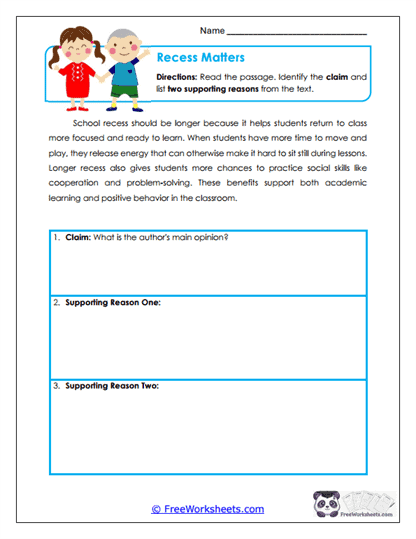
The worksheet includes a clear passage and structured sections for sequencing. A teacher might point out, “It helps students organize their thinking in a very concrete way.” The format supports step-by-step understanding. It is easy to print and use anywhere.