
Text Structure Worksheets
6th Grade reading text structure worksheets help students understand how authors organize informational texts to communicate ideas clearly and effectively. Free, ready-to-print worksheets are available in PDF format for immediate classroom use and independent practice. Students strengthen skills such as identifying organizational patterns, analyzing signal words, evaluating author's purpose, and explaining how structure supports meaning.
About This Collection of Worksheets
Understanding text structure is one of the most important skills for reading nonfiction successfully. Authors carefully organize information to help readers understand relationships between ideas, events, problems, solutions, comparisons, and processes. This collection helps students recognize common organizational patterns and understand why writers choose specific structures to communicate information effectively.
The worksheets provide practice with major informational text structures, including sequence, cause and effect, compare and contrast, problem and solution, and description. Students learn to identify signal words, analyze organizational patterns, evaluate author choices, and support conclusions with textual evidence. As texts become more complex, these skills help readers navigate challenging informational materials with greater confidence and accuracy.
Teachers, parents, and homeschool educators can use these resources to support reading instruction across language arts, science, social studies, and research-based learning. Each worksheet focuses on a specific aspect of text organization while encouraging critical thinking and close reading. Together, these activities help students become more strategic readers who understand not only what an author says, but how and why information is organized.
Paul’s Teacher Tip
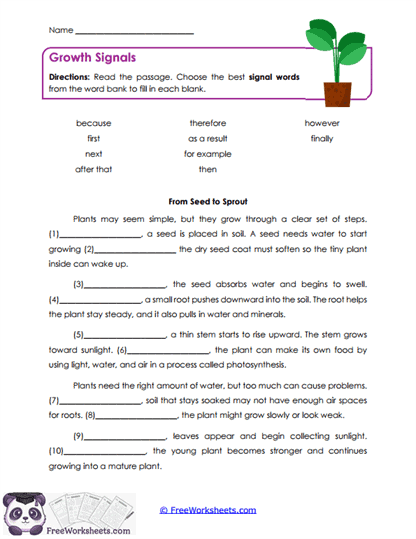
One of the biggest mistakes students make when identifying text structure is focusing only on signal words. While words such as because, however, first, and therefore provide valuable clues, they do not always tell the whole story. Encourage students to ask themselves, “How is the author organizing the ideas?” before selecting a structure. It can also be helpful to have students summarize the relationship between ideas in a passage before identifying the organizational pattern. The more students practice looking at the overall structure rather than isolated words, the stronger their nonfiction reading skills will become.
Worksheet Collection Skill Spotlights
Comparison Connections
- What Kids Do:
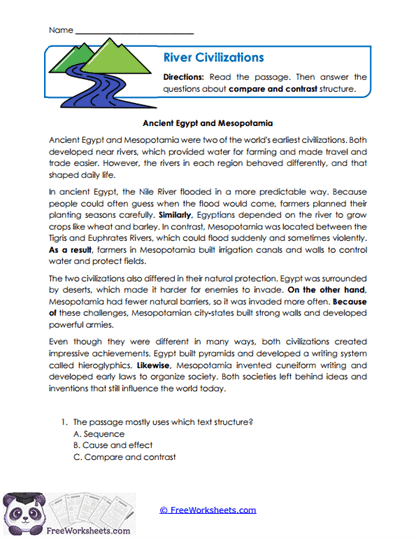
Students read an informational passage comparing Ancient Egypt and Mesopotamia. They identify similarities and differences, analyze organizational patterns, and examine how comparison helps readers better understand both civilizations. - Target Skill:
Students strengthen compare-and-contrast analysis skills by identifying relationships between ideas and evaluating how authors organize comparisons.
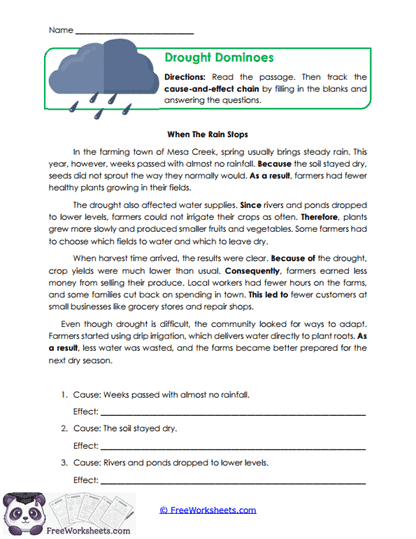
Effect Chains
- What Kids Do:
Students trace a chain of events in a passage about drought conditions. They identify causes, immediate effects, and long-term consequences while explaining how one event leads to another. - Target Skill:
Students develop a deeper understanding of cause-and-effect relationships and learn how authors organize complex chains of outcomes.
Martian Mapping
- What Kids Do:
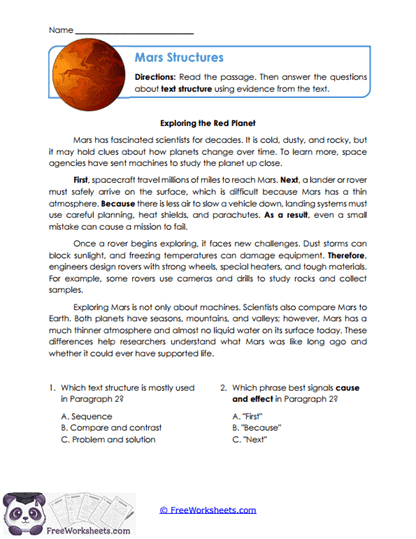
Students read a science passage about Mars exploration and identify how the author uses sequence structure to explain discoveries and exploration efforts. They analyze signal words and organizational patterns. - Target Skill:
Students strengthen sequence-analysis skills by examining how chronological organization helps explain scientific processes.
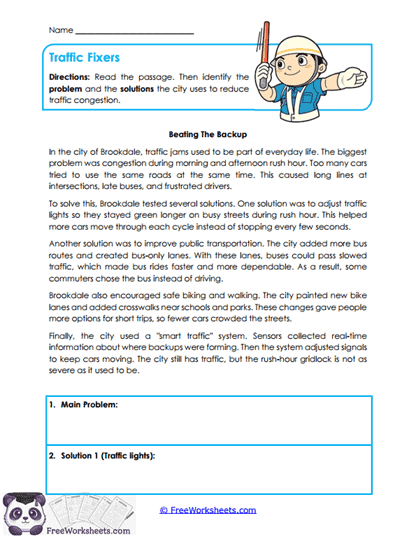
Problem Solvers
- What Kids Do:
Students analyze a nonfiction passage about traffic congestion and identify the main problem, proposed solutions, and resulting outcomes. They evaluate which solutions appear most effective. - Target Skill:
Students build problem-and-solution analysis skills by connecting challenges, actions, and results within informational texts.
Purpose Patterns
- What Kids Do:
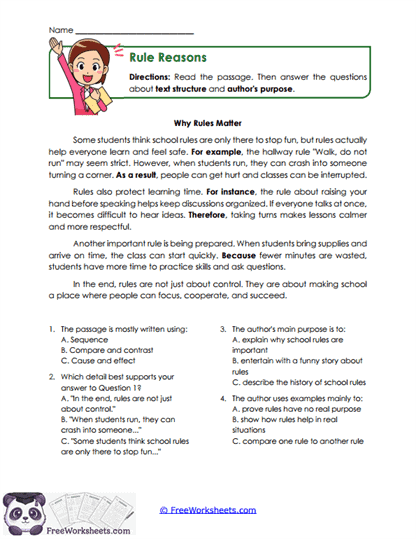
Students examine how an author organizes information about school rules and determine how text structure supports the author’s purpose. They evaluate examples, explanations, and supporting details. - Target Skill:
Students strengthen their ability to connect organizational patterns with author intent and overall message.
Sequence Detectives
- What Kids Do:
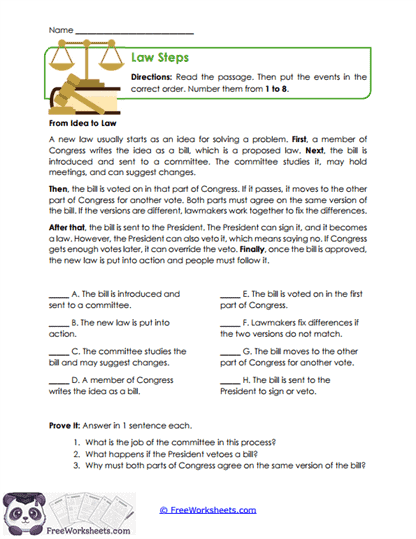
Students read a passage explaining how a bill becomes a law and place events in the correct order. They identify chronological relationships and explain the importance of each step. - Target Skill:
Students develop sequencing and procedural-reading skills by analyzing chronological structures in informational texts.
Signal Sleuths
- What Kids Do:
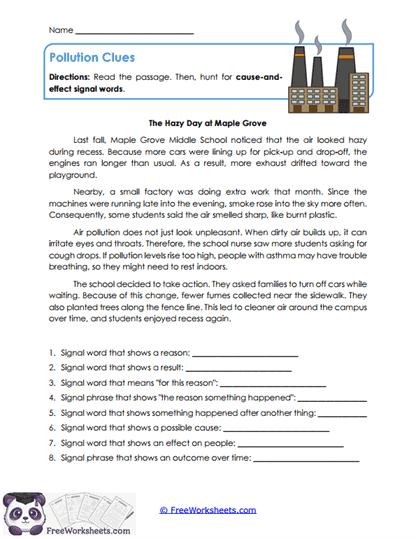
Students identify signal words and phrases in a passage about air pollution. They determine whether the words indicate causes, effects, reasons, or results and explain their significance. - Target Skill:
Students strengthen their ability to recognize signal words and use them to identify cause-and-effect relationships.
Structure Builders
- What Kids Do:
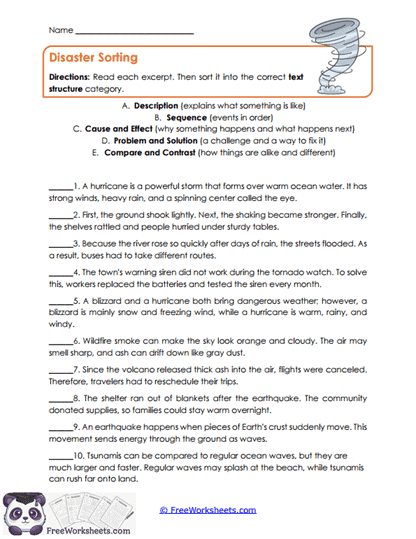
Students read multiple nonfiction passages and classify each according to its organizational pattern. They identify clues that reveal sequence, description, compare and contrast, cause and effect, or problem and solution structures. - Target Skill:
Students build foundational text structure recognition skills across a variety of nonfiction formats.
Structure Masters
- What Kids Do:
Students apply everything they have learned about informational text structures by analyzing passages, identifying organizational patterns, and supporting conclusions with evidence. - Target Skill:
Students strengthen advanced text structure analysis skills by evaluating how authors organize information across multiple formats.
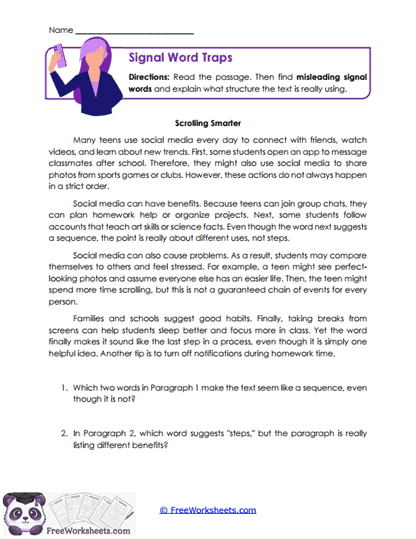
Structure Sleuths
- What Kids Do:
Students examine passages that contain potentially misleading signal words and determine the actual organizational structure. They evaluate how ideas are truly connected rather than relying on isolated clues. - Target Skill:
Students develop higher-level analytical reading skills by distinguishing between signal words and overall text organization.
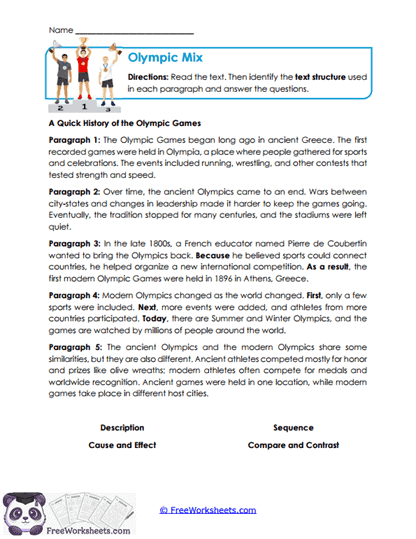
Structure Spotters
- What Kids Do:
Students read a passage about the Olympic Games and identify different text structures used across multiple paragraphs. They analyze how organizational patterns shift throughout the article. - Target Skill:
Students strengthen their ability to recognize multiple text structures within a single informational text.
Structure Switches
- What Kids Do:
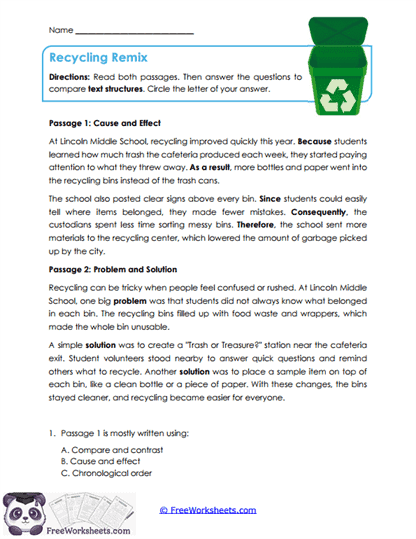
Students compare a cause-and-effect passage with a problem-and-solution passage. They identify organizational differences and explain how each structure helps communicate information. - Target Skill:
Students build deeper understanding of commonly confused text structures by comparing them side by side.