
Visual Elements Worksheets
6th Grade reading visual elements worksheets help students understand how photographs, diagrams, charts, graphs, captions, and other visuals contribute to meaning in informational and literary texts. Free, ready-to-print worksheets are available in PDF format for immediate classroom use and independent practice. Students strengthen skills such as interpreting visual information, making evidence-based inferences, analyzing diagrams, and evaluating how visuals support written text.
About This Collection of Worksheets
Visual elements are an essential part of modern reading. From science textbooks and news articles to websites and informational books, readers regularly encounter photographs, graphs, diagrams, captions, and other visual features that communicate important information. This collection helps students develop the skills needed to interpret these visuals thoughtfully and connect them to the written content they support.
The worksheets provide practice with a wide range of visual literacy skills, including analyzing photographs, interpreting charts and graphs, comparing visual formats, making inferences from images, evaluating captions, understanding diagrams, and creating visual representations of information. Students learn that visuals are more than decorations-they are valuable sources of information that help readers understand complex ideas, identify patterns, and strengthen comprehension.
Teachers, parents, and homeschool educators can use these resources to support reading instruction across multiple subject areas, including language arts, science, social studies, and technical reading. Each worksheet focuses on a specific visual-analysis skill while encouraging close observation, critical thinking, and evidence-based reasoning. Together, these activities help students become stronger readers who can gather and evaluate information from multiple sources.
Paul’s Teacher Tip
One of the best ways to improve visual literacy is to encourage students to slow down and study visuals with the same attention they give written text. Ask questions such as, “What information does this visual provide?” and “What can I learn from the image that the text doesn’t tell me directly?” Many students glance at photographs and diagrams without fully analyzing them. Teaching students to look for patterns, details, relationships, and evidence helps them develop stronger comprehension skills across all subject areas. The more students practice treating visuals as important sources of information, the more confident they become when reading complex nonfiction texts.
Worksheet Collection Skill Spotlights
Camouflage Clues
- What Kids Do:
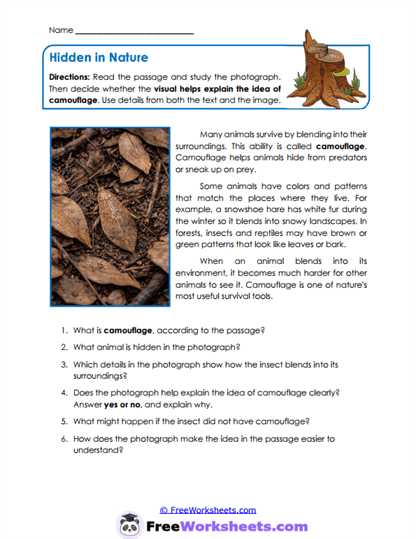
Students read an informational passage about camouflage and examine a photograph showing an animal blending into its environment. They analyze how the visual supports the scientific explanation and helps clarify the concept. - Target Skill:
Students strengthen their ability to connect visual evidence to informational text and explain how photographs support scientific understanding.
Caption Clues
- What Kids Do:
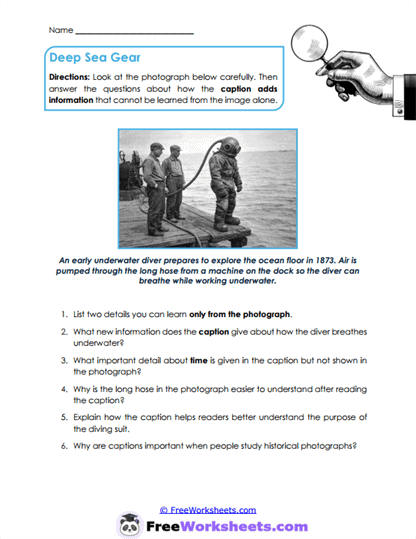
Students study a historical photograph of an underwater diver and analyze the accompanying caption. They compare information provided by the image and the caption to develop a more complete understanding of the topic. - Target Skill:
Students learn how captions contribute information that cannot always be gathered from visuals alone.
Caption Writers
- What Kids Do:
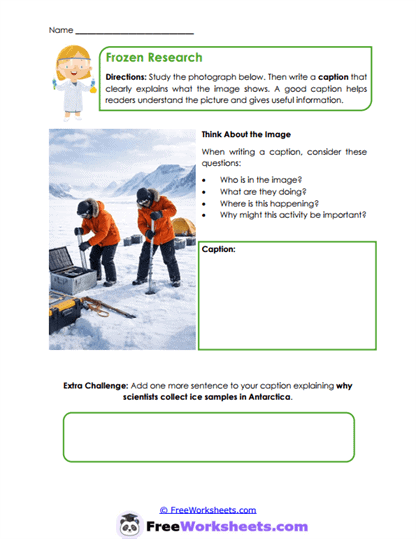
Students examine a photograph of scientists collecting ice samples and create their own informative caption. They add context, explanation, and important details that support reader understanding. - Target Skill:
Students strengthen visual-analysis and informational-writing skills by creating meaningful captions.
Chart Detective
- What Kids Do:
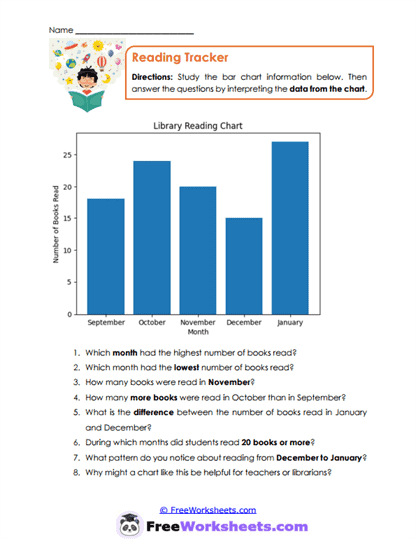
Students analyze a library reading chart and answer questions about trends, comparisons, and data patterns. They use evidence from the chart to support conclusions. - Target Skill:
Students develop graph-reading and data-interpretation skills while learning how charts communicate information visually.
Diagram Differences
- What Kids Do:
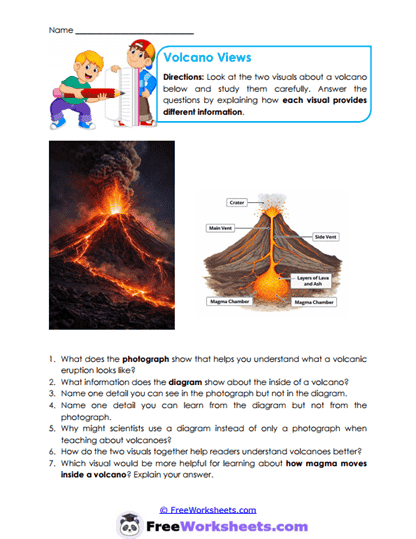
Students compare a photograph of an erupting volcano with a scientific diagram showing internal volcanic structures. They evaluate what each visual teaches and how the visuals work together. - Target Skill:
Students strengthen visual-comparison skills and learn how different visual formats communicate different types of information.
Graph Questions
- What Kids Do:
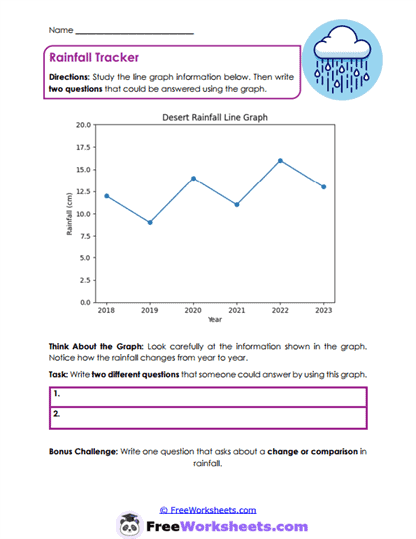
Students study rainfall data presented in a line graph and create their own questions based on observed trends and patterns. They use visual evidence to guide inquiry. - Target Skill:
Students build analytical thinking skills by generating meaningful questions from visual data.
Mystery Mood
- What Kids Do:
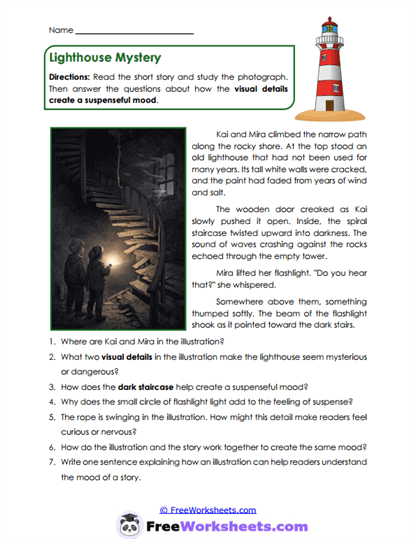
Students read a suspenseful story and analyze an illustration of an abandoned lighthouse. They examine how visual details contribute to mood, atmosphere, and reader emotions. - Target Skill:
Students develop literary-analysis skills by evaluating how illustrations influence mood and support storytelling.
Process Mapping
- What Kids Do:
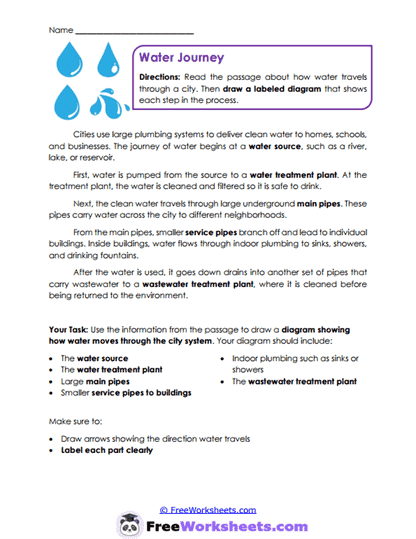
Students read about a city’s water system and create a diagram that visually represents the process. They organize information into a clear sequence and explain connections between stages. - Target Skill:
Students strengthen sequencing and organizational skills by transforming written information into visual form.
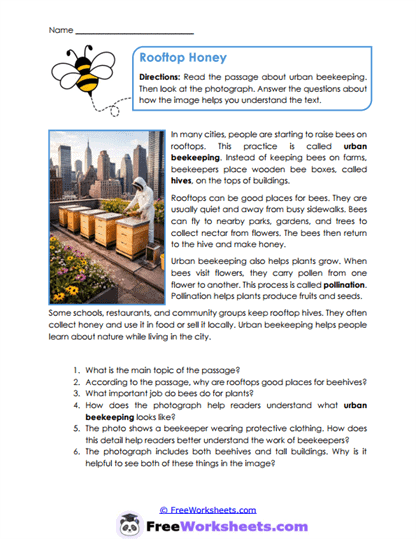
Urban Beekeeping
- What Kids Do:
Students read an informational passage about rooftop beekeeping and study a supporting photograph. They analyze how the image contributes to understanding the topic and provides additional details. - Target Skill:
Students learn how photographs enhance nonfiction comprehension by illustrating real-world examples.
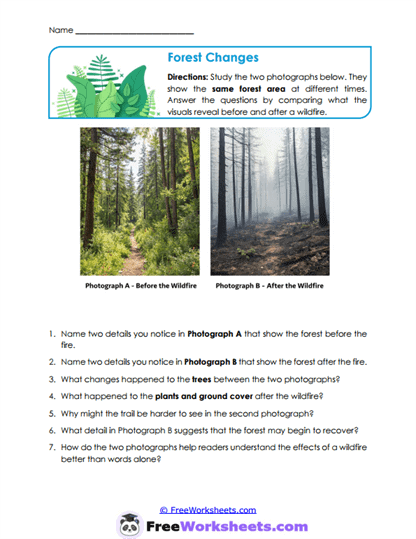
Visual Comparisons
- What Kids Do:
Students compare before-and-after photographs of a forest affected by wildfire. They identify differences, draw conclusions, and explain how visual evidence reveals environmental change. - Target Skill:
Students strengthen observation and comparison skills by analyzing changes shown through photographs.
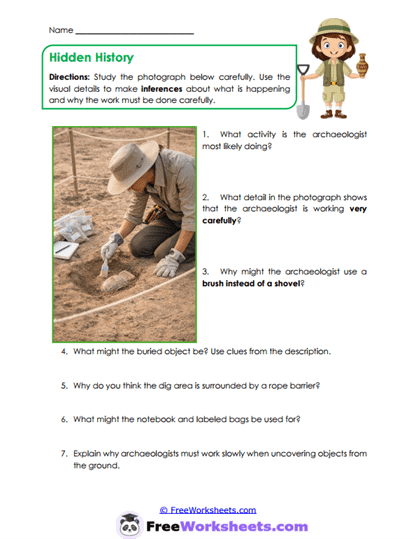
Visual Inferences
- What Kids Do:
Students study a photograph of an archaeologist at a dig site and make evidence-based inferences about the work being conducted. They support conclusions with visual details. - Target Skill:
Students build inference skills by combining observation and reasoning to interpret visual information.
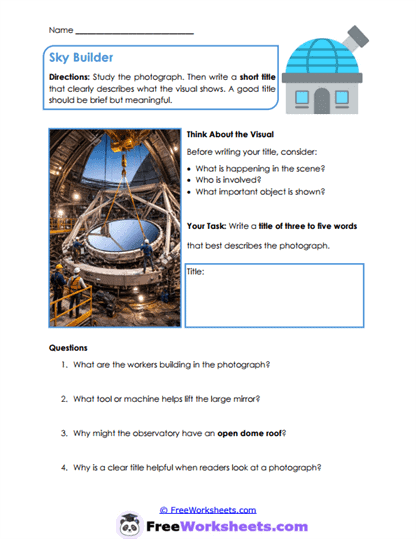
Visual Titles
- What Kids Do:
Students examine a photograph of workers constructing an observatory telescope and create a concise title that captures the image’s central idea. They summarize visual information using precise language. - Target Skill:
Students strengthen summarization and visual-analysis skills by identifying and communicating the main idea of an image.