
Analyzing Literature Worksheets
6th Grade Reading Analyzing Literature worksheets help students break down stories and understand how texts really work. These free, ready-to-print worksheets come in PDF format and are perfect for immediate classroom use. Students strengthen skills like identifying plot structure, analyzing character development, and citing text evidence aligned to curriculum standards.
About This Collection of Worksheets
This collection is designed to help sixth graders move beyond just reading a story and begin truly analyzing it. Each worksheet focuses on a key part of literary understanding, such as plot, character emotions, conflict, or theme. The passages are engaging and relatable, making it easier for students to stay focused while building important thinking skills.
You’ll notice that the activities gradually increase in complexity. Students might begin by identifying basic elements like setting and characters, then move into deeper tasks like explaining how events build tension or how a character changes over time. This structure helps build confidence while still challenging students to think critically.
These worksheets are also very flexible. Teachers can use them for whole-group lessons, small group instruction, or independent practice. Parents will find them helpful for reinforcing school learning at home, especially when guiding conversations about stories and encouraging kids to explain their thinking out loud.
Paul’s Teacher Tip
One of the best ways to use these worksheets is to slow students down during reading. Encourage them to pause after key moments and ask, “What just happened, and why does it matter?” This helps them shift from passive reading to active thinking. I also recommend having students underline or highlight evidence before answering questions-it makes their responses much stronger. If you’re working with a group, try modeling one example together before letting students work independently. And at home, simple conversations like “Why do you think the character did that?” can go a long way in building deeper understanding.
Worksheet Collection Skill Spotlights
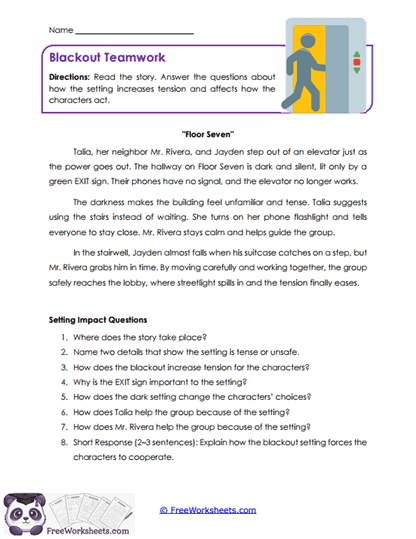
Blackout Teamwork
- What Kids Do:
Students read a suspenseful story set during a blackout and focus closely on how the environment shapes what characters think, feel, and do. They identify descriptive details that build tension, explain how those details influence decisions, and reflect on how teamwork develops under pressure. - Target Skill:
Students develop the ability to analyze how setting contributes to mood and influences character behavior. This aligns with Common Core expectations for explaining how plot unfolds and how specific elements like setting impact events and character responses.
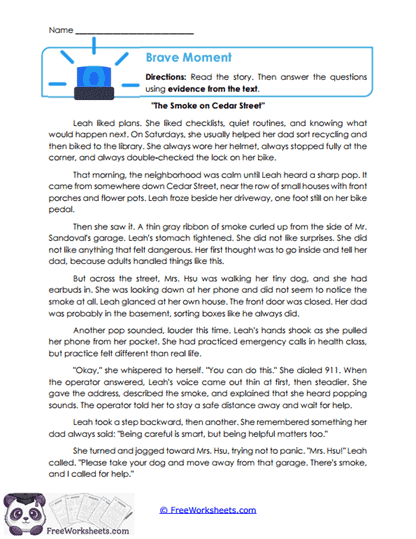
Brave Moment
- What Kids Do:
Students explore a story where a character faces a tense situation and must make a decision. They examine specific actions, connect those actions to character traits, and explain how small choices reveal deeper qualities like courage and responsibility. - Target Skill:
Students strengthen their ability to analyze character responses to challenges and explain how those responses move the story forward. This supports Common Core standards focused on understanding character development through actions and decisions.
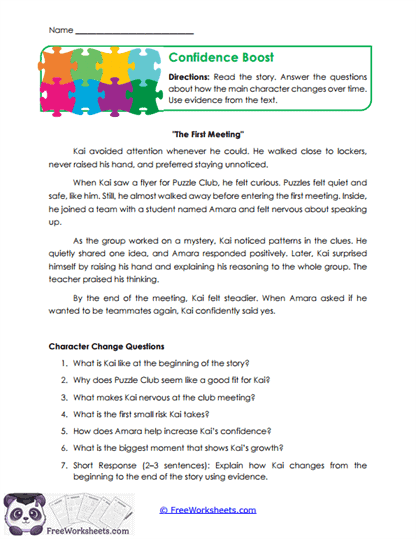
Confidence Boost
- What Kids Do:
Students track a character’s journey from uncertainty to confidence by identifying key moments of change. They describe how the character begins, what events influence growth, and how actions and dialogue reveal development across the story. - Target Skill:
Students build skills in analyzing how characters evolve over time, using evidence from the text to explain growth. This directly supports Common Core expectations for describing how plot events shape character development.
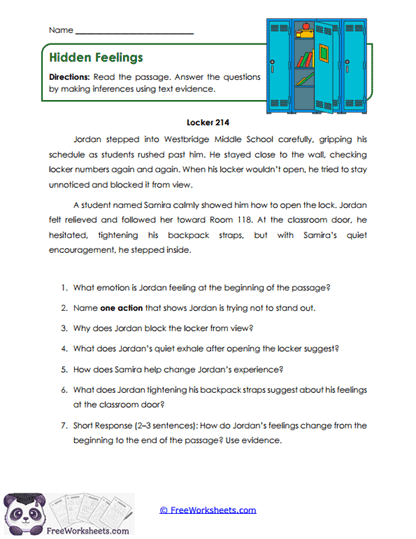
Hidden Feelings
- What Kids Do:
Students read a passage about a new school experience and look for subtle clues that reveal how a character feels. They examine actions, dialogue, and body language, then support their ideas with specific evidence from the text. - Target Skill:
Students improve their ability to make inferences and cite textual evidence when explaining character emotions. This aligns with Common Core standards that emphasize careful reading and evidence-based analysis.
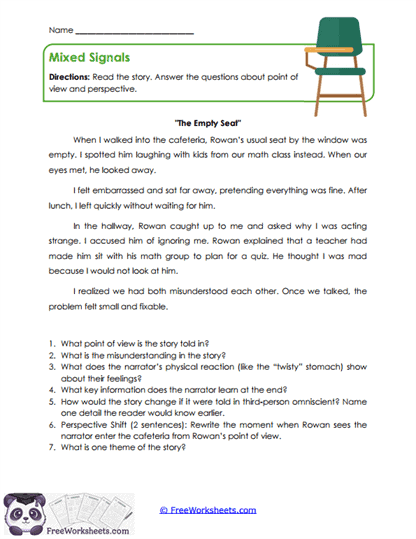
Mixed Signals
- What Kids Do:
Students read a story about a misunderstanding and explore how point of view shapes what each character believes. They analyze reactions, identify perspective, and rewrite part of the story from a different point of view. - Target Skill:
Students learn to explain how narration and perspective influence understanding. This supports Common Core expectations for analyzing how authors develop point of view and how it affects meaning.
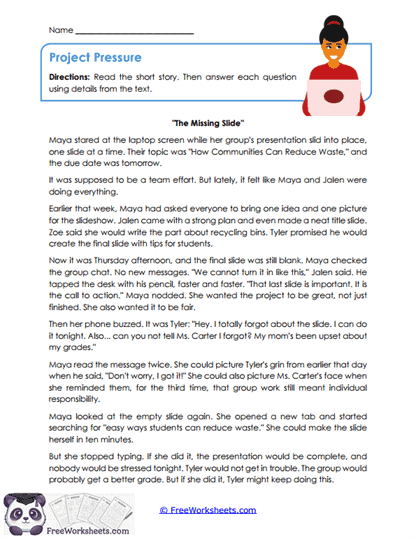
Project Pressure
- What Kids Do:
Students read about a group project gone wrong and evaluate the choices characters make under pressure. They consider different solutions, explain consequences, and reflect on responsibility and teamwork within the story. - Target Skill:
Students build skills in evaluating decisions and analyzing how characters respond to challenges. This aligns with Common Core goals for understanding how plot events and choices shape outcomes.
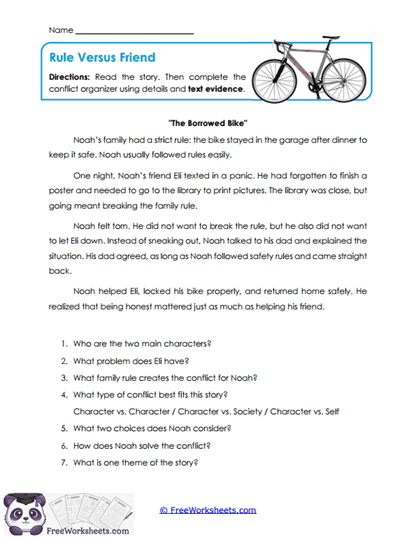
Rule Versus Friend
- What Kids Do:
Students examine a story where a character must choose between following rules and helping a friend. They identify the central conflict, classify it, and explain how the decision affects the story’s outcome. - Target Skill:
Students develop the ability to distinguish between types of conflict and explain how those conflicts drive the plot. This supports Common Core standards focused on analyzing story structure and character responses.
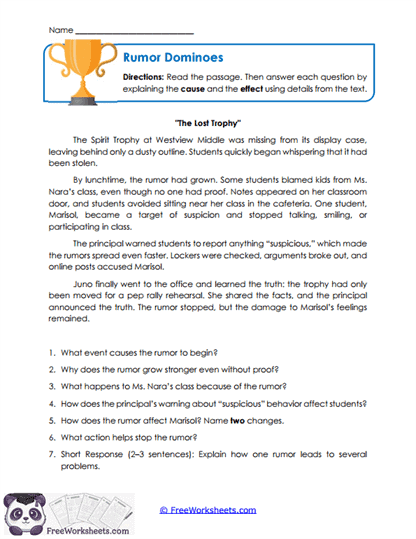
Rumor Dominoes
- What Kids Do:
Students follow a chain of events sparked by a rumor and map out how one action leads to multiple consequences. They identify the starting cause and trace each effect step by step through the story. - Target Skill:
Students strengthen their understanding of cause-and-effect relationships in literature. This aligns with Common Core expectations for analyzing how events influence one another within a narrative.
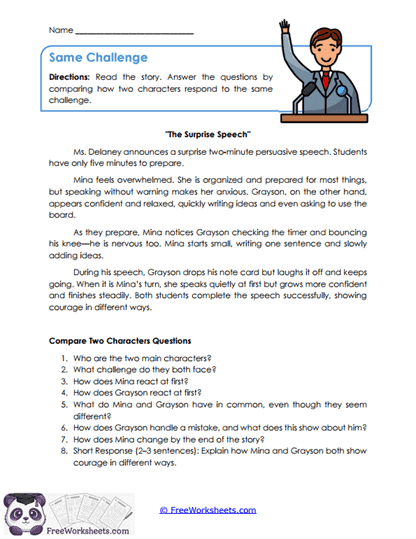
Same Challenge
- What Kids Do:
Students compare how two different characters respond to the same situation. They identify similarities and differences in reactions and explain what those responses reveal about each character. - Target Skill:
Students build compare-and-contrast skills by analyzing character traits and responses. This supports Common Core goals for understanding character behavior and deeper analysis of literary elements.
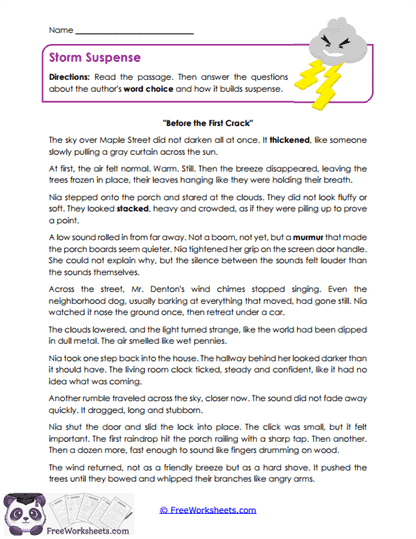
Storm Suspense
- What Kids Do:
Students read a descriptive passage and focus on how specific words and phrases create tension. They identify language choices and explain how those choices build suspense and affect the mood. - Target Skill:
Students develop the ability to analyze how word choice impacts tone and meaning. This aligns with Common Core standards that emphasize understanding the effect of language in literature.
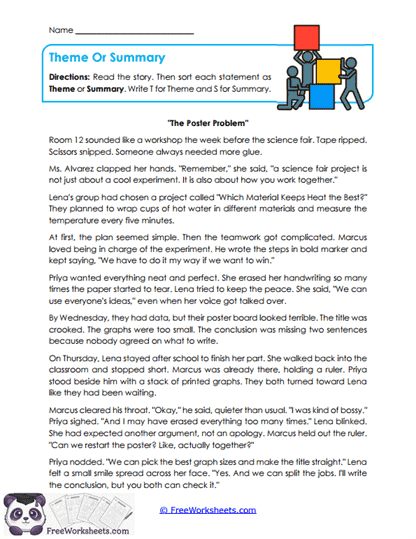
Theme Or Summary
- What Kids Do:
Students read a realistic fiction passage and decide whether given statements represent a theme or a summary. They justify their thinking and identify the deeper message of the story. - Target Skill:
Students learn to distinguish between summarizing events and identifying themes. This supports Common Core expectations for determining central ideas and explaining messages in a text.
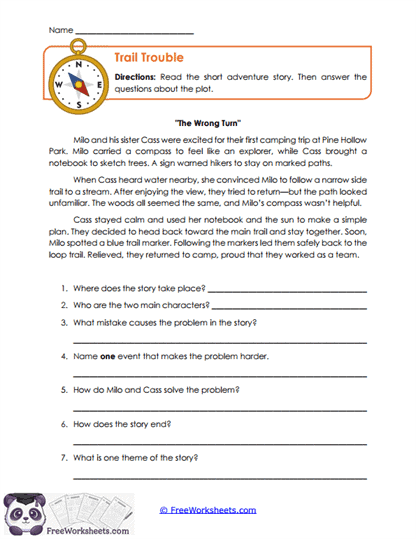
Trail Trouble
- What Kids Do:
Students read an adventure story and identify key plot elements like setting, characters, conflict, and resolution. They sequence events and explain how the story builds tension and reaches a solution. - Target Skill:
Students strengthen their understanding of plot structure and learn to describe how events unfold. This aligns with Common Core standards focused on analyzing how a narrative develops over time.