
About This Worksheet
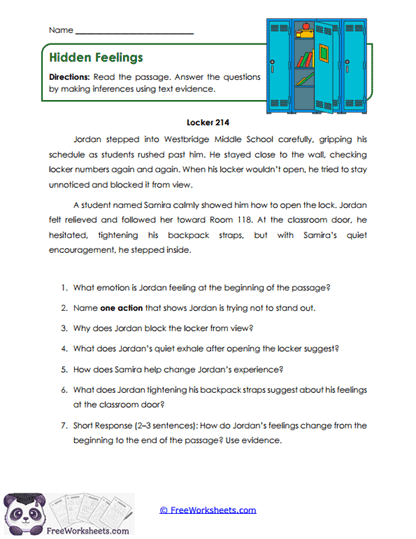
This worksheet is an analyzing literature task focused on making inferences about characters’ emotions. It is designed for Grade 6 students and emphasizes reading between the lines using text evidence. Students learn how actions and dialogue reveal internal feelings. For example, tightening a backpack strap may indicate nervousness.
Curriculum and Grade Alignment
This activity supports Grade 6 reading comprehension and inference skills. The main goal is to interpret character emotions using textual clues. Students should already understand basic reading comprehension strategies. It aligns with CCSS.ELA-LITERACY.RL.6.1, which emphasizes citing textual evidence to support analysis.
Student Tasks
On this worksheet, students will read a passage about a student navigating a new school experience. They answer questions that require identifying emotions and supporting them with evidence. Students explain how actions reveal feelings and how interactions influence character development. A short written response asks them to track emotional changes.
Common Challenges and Misconceptions
Students may rely on guessing emotions without evidence from the text. Some might overlook subtle clues like body language or tone. Others may struggle to explain how feelings change over time. Teachers should model how to connect specific text details to emotional interpretations.
Implementation Guidance
This worksheet works well in guided reading groups or independent practice. Teachers can use it to introduce or reinforce inference skills. Parents can support learning by discussing character feelings during reading. Encourage students to underline evidence before answering questions.
Details and Features
The worksheet includes a short passage and a mix of multiple-choice and open-ended questions. It also features a short response section for deeper thinking. The format is clear and easy to follow for middle school learners. It is suitable for printing or digital use.