
6th Grade Reading Fluency Worksheets
6th Grade Fluency Practice worksheets help students read more smoothly, clearly, and with confidence. These free, ready-to-print worksheets come in PDF format and are perfect for immediate classroom use. Students strengthen skills like pacing, expression, and accuracy to support strong comprehension and fluent reading.
About This Collection of Worksheets
This collection is designed to help students move from simply reading words to reading with confidence and meaning. Fluency at this level is all about sounding natural, like speaking, while still understanding the text. Each worksheet gives students a focused way to practice one part of fluency, such as pacing, expression, or phrasing.
The activities are engaging and varied, including stories, informational texts, and real-world examples. Students will reread passages, practice tone, and even revise sentences to improve flow. These repeated and structured activities help students build habits that lead to smoother, more confident reading over time.
Teachers can easily use these worksheets as part of a daily fluency routine, in small groups, or during literacy centers. Parents can also use them at home to support reading practice by listening and giving simple feedback. The goal is to help students become readers who not only understand what they read, but also read it clearly and expressively.
Paul’s Teacher Tip
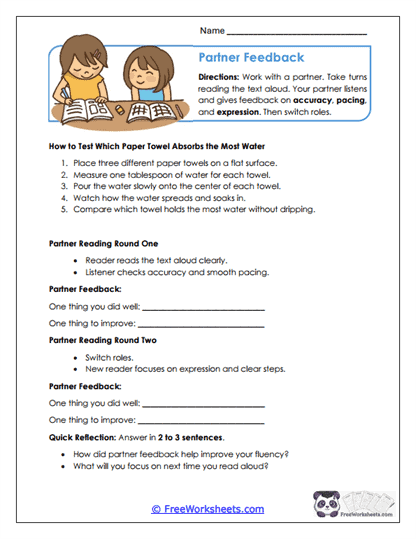
Fluency really improves when students know exactly what to listen for. Instead of saying “read it again,” try giving a specific focus like “this time, work on your pacing” or “this time, make it sound like you’re telling a story.” I also recommend modeling fluent reading often-students learn a lot just by hearing it done well. Partner reading can be very effective too, especially when students give each other simple feedback. Don’t forget to celebrate small improvements, because fluency builds over time. At home, even a few minutes of reading out loud each day can make a big difference.
Worksheet Collection Skill Spotlights
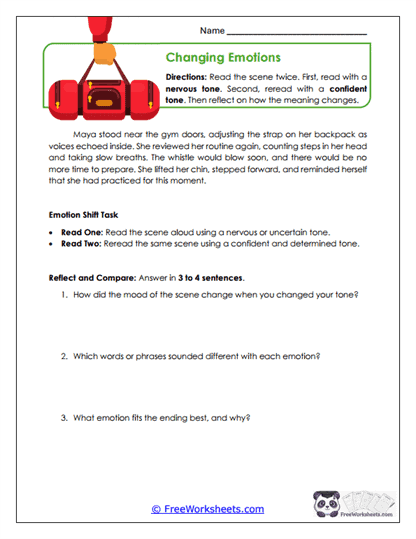
Changing Emotions
- What Kids Do:
Students read the same short scene twice using different emotional tones, such as nervous and confident. They listen for how the meaning changes, compare both readings, and reflect on how voice and expression influence the overall message. - Target Skill:
Students build expressive reading skills by adjusting tone to match meaning. This supports Common Core expectations for reading with appropriate expression and understanding how tone affects comprehension.
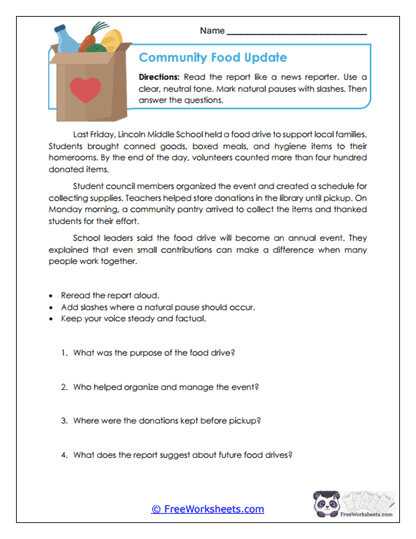
Community Food Update
- What Kids Do:
Students read a news-style report and practice maintaining a steady, clear pace while marking natural pauses. They reread the passage to improve flow and answer questions to confirm understanding of the content. - Target Skill:
Students develop control over pacing and tone when reading informational text. This aligns with Common Core goals for reading fluently with accuracy and appropriate rate.
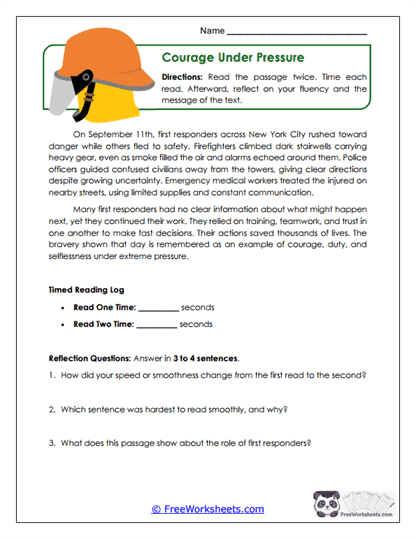
Courage Under Pressure
- What Kids Do:
Students complete timed readings of a meaningful passage and track how their speed and smoothness improve. They reflect on their progress and connect fluency practice to understanding the message of the text. - Target Skill:
Students strengthen fluency through repeated reading and self-reflection. This supports Common Core expectations for building accuracy, rate, and expression to support comprehension.
Expression Check
- What Kids Do:
Students read short sentences and adjust their voice to match punctuation and meaning. They practice rereading with improved expression and reflect on how their delivery changes the sound of each sentence. - Target Skill:
Students build awareness of expressive reading and how it connects to meaning. This aligns with Common Core standards for reading with appropriate expression and clarity.
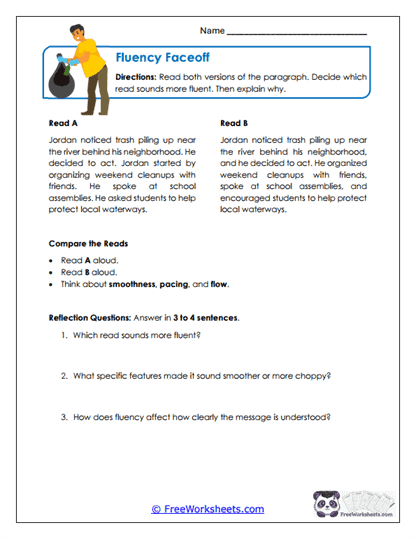
Fluency Faceoff
- What Kids Do:
Students compare two versions of a passage and decide which one sounds smoother and more natural. They read both aloud, listen carefully, and explain what makes one version more fluent than the other. - Target Skill:
Students develop the ability to evaluate fluency and recognize strong reading patterns. This supports Common Core goals for understanding how pacing and flow affect comprehension.
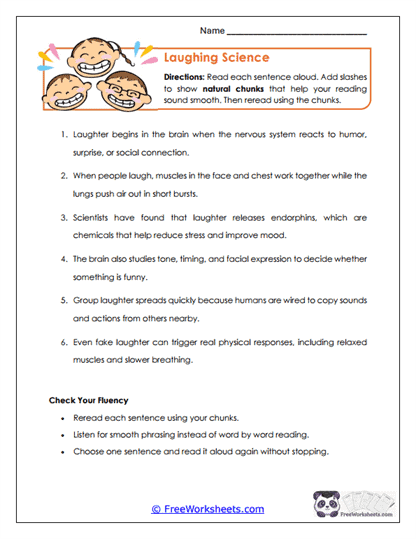
Laughing Science
- What Kids Do:
Students read short science sentences and mark natural phrasing breaks using slashes. They reread the sentences with smoother flow and reflect on how chunking improves their reading. - Target Skill:
Students strengthen phrasing and sentence flow to improve fluency. This aligns with Common Core expectations for reading in meaningful phrases rather than word by word.
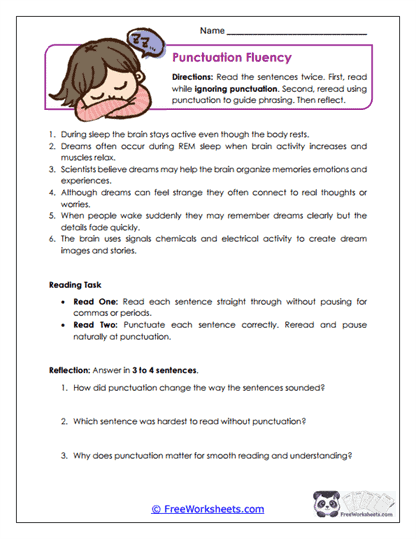
Punctuation Fluency
- What Kids Do:
Students read sentences first without punctuation and then with correct pauses. They compare both versions and reflect on how punctuation improves clarity and understanding. - Target Skill:
Students learn how punctuation supports fluent reading and meaning. This supports Common Core standards for reading with proper phrasing and expression.
Read Like A Pro
- What Kids Do:
Students read a full passage multiple times, focusing on accuracy, pacing, and expression during each round. They reflect on their growth and identify areas for improvement. - Target Skill:
Students build complete fluency by combining all key elements of reading. This aligns with Common Core goals for reading smoothly and with understanding.
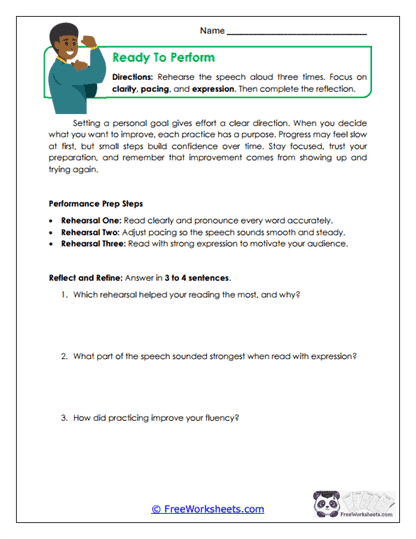
Ready To Perform
- What Kids Do:
Students rehearse a short speech several times, improving accuracy, pacing, and expression with each attempt. They reflect on which practice helped them sound more confident and clear. - Target Skill:
Students strengthen oral reading and presentation skills through repeated practice. This supports Common Core expectations for fluent and expressive reading.
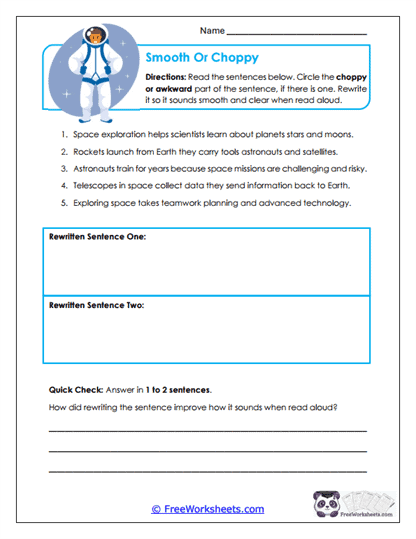
Smooth Or Choppy
- What Kids Do:
Students read sentences and decide whether they sound smooth or awkward. They rewrite choppy sentences to improve flow and reflect on how their changes make reading easier. - Target Skill:
Students build awareness of sentence fluency and improve both reading and writing clarity. This aligns with Common Core goals for fluent reading and effective communication.
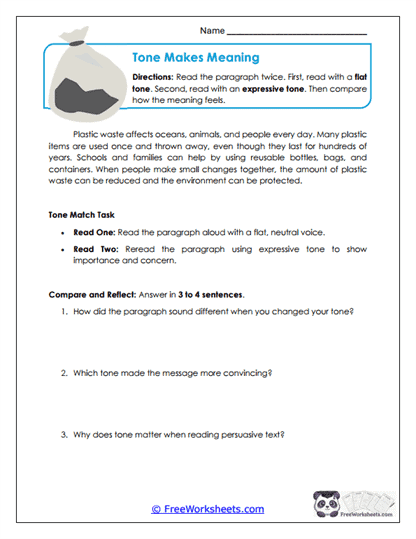
Tone Makes Meaning
- What Kids Do:
Students read the same passage using different tones and compare how the meaning changes. They reflect on which version communicates the message more clearly and effectively. - Target Skill:
Students develop the ability to adjust tone to match purpose and meaning. This supports Common Core standards for expressive and meaningful reading.
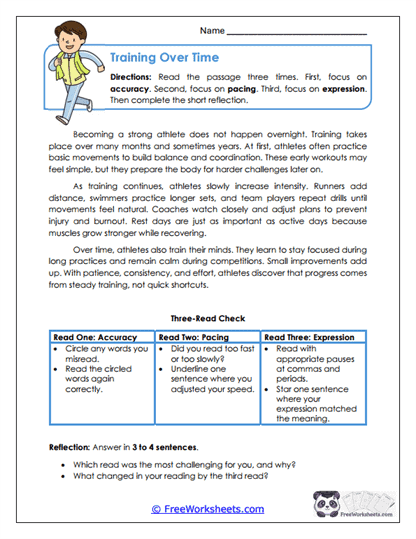
Training Over Time
- What Kids Do:
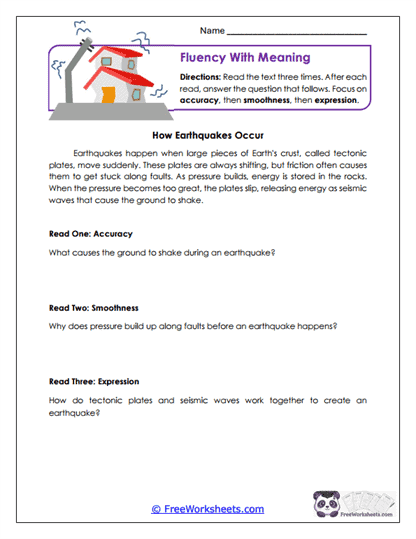
Students read a passage multiple times, focusing on accuracy first, then pacing, and finally expression. They track their improvement and reflect on how their reading becomes smoother. - Target Skill:
Students build fluency through structured repeated reading. This aligns with Common Core expectations for improving accuracy, rate, and expression over time.