
About This Worksheet
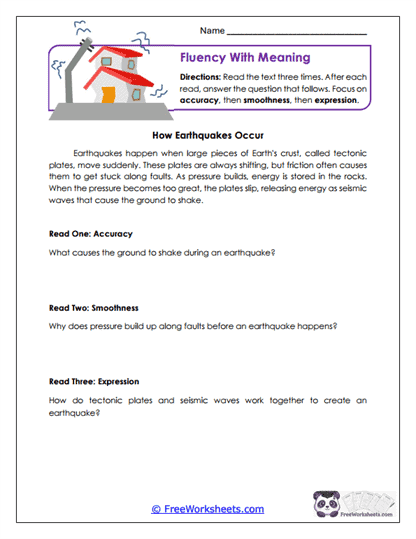
This worksheet is all about helping students really tune into how their voice sounds when they read. A teacher might explain to a parent, “At this stage, we’re helping students move from just reading words to actually sounding like they understand what they’re reading.” It’s designed for Grade 6 students to check and improve their expression, which is a key part of fluency. For example, reading a question like a statement versus with a questioning tone can completely change how it sounds.
Curriculum and Grade Alignment
This activity aligns with CCSS.ELA-LITERACY.RF.6.4, focusing on reading with appropriate expression and meaning. A teacher might say, “We want students to sound like they’re talking, not just reading.” This builds confidence and helps comprehension come more naturally. It also supports speaking and listening skills.
Student Tasks
On this worksheet, students will read short sentences and decide how they should sound when spoken aloud. A teacher might explain, “They’ll practice adjusting their voice to match punctuation and meaning.” Students may reread sentences to improve expression. They also reflect on how their reading changed.
Common Challenges and Misconceptions
Students often read in a flat voice without realizing it. A teacher might note, “They don’t always hear the difference until it’s pointed out.” Another challenge is matching tone to punctuation correctly. Teachers can support students by modeling expressive reading.
Implementation Guidance
In the classroom, this worksheet works really well as a quick fluency warm-up. A teacher might say, “We practice a few sentences together before students try independently.” At home, parents can support by listening and asking how the sentence should sound. This builds awareness quickly.
Details and Features
The worksheet includes short, focused sentences that are easy to practice. A teacher might point out, “It’s simple but very effective for building expressive reading.” The format encourages repeated practice. It is easy to print and use anywhere.