
Analyzing Informational Texts Worksheets
6th Grade Reading Analyzing Informational Texts worksheets are designed to move students beyond just "reading the words" into actually understanding, questioning, and thinking about what they read. At this level, students are expected to dig deeper-figure out the main idea, analyze how a text is structured, evaluate arguments, and even explain their thinking in writing.
About This Collection of Worksheets
If you’ve ever asked your child, “What did you read?” and gotten a one-word answer, this is exactly the kind of practice that helps change that. These worksheets are built to slow students down and teach them how to interact with a text-not just finish it.
Throughout this collection, students work with high-interest nonfiction topics like science, technology, and real-world issues. But more importantly, they learn how to think while they read. They practice finding the main idea, pulling out key details, understanding how a text is organized, and figuring out what the author is really trying to say.
What I like most here is the progression. Students start with core skills like identifying central ideas and summarizing. Then they move into deeper work-analyzing arguments, evaluating evidence, spotting bias, and even writing their own responses. By the end, they’re not just reading-they’re thinking like analysts.
These worksheets work really well in small chunks. You don’t need to do a whole packet at once. One or two at a time, with a quick 
Paul’s Teacher Tip
Here’s something I always tell parents: at this age, it’s not about how fast your child reads-it’s about how well they understand.
After your child finishes a passage, try asking simple follow-up questions like:
- “What was the main idea?”
- “What is the author trying to teach you?”
- “Do you agree with the author? Why or why not?”
Even a short conversation like this helps build critical thinking. And if they struggle at first-that’s completely normal. These are big skills, and they grow with practice.
Worksheet Collection Skill Spotlights
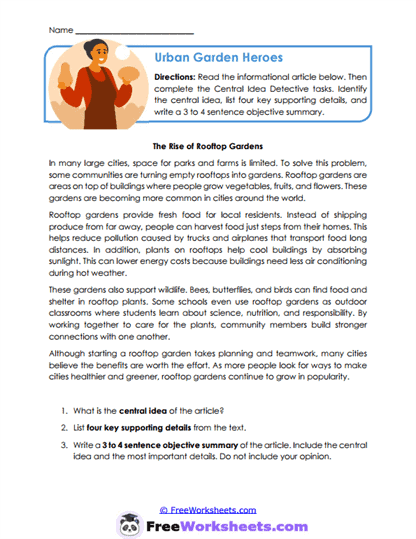
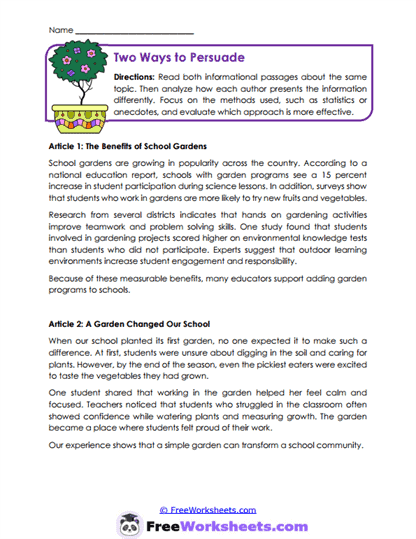
Garden Heroes
- What Kids Do:
Your child reads about rooftop gardens, identifies the main idea, pulls out key details, and writes a short summary. - Target Skill:
This builds one of the most important reading skills-figuring out what the text is mostly about and supporting it with details.
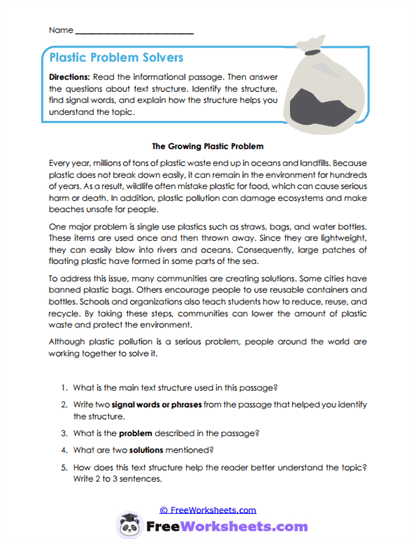
Plastic Solvers
- What Kids Do:
Students read about plastic pollution and identify how the text is organized (like problem and solution). - Target Skill:
This helps students understand how authors organize ideas, which makes texts easier to understand overall.
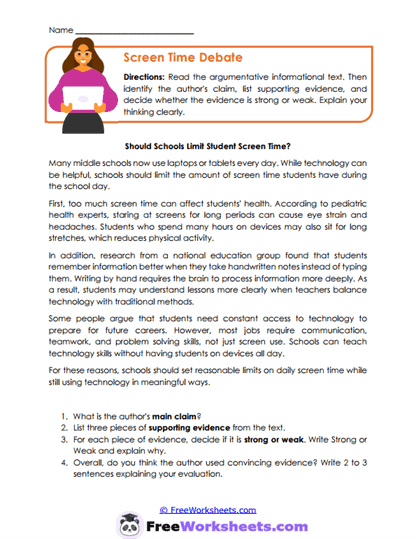
Screen Debate
- What Kids Do:
Students read an argument about screen time, identify the claim, and decide if the evidence is strong or weak. - Target Skill:
This builds critical thinking. Students learn not to just accept information-but to question it.
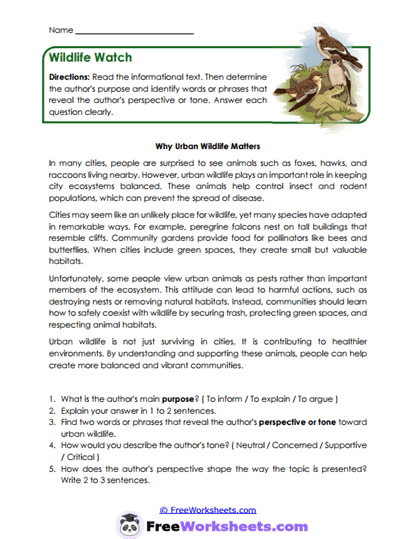
Wildlife Watch
- What Kids Do:
Students figure out the author’s purpose, tone, and point of view while reading about urban wildlife. - Target Skill:
This helps students understand why a text was written and how the author’s feelings shape it.
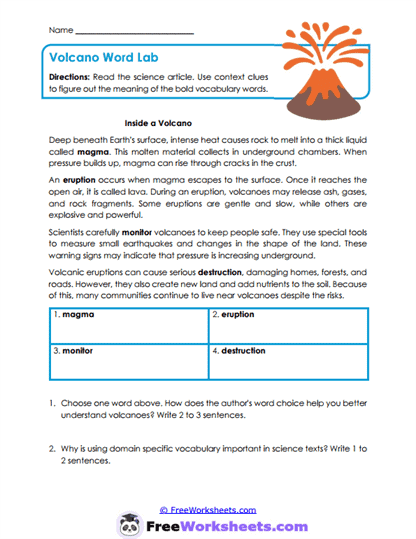
Word Lab
- What Kids Do:
Students use context clues to figure out the meaning of important vocabulary words in a science passage. - Target Skill:
This strengthens vocabulary and helps students unlock the meaning of complex texts.
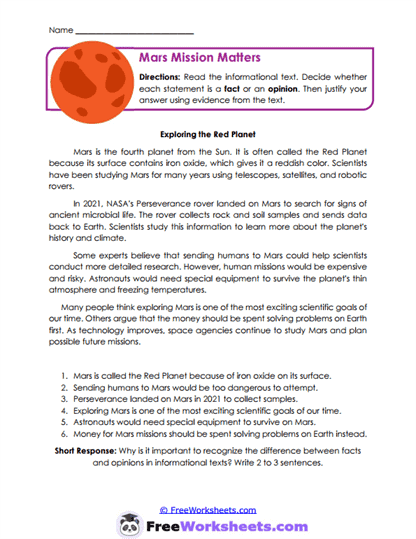
Mars Matters
- What Kids Do:
Students decide whether statements are facts or opinions and explain their thinking. - Target Skill:
This builds the ability to question information and separate what’s true from what’s someone’s belief.
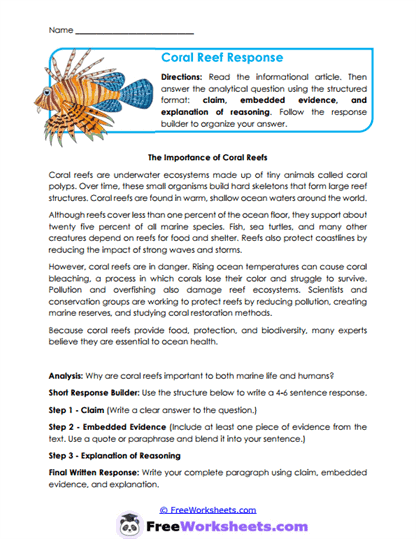
Reef Response
- What Kids Do:
Students read a passage and write a response using a claim, evidence, and explanation. - Target Skill:
This connects reading and writing-students learn to support their ideas with proof.
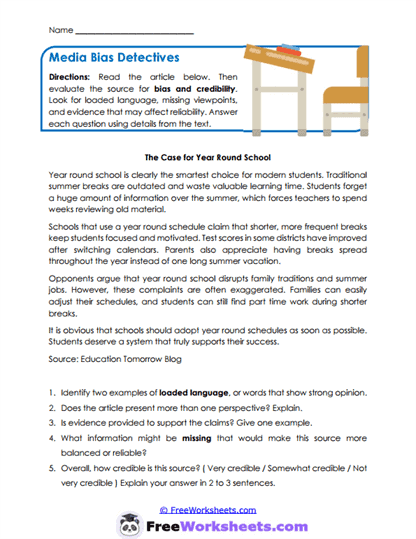
Bias Detectives
- What Kids Do:
Students identify bias and decide if a text is balanced or one-sided. - Target Skill:
This helps students become more aware of persuasion and credibility-skills they’ll use for life.
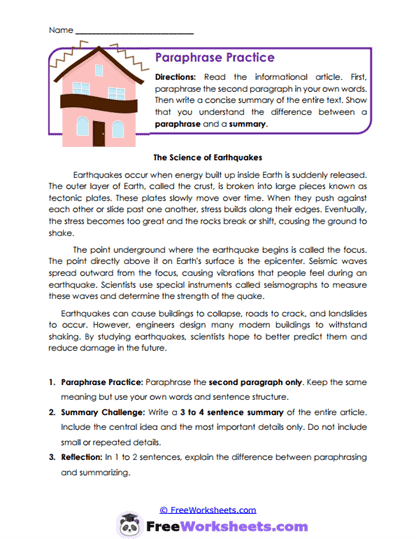
Paraphrase Power
- What Kids Do:
Students rewrite information in their own words and create a short summary. - Target Skill:
This builds real understanding-if they can explain it, they truly get it.
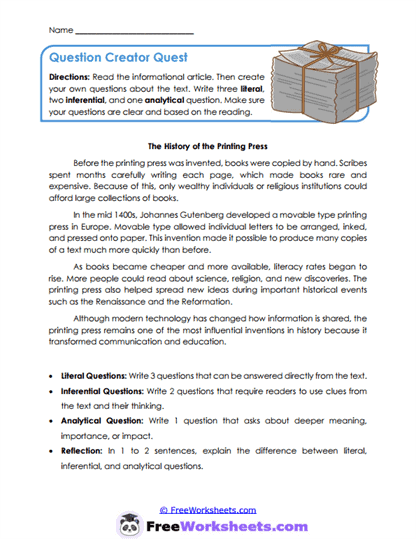
Question Quest
- What Kids Do:
Students create their own questions about a text-literal, inferential, and analytical. - Target Skill:
This shows deep understanding. Being able to ask strong questions is a high-level skill.
Text Connections
- What Kids Do:
Students connect the text to their own life, other texts, and the world around them. - Target Skill:
This makes reading more meaningful and helps ideas stick.
Main Idea Map
- What Kids Do:
Students organize the main idea and supporting details in a graphic organizer, then write a summary. - Target Skill:
This strengthens organization and comprehension-helping students clearly understand and explain what they read.