
Author's Perspective Worksheets
6th Grade Reading Author's Perspective worksheets help students understand how authors share opinions and shape ideas in texts. These free, ready-to-print worksheets come in PDF format and are perfect for immediate classroom use. Students build skills like identifying point of view, analyzing tone, and evaluating supporting evidence aligned to the curriculum.
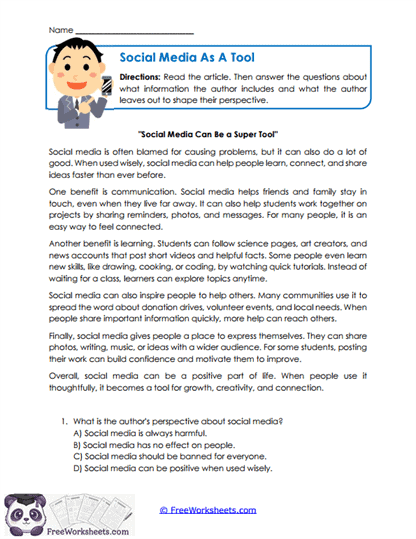
About This Collection of Worksheets
This collection is all about helping students look beyond the surface of a text and start thinking like careful, critical readers. Instead of just asking, “What is this about?” students begin asking, “What does the author believe, and how do they show it?” Each worksheet gives students a chance to explore how opinions, tone, and evidence work together.
The topics are engaging and relatable, ranging from school life to real-world issues like technology, health, and the environment. This makes it easier for students to stay interested while practicing important skills. As they work through the collection, they’ll learn to recognize bias, compare perspectives, and understand how authors try to influence readers.
These worksheets are flexible and easy to use in many settings. Teachers can use them for guided lessons, small groups, or independent work. Parents can use them at home to spark meaningful conversations about reading and thinking. The goal is to help students become thoughtful readers who don’t just accept information but question and analyze it.
Paul’s Teacher Tip
When teaching author’s perspective, I always remind students that every author has a reason for writing. A great strategy is to ask, “What is the author trying to convince me of?” before even looking at the questions. Encourage students to underline words that feel strong or emotional, since those often reveal opinion or bias. It also helps to have students restate the author’s perspective in their own words before choosing evidence. If you can, build in short discussions where students compare ideas-this really strengthens understanding. At home, simple questions like “Do you agree with the author?” can turn reading into deeper thinking.
Worksheet Collection Skill Spotlights
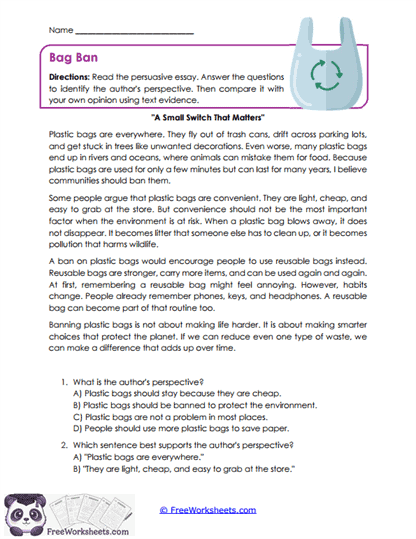
Bag Ban
- What Kids Do:
Students read a persuasive essay about reducing plastic bag use and work to clearly identify what the author believes about environmental choices. They examine key sentences, choose the strongest supporting details, and explain how those details connect directly to the author’s overall message. - Target Skill:
Students strengthen their ability to determine an author’s perspective and evaluate how evidence supports that viewpoint. This aligns with Common Core expectations for analyzing how authors present and support ideas in informational text.
Cafeteria Choices
- What Kids Do:
Students explore a passage about school lunches and identify the author’s opinion about improving food choices. They select evidence that supports that viewpoint and explain how specific details connect to the author’s argument in a clear and thoughtful way. - Target Skill:
Students build skills in identifying perspective and matching it with relevant supporting evidence. This supports Common Core goals for understanding how authors use reasons and examples to communicate ideas.
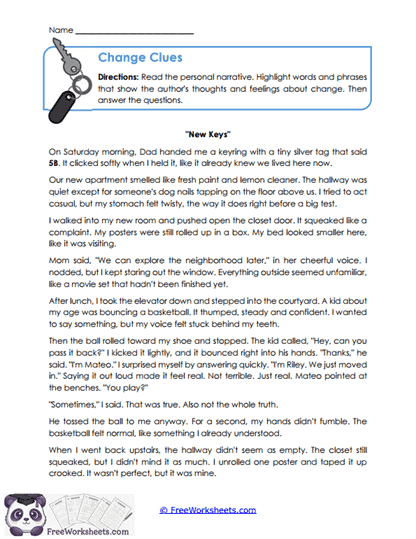
Change Clues
- What Kids Do:
Students read a personal narrative about moving to a new place and highlight words and phrases that reveal how the narrator feels. They connect those clues to the author’s perspective and explain how emotions shift throughout the text. - Target Skill:
Students develop the ability to analyze how perspective is revealed through narration and word choice. This aligns with Common Core expectations for interpreting how authors communicate feelings and viewpoints.
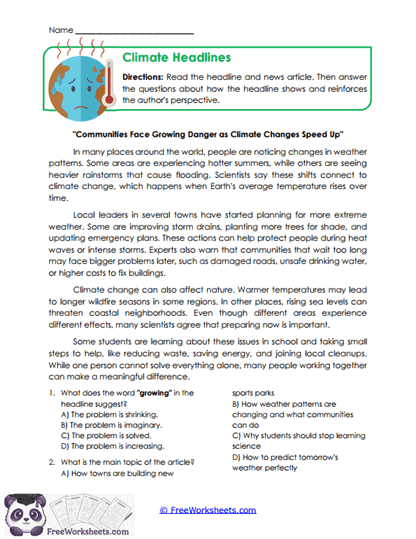
Climate Headlines
- What Kids Do:
Students examine a headline and short article about climate change and focus on how specific word choices shape meaning. They analyze how the headline frames the topic and influences how readers interpret the information that follows. - Target Skill:
Students learn to evaluate how language, including headlines, contributes to an author’s perspective. This supports Common Core standards focused on understanding how ideas are presented and reinforced.
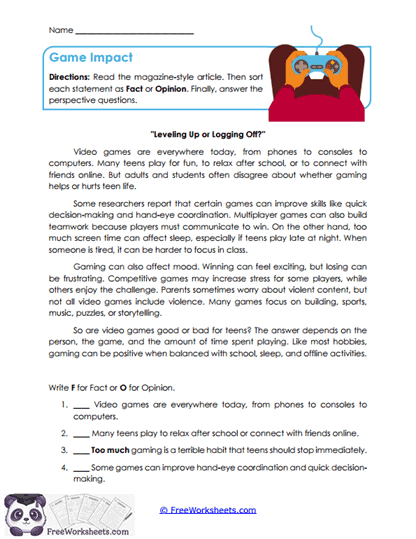
Game Impact
- What Kids Do:
Students read a balanced article about video games and sort statements as fact or opinion. They then identify the author’s overall perspective and explain how both sides are presented before a conclusion is formed. - Target Skill:
Students strengthen their ability to distinguish fact from opinion and analyze how authors build perspective using both. This aligns with Common Core expectations for critical reading and evaluating arguments.
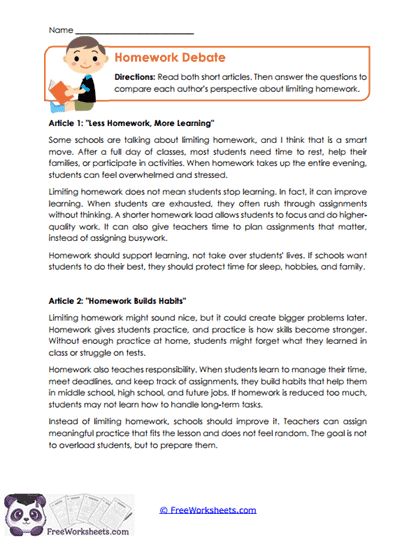
Homework Debate
- What Kids Do:
Students read two short articles with opposing views on homework and compare how each author presents their ideas. They identify each perspective, analyze supporting reasons, and explain differences in how the arguments are built. - Target Skill:
Students build compare-and-contrast skills by evaluating multiple perspectives. This supports Common Core goals for analyzing how different authors approach the same topic.
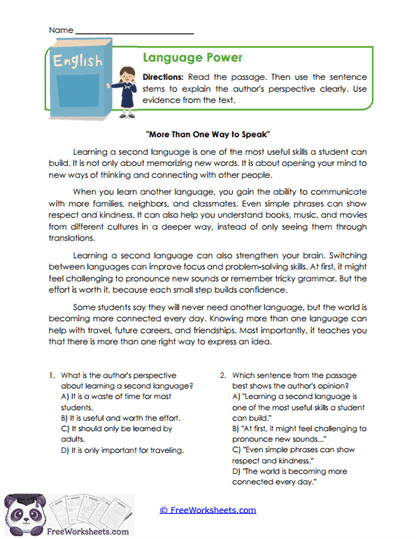
Language Power
- What Kids Do:
Students read an informational passage about learning a new language and identify the author’s belief about its importance. They choose the strongest supporting sentence and explain why it best proves the author’s point. - Target Skill:
Students improve their ability to connect main ideas with supporting evidence. This aligns with Common Core expectations for explaining how authors support their perspectives.
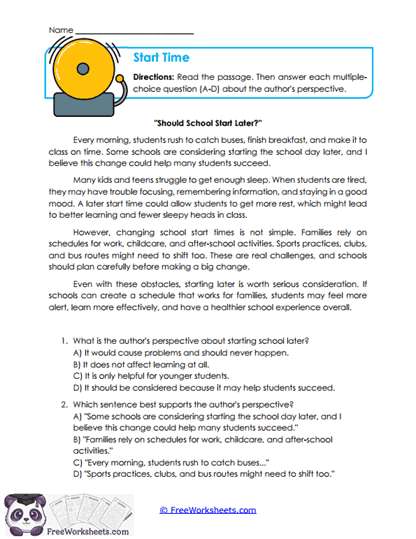
School Start Times
- What Kids Do:
Students read an article about school schedules and identify the author’s opinion on start times. They analyze supporting details and explain how those details help convince the reader. - Target Skill:
Students develop skills in identifying perspective and evaluating how evidence strengthens an argument. This supports Common Core standards for analyzing point of view in informational text.
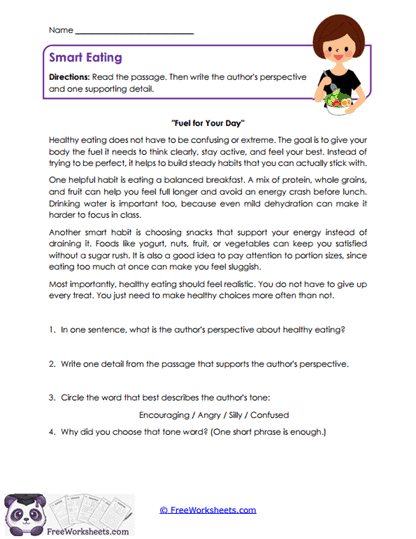
Smart Eating
- What Kids Do:
Students read a passage about healthy habits and determine what the author believes about eating well. They identify tone, select evidence, and explain how the author communicates ideas clearly. - Target Skill:
Students strengthen their ability to identify perspective and analyze tone. This aligns with Common Core goals for understanding how authors express opinions and attitudes.
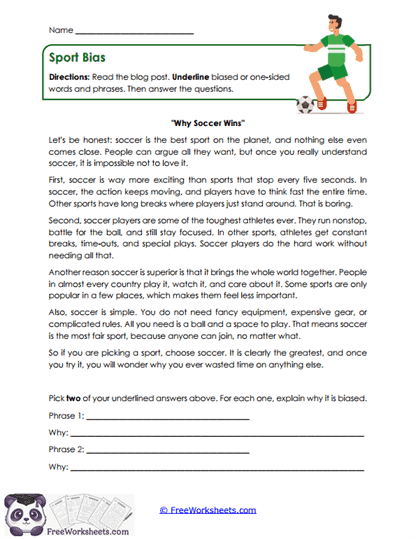
Sport Bias
- What Kids Do:
Students read a blog-style passage that strongly favors one sport and identify words that show bias. They explain why certain phrases feel one-sided and how that language shapes the message. - Target Skill:
Students learn to recognize bias and understand how it influences perspective. This supports Common Core expectations for analyzing how authors use language to persuade.
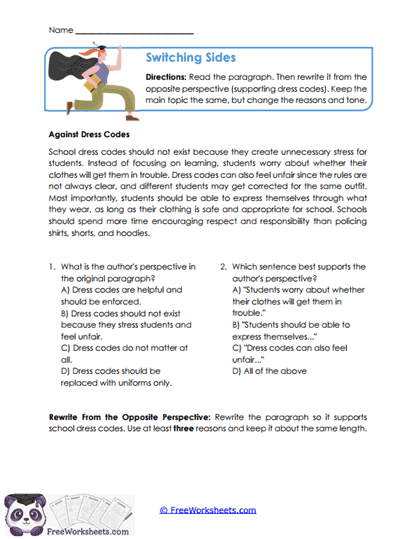
Switching Sides
- What Kids Do:
Students read a persuasive paragraph about dress codes and then rewrite it from the opposite point of view. They adjust reasons, tone, and details to reflect a completely different perspective. - Target Skill:
Students build deeper understanding of perspective by applying it in writing. This aligns with Common Core standards for analyzing and manipulating point of view.
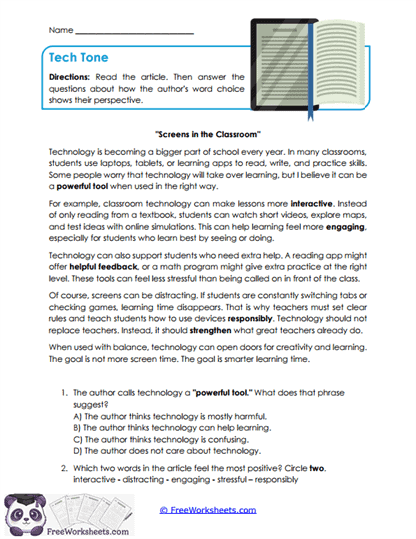
Tech Tone
- What Kids Do:
Students read an article about technology in school and identify words that reveal the author’s attitude. They explain how tone connects to the author’s overall message and shapes reader understanding. - Target Skill:
Students develop the ability to analyze tone and connect it to perspective. This supports Common Core goals for interpreting how word choice affects meaning.