
About This Worksheet
This worksheet helps students understand how an author’s word choice reveals their perspective, especially on topics like technology in school. A teacher might explain to a parent, “This is where students start to see that even small word choices can show whether an author feels positive, negative, or balanced.” It’s designed for Grade 6 students to connect tone and language to the author’s overall message. For example, describing technology as a “powerful tool” clearly shows a supportive perspective.
Curriculum and Grade Alignment
This activity aligns with CCSS.ELA-LITERACY.RI.6.6 by focusing on how an author’s perspective is communicated through tone and word choice. A teacher might say, “Students already understand what tone is, but now we’re asking them to explain how it connects to the author’s opinion.” This builds stronger reading comprehension and prepares students for analyzing more complex texts. It also supports vocabulary development and critical thinking.
Student Tasks
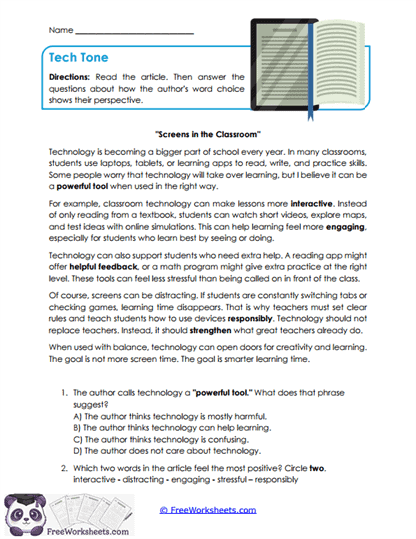
On this worksheet, students will read an article about technology in the classroom. A teacher might explain, “They’ll analyze specific phrases the author uses and decide what those words suggest about the author’s beliefs.” Students answer questions about tone and identify words that feel most positive. They are encouraged to explain how those choices shape the reader’s understanding.
Common Challenges and Misconceptions
Students may pick out positive or negative words without connecting them to the author’s perspective. A teacher might note, “They’ll circle words but won’t always explain what those words mean for the author’s message.” Another challenge is misunderstanding tone as just emotion rather than purpose. Teachers can support students by asking, “What does this word make you think the author believes?”
Implementation Guidance
In the classroom, this worksheet works well as a guided reading activity with discussion. A teacher might say, “We read the passage together and pause to talk about key words before answering questions.” At home, parents can support by asking their child why certain words stand out and what they suggest. This helps students become more thoughtful and observant readers.
Details and Features
The worksheet includes a relevant, real-world topic that students encounter daily. A teacher might point out, “That makes it easier for them to connect and stay engaged.” The questions are designed to guide students step by step through analyzing tone and perspective. It is clearly formatted and easy to print or use digitally.