
Theme Worksheets
6th Grade reading theme worksheets help students uncover the deeper messages and life lessons that authors communicate through stories. Free, ready-to-print worksheets are available in PDF format for immediate classroom use and independent practice. Students strengthen skills such as identifying themes, analyzing character growth, connecting evidence to central messages, and explaining how authors develop meaning throughout a text.
About This Collection of Worksheets
Theme is one of the most important concepts in literary analysis because it moves readers beyond what happened in a story and encourages them to think about what the story means. This collection helps students learn how authors communicate lessons, insights, and universal truths through character experiences, conflicts, decisions, and outcomes. Through engaging narratives and thoughtful activities, learners develop the ability to recognize and explain deeper messages within literature.
The worksheets provide practice with a variety of theme-related skills, including distinguishing themes from topics and summaries, analyzing character growth, evaluating evidence, interpreting author’s messages, connecting conflicts to lessons, and supporting interpretations with textual evidence. Students learn that themes are developed across an entire story rather than revealed through a single event. These activities encourage close reading, critical thinking, and meaningful discussion about literature and life.
Teachers, parents, and homeschool educators can use these resources to support reading instruction, literature studies, intervention groups, independent practice, and enrichment activities. Each worksheet focuses on a specific aspect of theme analysis while helping students become stronger readers and more thoughtful interpreters of text. Together, these activities build the foundation for advanced literary analysis and evidence-based reasoning.
Paul’s Teacher Tip
One of the most common mistakes students make is confusing a theme with a topic. Words such as friendship, courage, teamwork, or perseverance are topics, not themes. Encourage students to turn those topics into complete lessons by asking, “What does the story teach about this idea?” For example, instead of writing “friendship,” a stronger theme might be, “True friends support each other through difficult challenges.” Requiring students to support every theme statement with evidence from the text also helps strengthen comprehension and prevents guessing. The more students practice connecting story events to larger lessons, the more naturally theme analysis will become.
Worksheet Collection Skill Spotlights
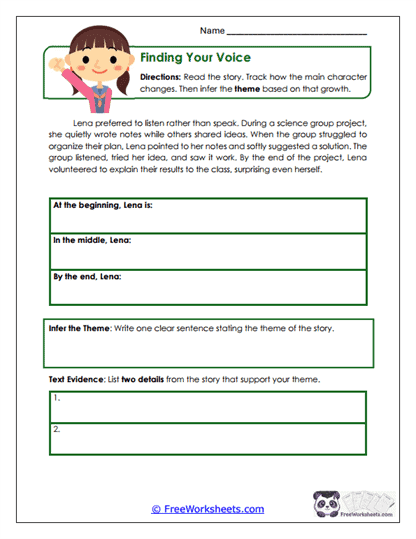
Character Growth
- What Kids Do:
Students follow Lena’s development throughout a story and examine how her confidence changes over time. They compare her actions and attitudes at different points in the narrative and use those changes to identify a larger lesson. - Target Skill:
Students strengthen their ability to connect character development to theme and explain how growth reveals a story’s deeper message.
Community Strength
- What Kids Do:
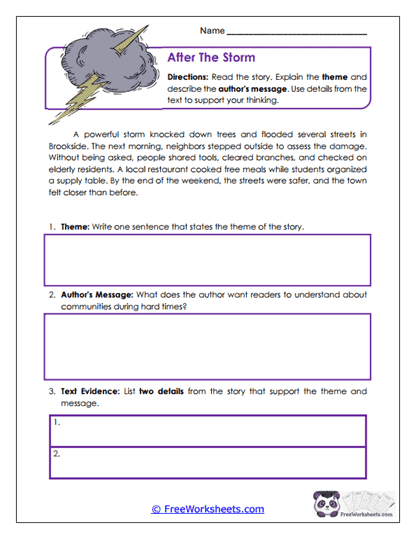
Students read about a town recovering after a storm and analyze how cooperation and support help people overcome challenges. They identify both the theme and the author’s message using evidence from the text. - Target Skill:
Students build skills in theme analysis and author’s message interpretation by examining how events and actions communicate larger ideas.
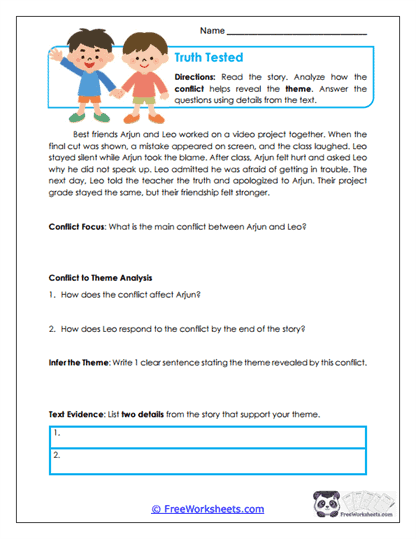
Conflict Lessons
- What Kids Do:
Students analyze a disagreement between friends and explore how honesty, responsibility, and communication contribute to resolving the conflict. They connect the conflict to a broader lesson. - Target Skill:
Students strengthen their ability to identify themes that emerge through character choices, challenges, and consequences.
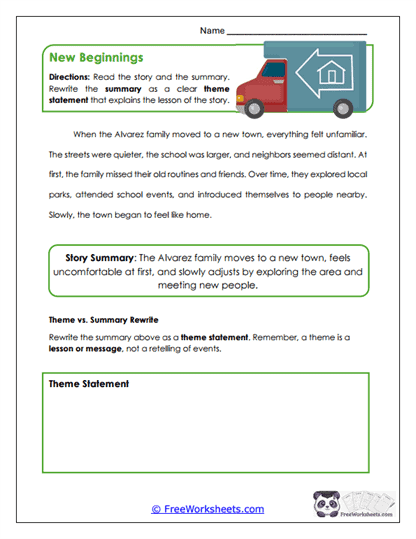
Fresh Starts
- What Kids Do:
Students examine a family’s move to a new town and transform a story summary into a meaningful theme statement. They focus on lessons about change, adaptation, and growth. - Target Skill:
Students learn to distinguish between summaries and themes while developing stronger literary-analysis skills.
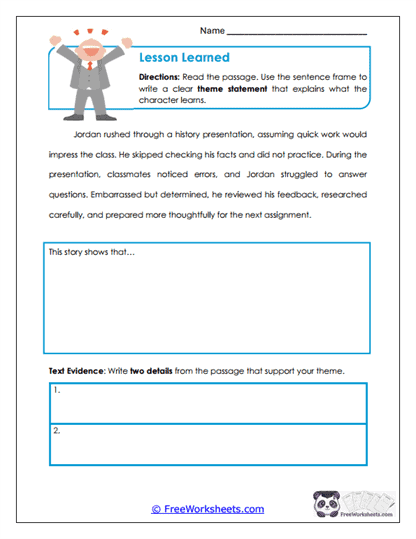
Theme Builder
- What Kids Do:
Students analyze Jordan’s experiences and create a complete theme statement supported by textual evidence. They explain how events contribute to the lesson learned. - Target Skill:
Students strengthen their ability to write clear theme statements and support them with evidence from the text.
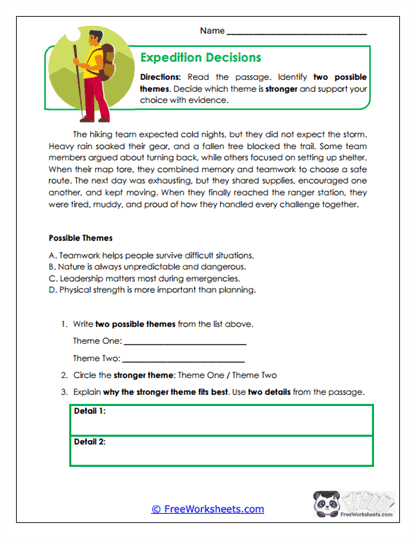
Theme Choices
- What Kids Do:
Students evaluate multiple possible themes within a story about a hiking group facing unexpected obstacles. They determine which theme is best supported and justify their reasoning. - Target Skill:
Students develop critical-thinking skills by comparing interpretations and defending conclusions with evidence.
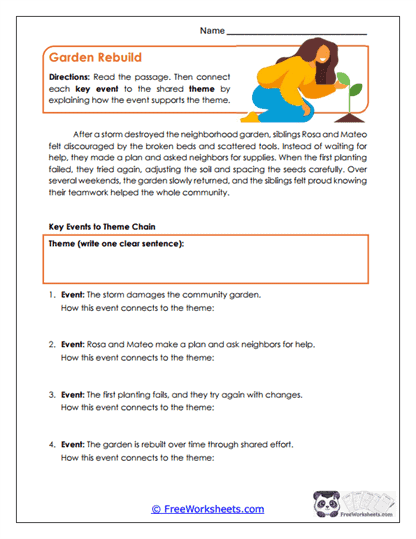
Theme Connections
- What Kids Do:
Students examine how events throughout a community garden story contribute to a central message. They connect multiple plot developments to a larger lesson. - Target Skill:
Students strengthen their understanding of how themes develop across an entire narrative rather than through a single event.
Theme Connections Review
- What Kids Do:
Students synthesize character actions, conflicts, and outcomes from across a story to identify and support a central theme. They gather evidence from multiple parts of the text. - Target Skill:
Students build advanced theme-analysis skills by connecting multiple story elements to an author’s overall message.
Theme Detectives
- What Kids Do:
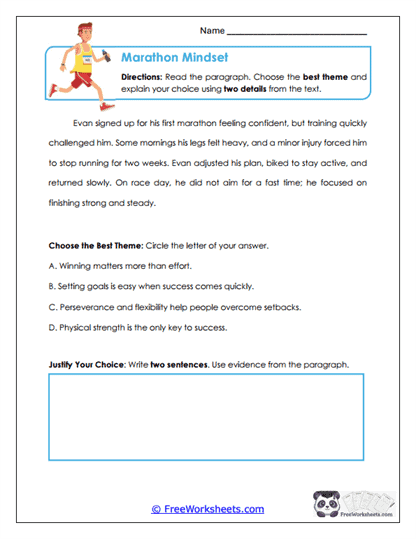
Students analyze a story about a marathon runner facing setbacks and determine which theme is best supported by the character’s experiences. They justify their choice using evidence. - Target Skill:
Students strengthen evidence-based reading skills by connecting details and events to thematic ideas.
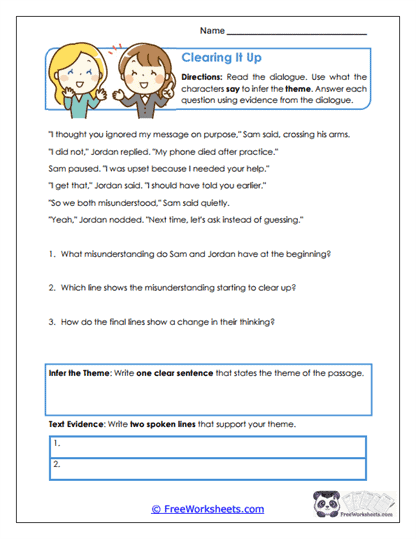
Theme Dialogue
- What Kids Do:
Students examine a conversation between friends who resolve a misunderstanding. They analyze dialogue, character interactions, and conflict resolution to uncover the story’s lesson. - Target Skill:
Students learn how dialogue can reveal theme and character growth while supporting literary interpretation.
Theme Evidence
- What Kids Do:
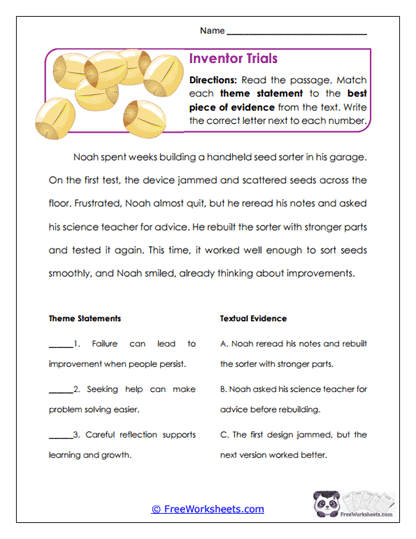
Students match theme statements to supporting details from a story about an invention project. They explain how evidence supports specific lessons and messages. - Target Skill:
Students strengthen their ability to connect textual evidence directly to thematic interpretations.
Theme Tracker
- What Kids Do:
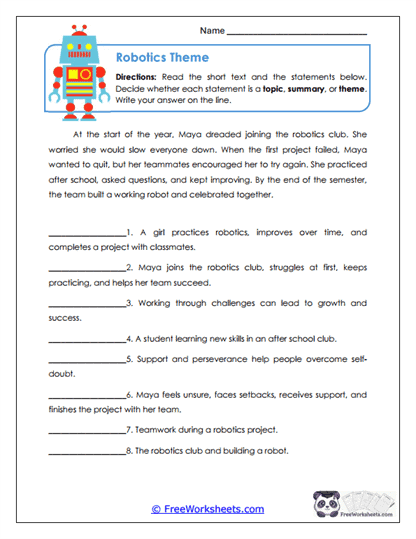
Students learn to distinguish between topics, summaries, and themes using a narrative about a robotics club. They classify statements and identify which ones communicate deeper lessons. - Target Skill:
Students build foundational theme-analysis skills by understanding the differences between related literary concepts.