
About This Worksheet
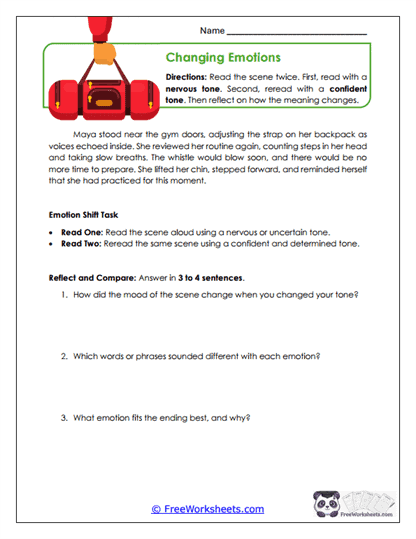
This worksheet is a really powerful way to show students how emotion and tone work together when reading. A teacher might explain to a parent, “We’re helping students realize that how they read something can completely change how it feels to the listener.” It’s designed for Grade 6 students to practice reading the same text with different emotional tones. For example, reading a scene nervously versus confidently can make the character seem unsure or strong.
Curriculum and Grade Alignment
This activity aligns with CCSS.ELA-LITERACY.RF.6.4, focusing on reading with expression and understanding how tone affects meaning. A teacher might say, “Students are learning that fluency isn’t just speed-it’s about matching their voice to the message.” This builds both comprehension and speaking confidence. It also supports deeper understanding of character and mood in texts.
Student Tasks
On this worksheet, students will read a short scene twice using two different emotional tones. A teacher might explain, “They’ll first read it with a nervous tone, then reread it with a confident tone.” Students compare how the meaning and mood change with each version. They also reflect on which words or phrases stood out differently.
Common Challenges and Misconceptions
Students may not fully change their tone between readings. A teacher might note, “They’ll read both versions the same way unless they’re really thinking about the emotion.” Another challenge is connecting tone to meaning. Teachers can support students by asking how the character would feel in each version.
Implementation Guidance
In the classroom, this worksheet works really well as a read-aloud and discussion activity. A teacher might say, “We often act out the tones so students can really hear and feel the difference.” At home, parents can support by listening and asking how the tone changed the story. This helps students connect reading to expression.
Details and Features
The worksheet includes a short, relatable scene and clear tone instructions. A teacher might point out, “It’s engaging because students can experiment with their voice.” The reflection questions deepen understanding. It is easy to print and great for repeated practice.