
About This Worksheet
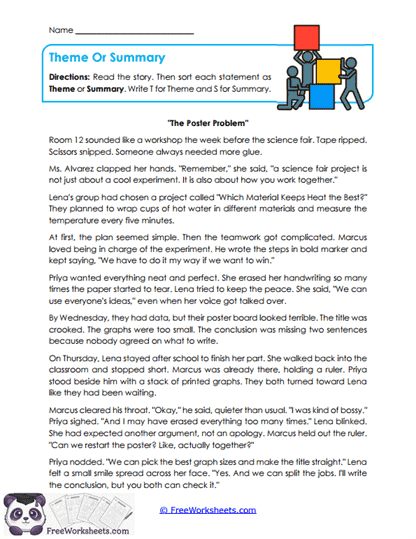
This worksheet is all about helping students truly understand the difference between a theme and a summary, which is a skill many sixth graders are still developing. Think of it as moving from simply retelling a story to actually understanding the message behind it. A teacher might explain to a parent, “We want students to see that a summary tells what happened, while a theme explains what the story is really teaching us.” For example, listing events like “the group worked on a project” becomes a theme such as “teamwork requires listening and compromise.”
Curriculum and Grade Alignment
In Grade 6, students are expected to go beyond surface-level comprehension and begin interpreting deeper meaning in texts. This worksheet supports that shift by focusing on distinguishing between theme and summary, which aligns with CCSS.ELA-LITERACY.RL.6.2. A teacher might say, “Before this, students can retell a story, but now we’re asking them to explain the lesson or message behind it.” This skill is essential because it prepares students for more advanced literary analysis in later grades.
Student Tasks
On this worksheet, students will read a realistic fiction passage about a group working through a challenging project together. A teacher might explain, “They’ll look at different statements and decide whether each one is a theme or just a summary of events.” Students are asked to justify their thinking, which helps them slow down and really consider the difference. They also practice identifying the central message of the story based on character actions and outcomes.
Common Challenges and Misconceptions
One of the biggest challenges is that students often think a theme is just a shorter summary. A teacher might tell a parent, “They’ll say something like ‘They finished the project’ instead of recognizing the deeper idea about teamwork or communication.” Another common issue is choosing themes that are too specific instead of general life lessons. To support this, teachers often encourage students to ask, “What can anyone learn from this story?” as a guiding question.
Implementation Guidance
In the classroom, this worksheet works beautifully as part of a guided reading lesson or small group discussion. A teacher might say, “I like to read the passage with students first, then talk through one example together before letting them try on their own.” At home, parents can support by asking their child to explain not just what happened in the story, but what lesson the characters learned. This kind of conversation really helps solidify the difference between summary and theme.
Details and Features
This worksheet includes a thoughtfully written passage and a series of statements that students must sort as either theme or summary. A teacher might point out, “It’s designed to make students think, not just recall information.” The layout is clean and easy to follow, making it ideal for both classroom and at-home use. It also encourages discussion, which is key for deep understanding.