
Grade 2 Vocabulary Worksheets
Choosing the right word depends on understanding its meaning and how it fits into a sentence. These grade 2 vocabulary worksheets explore synonyms, antonyms, multiple-meaning words, and context clues through varied language activities. Children match words with definitions, replace inappropriate vocabulary in sentences, and use surrounding text to determine unfamiliar meanings. The free printable PDFs offer guided word choices alongside opportunities for independent responses. Encourage learners to explain why a word fits its context and use newly learned vocabulary in original sentences.
About This Collection of Worksheets
Building a strong vocabulary is essential for helping young readers understand what they read, communicate their ideas, and become more independent learners. These 2nd grade vocabulary worksheets introduce students to important word relationships, including synonyms, antonyms, multiple-meaning words, and vocabulary categories. Children also learn to use surrounding sentences and story details to determine unfamiliar word meanings rather than relying on memorized definitions alone. By exploring how words relate to one another and how their meanings change in different situations, students develop the language awareness needed for stronger reading comprehension and written expression.
This collection includes a wide range of activities that help students recognize, understand, and apply vocabulary in meaningful ways. Children match familiar words with definitions, identify synonyms and antonyms, sort words into categories, and find items that do not belong in a group. Other worksheets focus on using context clues to determine word meanings, selecting the best vocabulary word to complete a sentence, and replacing incorrect words with more appropriate choices. Students also explore multiple-meaning words, finish sentence starters using new vocabulary, and analyze word meanings within short reading passages. The variety of formats gives children opportunities to practice vocabulary recognition, reasoning, and independent language use.
Teachers can use these printable worksheets during vocabulary lessons, guided reading, literacy centers, small-group instruction, or independent practice. Parents, tutors, and homeschool educators can reinforce the same skills by encouraging children to explain word meanings, use new vocabulary in conversation, and identify context clues while reading together. Some worksheets offer structured support through matching exercises, word banks, and multiple-choice questions, while others require students to generate their own responses or interpret vocabulary within longer passages. This flexibility allows educators to support developing readers while providing additional opportunities for students who are ready to apply their vocabulary knowledge more independently.
Paul’s Teacher Tip
When introducing new vocabulary, encourage students to explain a word in their own language before asking them to match it with a formal definition. Model context clue strategies by reading an entire sentence aloud, highlighting the words that provide meaning, and substituting a possible definition to see whether the sentence still makes sense. For synonym and antonym activities, have children use both words in spoken sentences so they understand the relationship rather than simply memorizing pairs. When teaching multiple-meaning words, use drawings or short examples to demonstrate how the same spelling can represent different ideas depending on context. Extend vocabulary practice by asking students to create original sentences with newly learned words and explain why each word fits the situation.
Worksheet Collection Skill Spotlights
Best Fit
What Kids Do:
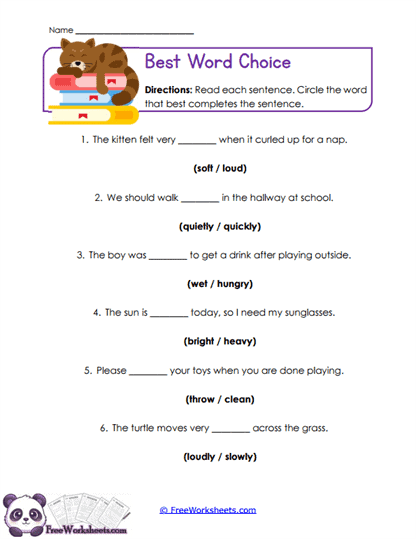
Students read six short sentences, each containing two vocabulary choices in parentheses. They compare words such as soft and loud, quietly and quickly, or bright and heavy before deciding which option best completes the sentence. Children circle their selected answers and reread the completed sentences to confirm that the vocabulary matches the situation being described.
Target Skill:
This worksheet strengthens the ability to select vocabulary based on sentence meaning and context. Students practice comparing word choices, recognizing subtle differences in meaning, and using information from a sentence to make accurate decisions. These skills support 2nd grade reading comprehension, language awareness, and increasingly precise vocabulary use.
Context Detective
What Kids Do:
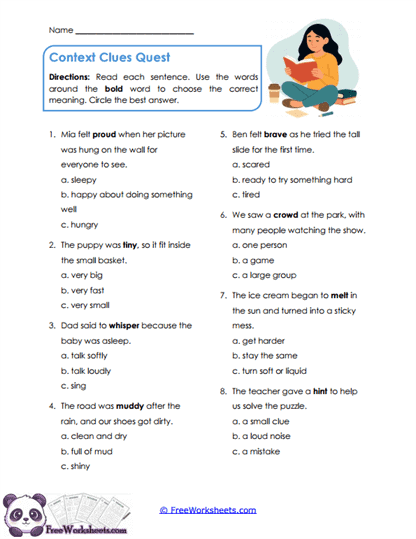
Children examine eight sentences containing bold vocabulary words such as proud, tiny, whisper, muddy, brave, crowd, melt, and hint. They read each sentence carefully, identify clues in the surrounding language, and choose the correct meaning from three possible answers. Rather than relying on the vocabulary word alone, students must consider the complete situation described in each sentence.
Target Skill:
This activity develops the ability to determine unfamiliar word meanings through context clues. By examining the surrounding language and connecting it with what they already know, 2nd grade students strengthen vocabulary acquisition, inference, reading comprehension, and the ability to approach unfamiliar words with greater independence.
Double Meanings
What Kids Do:
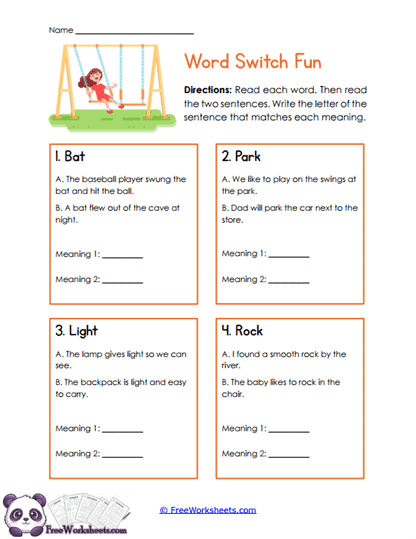
Students explore four familiar words that can have more than one meaning, including bat, park, light, and rock. Each word appears in two different sentences that demonstrate its separate uses. Children read both examples, consider how the surrounding language changes the interpretation, and identify the meaning represented in each sentence.
Target Skill:
The worksheet builds understanding of multiple-meaning words and how context determines the intended definition. Students learn that a familiar word does not always communicate the same idea, strengthening 2nd grade vocabulary flexibility, semantic awareness, and comprehension when encountering words with different meanings in reading and conversation.
Meaning Matches
What Kids Do:
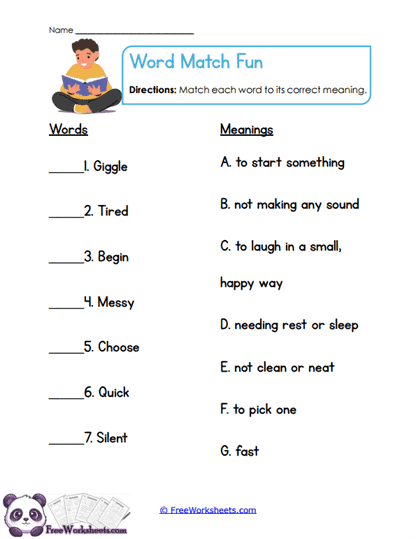
Children work with seven common vocabulary words, including giggle, tired, begin, messy, choose, quick, and silent. They read the numbered word list and compare it with seven lettered definitions in a separate column. Students write the appropriate letter beside each word to demonstrate that they understand its meaning, then review the completed pairs.
Target Skill:
This activity reinforces the connection between familiar vocabulary words and their definitions. Students strengthen word recognition, semantic understanding, and the ability to explain common language accurately. These foundational skills support 2nd grade reading comprehension and help children use familiar vocabulary more confidently in speaking and writing.
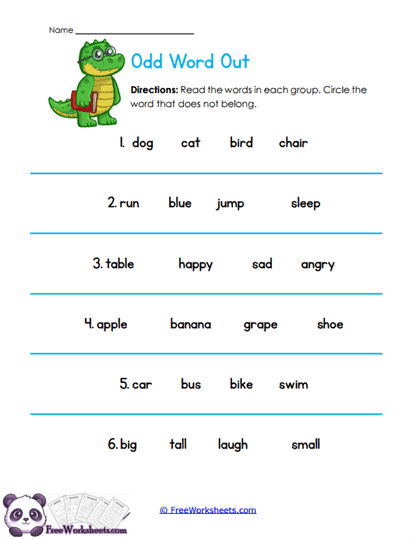
Odd Choice
What Kids Do:
Students examine six groups of four vocabulary words and identify the item that does not share the category represented by the other three. Examples include groups containing dog, cat, bird, and chair or apple, banana, grape, and shoe. Children circle the word that does not belong after considering the relationship connecting the remaining choices.
Target Skill:
This worksheet develops vocabulary classification and meaning-based reasoning. Students practice identifying shared characteristics, recognizing word relationships, and detecting exceptions within a group. By explaining why one word differs from the others, 2nd grade learners strengthen semantic organization, logical thinking, and category recognition.
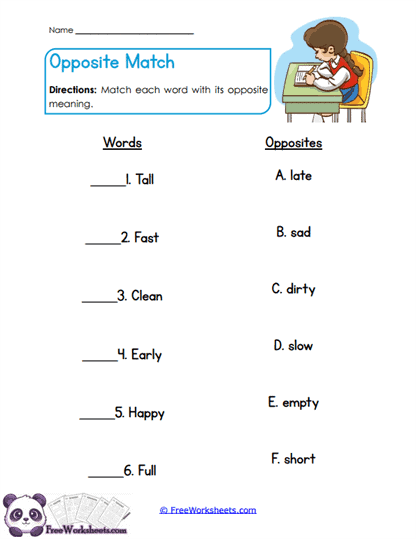
Opposite Words
What Kids Do:
Children match six familiar vocabulary words with their antonyms using a lettered answer format. They examine pairs such as tall and short, fast and slow, clean and dirty, early and late, happy and sad, and full and empty. Students compare the meanings of the words, locate the opposite for each one, and write the correct matching letter beside the original word.
Target Skill:
This activity strengthens understanding of antonyms and the relationships between words with opposite meanings. Students develop the ability to recognize contrasts involving size, speed, condition, time, emotions, and quantity. These skills support 2nd grade vocabulary development, descriptive language, reading comprehension, and accurate word selection.
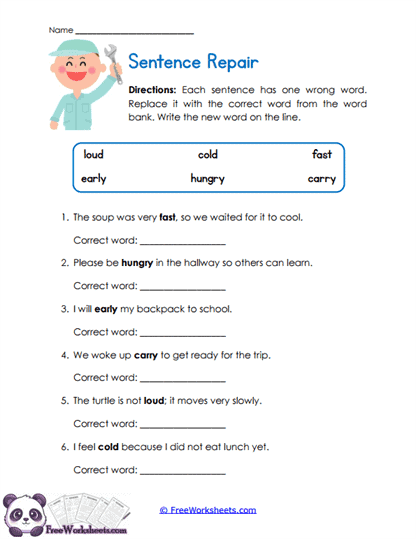
Sentence Repair
What Kids Do:
Students read six sentences containing vocabulary words that do not fit the intended meaning. Using a word bank with choices such as loud, cold, fast, early, hungry, and carry, they identify the incorrect word in each sentence and select a more appropriate replacement. Children write the corrected word on the provided line and reread the sentence to confirm that it now communicates a sensible idea.
Target Skill:
This worksheet develops vocabulary editing and contextual reasoning by requiring students to recognize when a word disrupts sentence meaning. Students strengthen 2nd grade comprehension, semantic accuracy, and language revision skills while learning to evaluate whether vocabulary choices communicate the intended message clearly and logically.
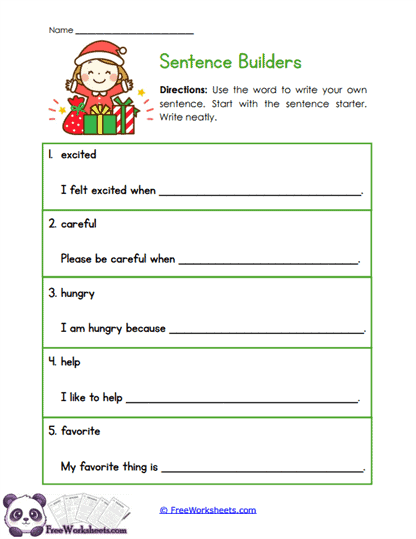
Sentence Starters
What Kids Do:
Children work with five vocabulary words, including excited, careful, hungry, help, and favorite. Each word appears with a sentence starter that provides the beginning of a complete thought. Students read the vocabulary word, consider its meaning, and finish the sentence with an original idea that fits naturally. The guided format provides support while allowing students to express their own experiences and observations.
Target Skill:
This activity strengthens the transition from recognizing vocabulary to using it independently in writing. Students demonstrate an understanding of word meanings by incorporating them into meaningful sentences, supporting 2nd grade expressive vocabulary, sentence construction, grammar awareness, and the ability to communicate personal ideas using appropriate language.
Story Meanings
What Kids Do:
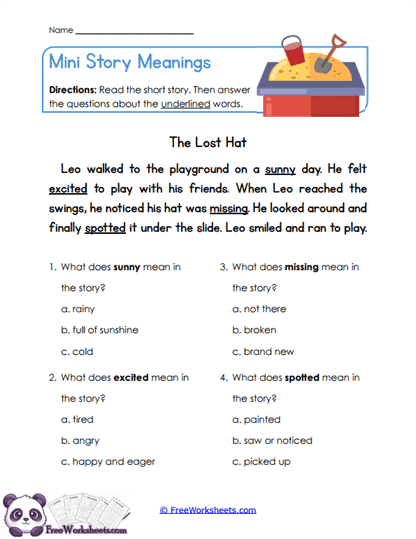
Students read a short story titled “The Lost Hat,” which follows Leo as he visits a playground, discovers that his hat is missing, and eventually finds it beneath a slide. After reading, children answer four multiple-choice questions about the meanings of underlined words such as sunny, excited, missing, and spotted. They use events and surrounding sentences to determine the correct definitions.
Target Skill:
This worksheet strengthens vocabulary comprehension within connected narrative text. Students learn to interpret unfamiliar or important words by examining story events and nearby language, supporting 2nd grade context clue strategies, reading comprehension, and the ability to determine word meaning without relying exclusively on isolated definitions.
Synonym Pairs
What Kids Do:
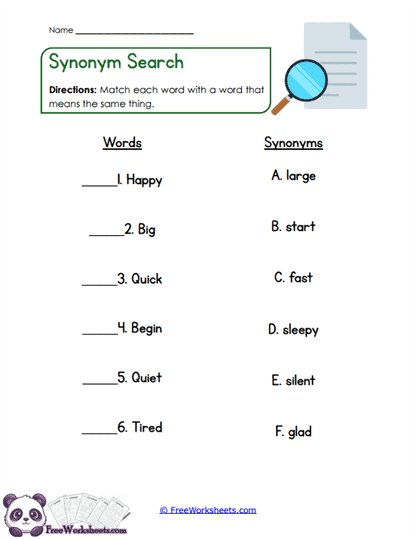
Children examine six familiar vocabulary words and match each one with a synonym from a separate lettered list. Examples include happy and glad, big and large, quick and fast, begin and start, quiet and silent, and tired and sleepy. Students write the correct letter beside each original word and can review the completed pairs to understand how different words express similar ideas.
Target Skill:
This activity develops understanding of synonyms and how words with identical or closely related meanings can be used interchangeably in many situations. Students strengthen 2nd grade vocabulary knowledge, semantic relationships, word choice, and reading comprehension while expanding the range of descriptive language available for speaking and writing.
Word Fill
What Kids Do:
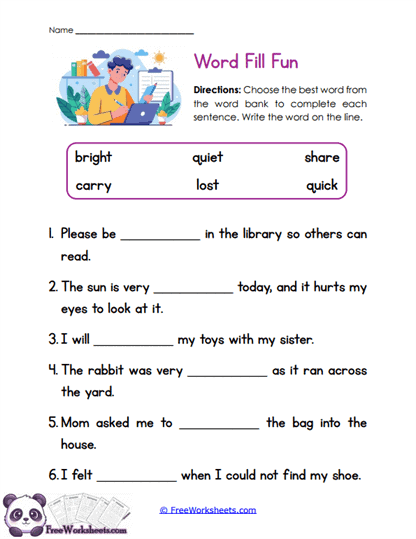
Students use a six-word vocabulary bank containing bright, quiet, share, carry, lost, and quick to complete six sentences. They read each sentence, consider the meaning of the missing word, and select the vocabulary choice that fits best. Children write the answer on the blank and can cross out words as they use them, helping them track their remaining options.
Target Skill:
This worksheet reinforces the ability to apply vocabulary knowledge within meaningful sentence contexts. Students practice using grammar, semantic clues, and everyday understanding to select appropriate words, strengthening 2nd grade reading comprehension, word usage, contextual reasoning, and the ability to recognize when a sentence communicates a complete and logical idea.
Word Sorting
What Kids Do:
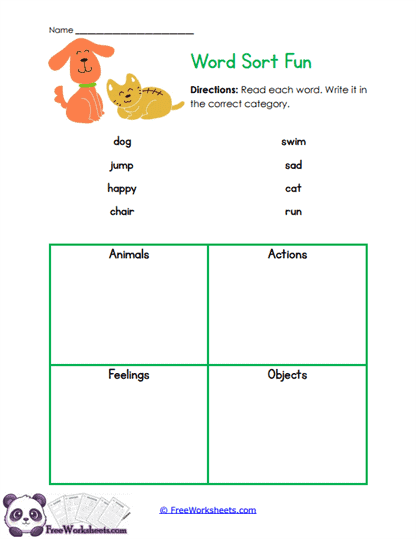
Children organize eight familiar vocabulary words into four categories labeled Animals, Actions, Feelings, and Objects. They examine words such as dog, jump, happy, chair, swim, sad, cat, and run, then write each word in the appropriate category box. Students use their understanding of what the words name or describe to classify them accurately.
Target Skill:
This activity strengthens semantic classification and understanding of vocabulary relationships. Students learn to distinguish words representing living things, actions, emotions, and physical objects, supporting 2nd grade language development, category recognition, and the ability to organize vocabulary according to shared meanings and characteristics.