
Compare and Contrast Worksheets
These Grade 2 Reading Compare and Contrast worksheets help students identify similarities and differences across texts, characters, and topics. Each activity is free, ready-to-print, and provided in PDF format for immediate classroom use. Students build key skills like text comparison, idea organization, and analytical thinking aligned to curriculum standards.
About This Collection of Worksheets
Compare and contrast is an essential reading skill for Grade 2 students as they begin to analyze how ideas connect across texts. These worksheets support learners in recognizing similarities and differences in both fiction and nonfiction, aligning with Common Core standards such as RL.2.9 and RI.2.9. This skill strengthens comprehension and helps students organize their thinking in clear, meaningful ways.
This collection is built for flexible classroom use across a variety of settings. Teachers can easily incorporate these worksheets into morning work, literacy centers, small groups, homework, or RTI interventions. The range of topics-from animals to stories to science-makes it easy to keep students engaged while reinforcing important comparison skills.
Each worksheet is designed with clean formatting for easy printing and minimal ink use. The layouts are simple, accessible, and require little prep, making them ideal for both classroom instruction and at-home learning support.
Paul’s Teacher Tip
When introducing compare and contrast, start with familiar topics like pets or daily routines so students can easily spot similarities and differences. Many students naturally focus on differences first, so be sure to model how to find what is the same as well. Using graphic organizers like Venn diagrams or T-charts can make thinking more visible and organized. For students who need extra support, provide sentence starters such as “Both have…” or “One difference is…” to guide their responses. To extend learning, ask students to explain why two things are similar or different, not just list them. This builds deeper comprehension and prepares them for more advanced analysis.
Worksheet Collection Skill Spotlights
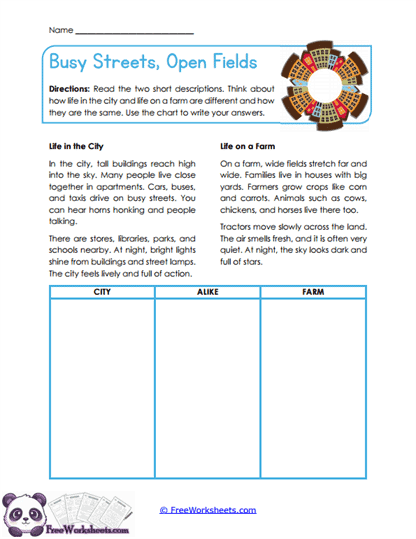
Busy Streets, Open Fields
- What Kids Do:
Students read about city and farm life and sort details into a structured chart showing unique features and shared characteristics. - Target Skill:
Builds comparative reasoning by organizing information across informational texts using categorization strategies.
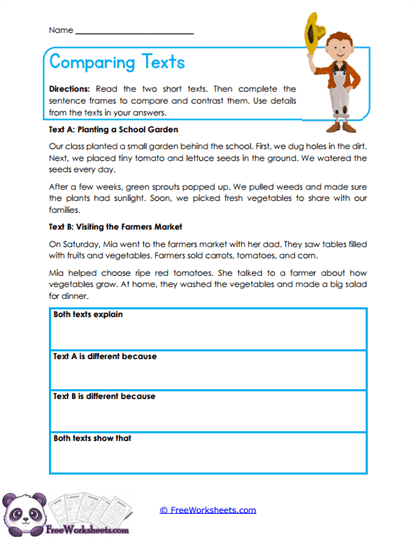
Comparing Texts
- What Kids Do:
Learners read two related passages and complete guided sentence frames to explain how the texts are alike and different. - Target Skill:
Strengthens explanatory comparison by encouraging students to justify similarities and differences with clear reasoning.
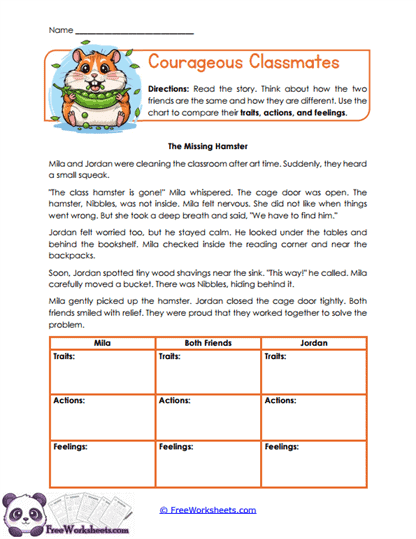
Courageous Classmates
- What Kids Do:
Students examine a short story and sort character traits, actions, and emotions into a comparison chart. - Target Skill:
Develops character analysis through identification of behavioral patterns and emotional responses across individuals.
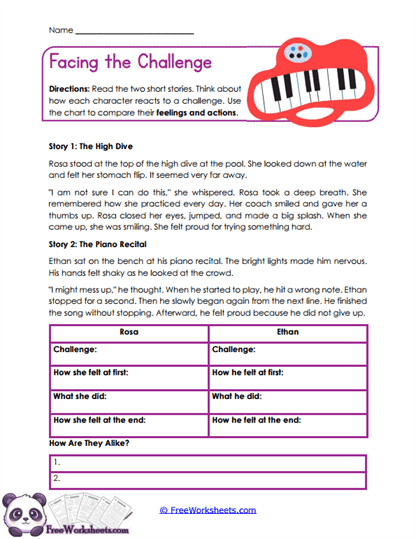
Facing the Challenge
- What Kids Do:
Students read two short narratives and compare how each character reacts to a difficult situation using a structured organizer. - Target Skill:
Enhances understanding of character response by evaluating emotional and behavioral differences within stories.
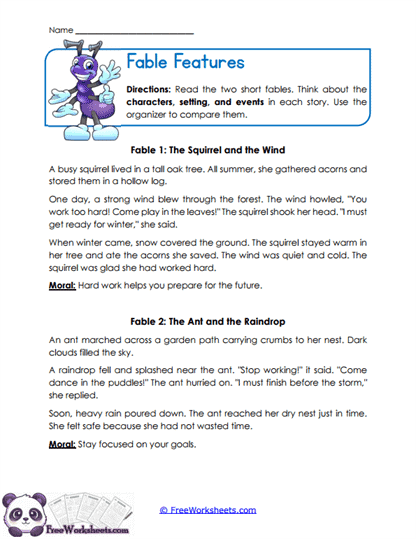
Fable Features
- What Kids Do:
Learners read two fables and organize story elements like characters, settings, and lessons into a comparison organizer. - Target Skill:
Builds theme recognition and literary analysis by examining how story elements contribute to meaning.
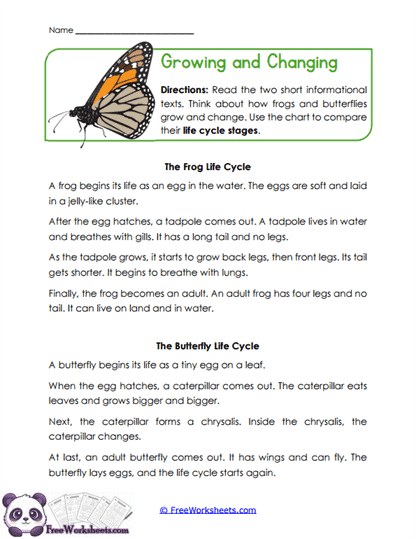
Growing and Changing
- What Kids Do:
Students read about frog and butterfly life cycles and compare stages of growth using a detailed chart. - Target Skill:
Supports cross-disciplinary thinking by connecting informational reading with scientific process comparison.
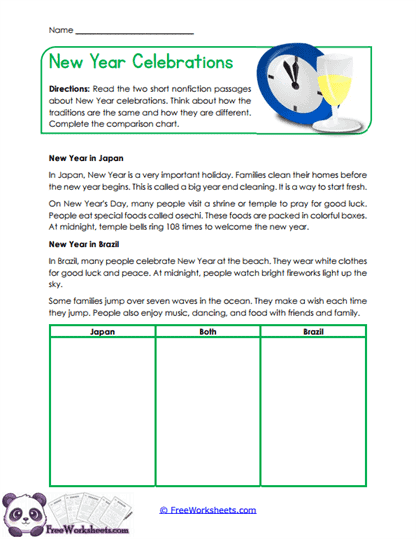
New Year Celebrations
- What Kids Do:
Students read about celebrations in different countries and sort cultural details into shared and unique categories. - Target Skill:
Develops global awareness and informational comparison through analysis of cultural practices.
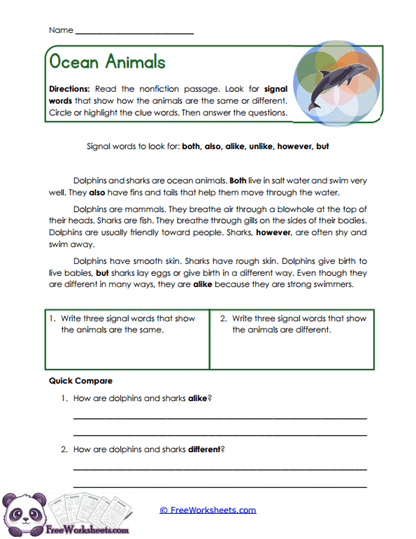
Ocean Animals
- What Kids Do:
Students read about dolphins and sharks and identify signal words while listing similarities and differences. - Target Skill:
Improves comprehension of text structure by recognizing language cues that signal comparison.
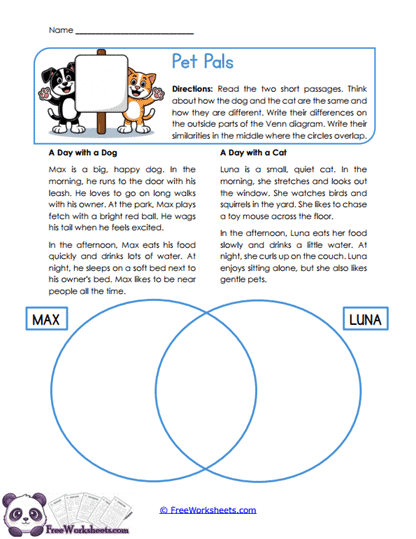
Pet Pals
- What Kids Do:
Learners read about a dog and a cat and place details into a Venn diagram showing overlaps and differences. - Target Skill:
Strengthens visual organization of ideas through structured comparison of familiar topics.
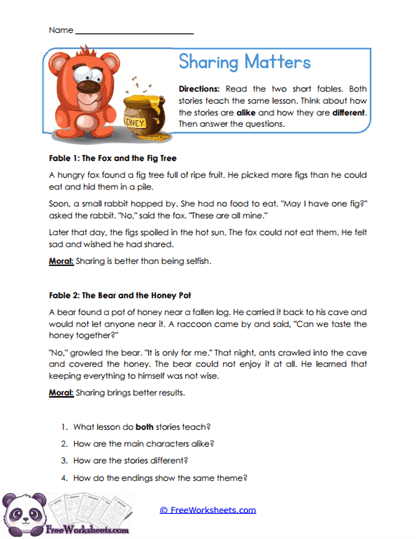
Sharing Matters
- What Kids Do:
Students read two fables and answer questions comparing story events and lessons learned. - Target Skill:
Builds thematic understanding by identifying shared messages across different narratives.
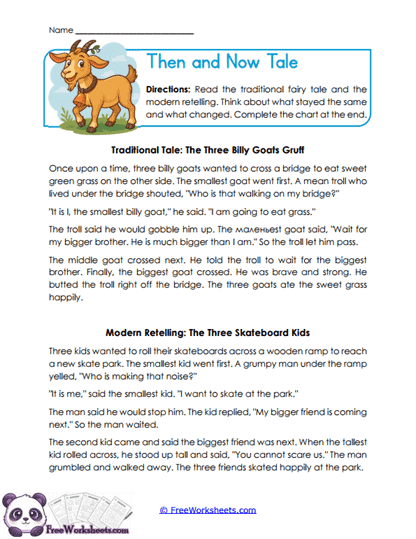
Then and Now Tale
- What Kids Do:
Students compare a traditional story and a modern version by analyzing characters, events, and changes. - Target Skill:
Enhances literary comparison by examining how stories evolve across different versions.
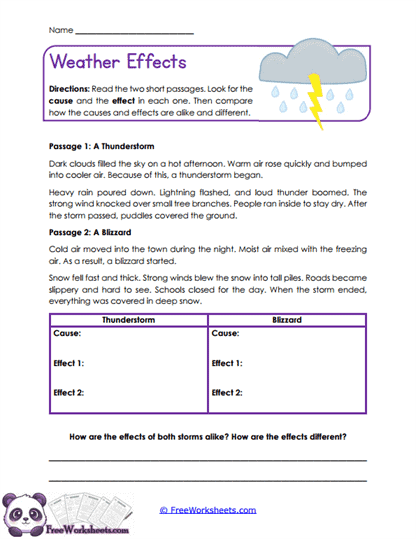
Weather Effects
- What Kids Do:
Students read about two storms and record causes and effects before comparing the events. - Target Skill:
Integrates comparison with cause-and-effect analysis to deepen comprehension across informational texts.