
2nd Grade Reading Comprehension Worksheets
These worksheets strengthen essential Reading skills through engaging, standards-aligned passages and questions. These free, ready-to-print PDF worksheets are designed for immediate classroom use and simple implementation. Students build skills in main idea identification, sequencing, cause and effect, character analysis, and evidence-based answering.
About This Collection of Worksheets
At the Grade 2 level, reading comprehension shifts from basic decoding to deeper understanding of literary and informational texts. Students are expected to identify main ideas, analyze character responses, understand story structure, and answer questions using text evidence in alignment with Common Core standards such as RL.2.1, RL.2.3, RL.2.5, and RI.2.2. These worksheets support that developmental progression by guiding students to think critically about both narrative and nonfiction passages.
This collection is ideal for literacy centers, guided reading groups, independent practice, homework, formative assessments, and RTI support. Teachers can use the structured questions to model close reading strategies, highlight key details, and reinforce evidence-based responses. The variety of formats-including multiple choice, matching, sequencing, and short written responses-keeps instruction purposeful and skill-focused.
Each worksheet is designed in an ink-friendly, black-and-white format for easy classroom copying and low-prep implementation. The clear layouts support organized student responses and minimize distractions. These printable PDFs make it simple to reinforce essential comprehension skills while maintaining instructional rigor.
Paul’s Teacher Tip
With Grade 2 students, focus on building the habit of going back to the text every time. After each question, ask “Where did you find that?” and have students point to the sentence. Model how to look for keywords in the question and match them to the text. For extra support, read short sections together and think aloud as you find answers. Over time, students begin to rely less on guessing and more on evidence, which is a big step toward stronger comprehension.
Worksheet Collection Skill Spotlights
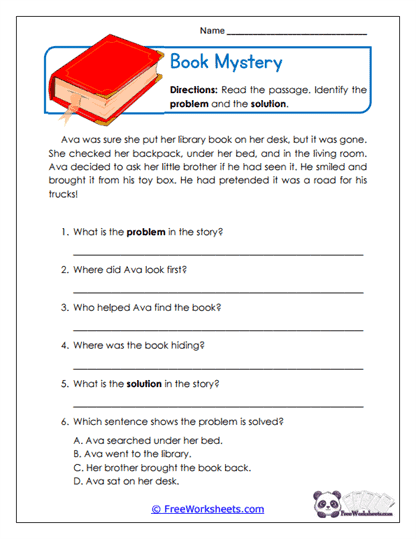
Book Mystery
• What Kids Do – Students read a story, identify the main problem, and explain how it is solved using details.
• Target Skill – Builds understanding of problem and solution with text evidence.
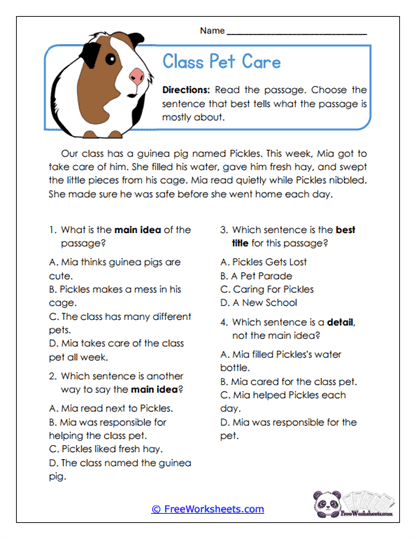
Class Pet Care
• What Kids Do – Students read a passage, choose the main idea, and identify details that support it.
• Target Skill – Develops main idea and supporting detail identification.
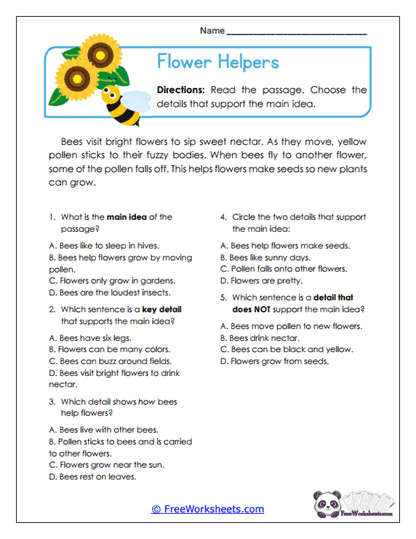
Flower Helpers
• What Kids Do – Students read a nonfiction text and select details that support the main idea about pollination.
• Target Skill – Builds main idea comprehension in informational text.
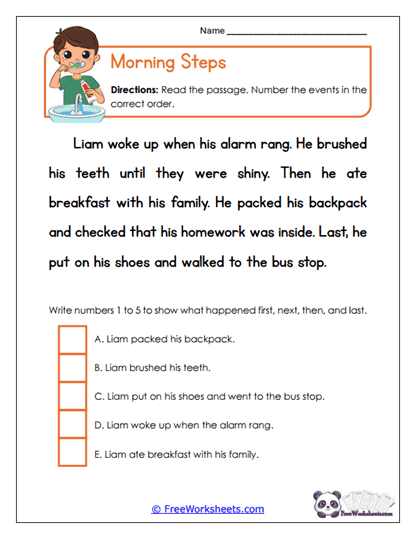
Morning Steps
• What Kids Do – Students read a story and number events in the correct order.
• Target Skill – Develops sequencing and chronological understanding.
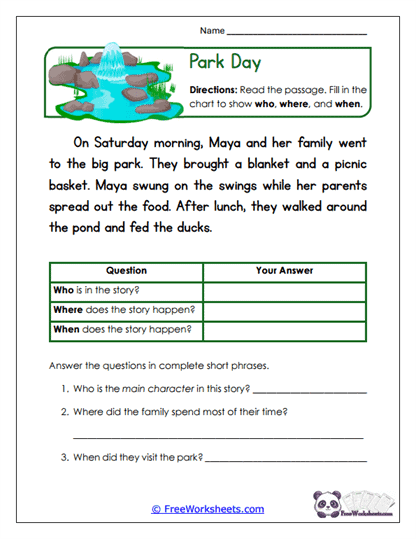
Park Day
• What Kids Do – Students identify characters, setting, and time, then record details from the text.
• Target Skill – Builds understanding of key story elements.
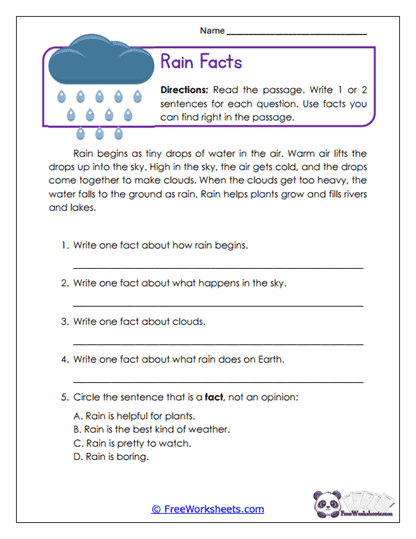
Rain Facts
• What Kids Do – Students read a passage and answer questions about the main topic and supporting details.
• Target Skill – Develops nonfiction comprehension and evidence use.
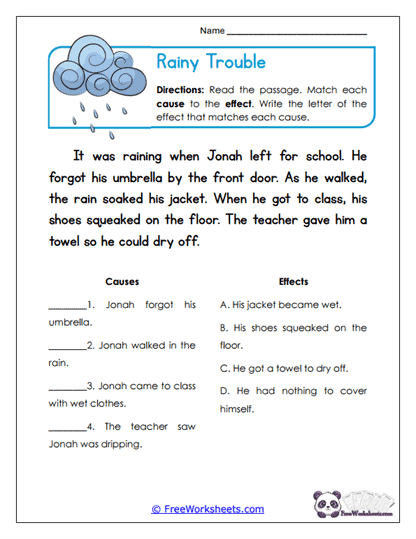
Rainy Trouble
• What Kids Do – Students match causes and effects based on events in a story.
• Target Skill – Builds cause-and-effect understanding.
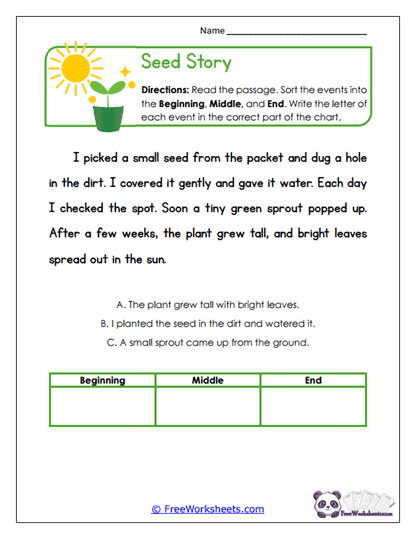
Seed Story
• What Kids Do – Students sort events into beginning, middle, and end.
• Target Skill – Develops understanding of story structure.
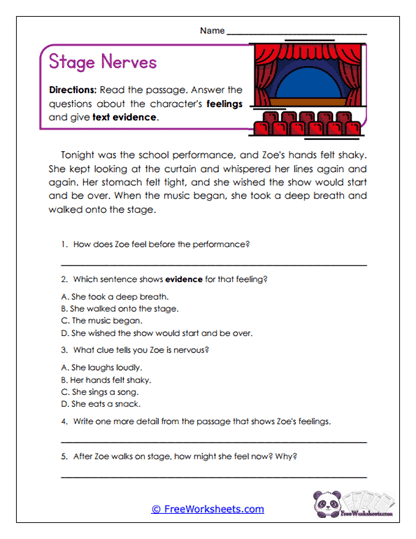
Stage Nerves
• What Kids Do – Students identify a character’s feelings and support their answers with clues from the text.
• Target Skill – Builds inference of emotions using evidence.
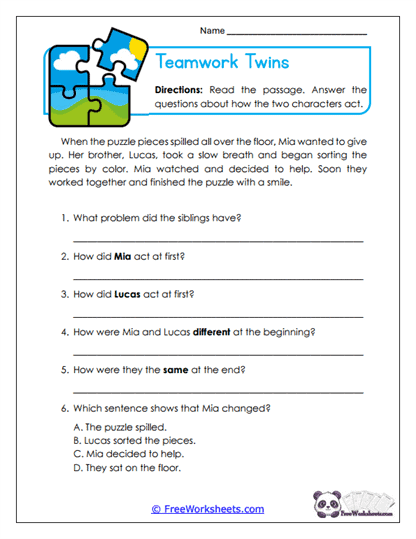
Teamwork Twins
• What Kids Do – Students compare how two characters respond to a problem and explain how one changes.
• Target Skill – Develops character comparison and growth analysis.
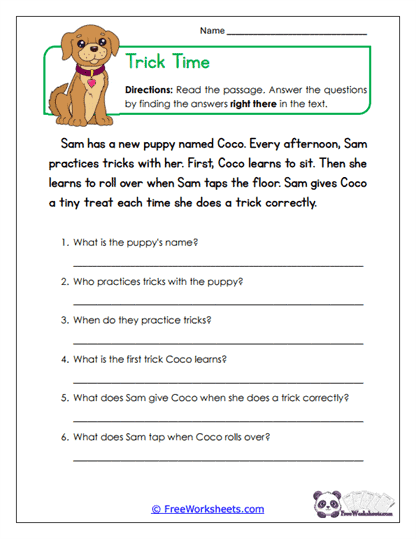
Trick Time
• What Kids Do – Students answer questions by finding details directly in the text.
• Target Skill – Builds literal comprehension and text-based answering.
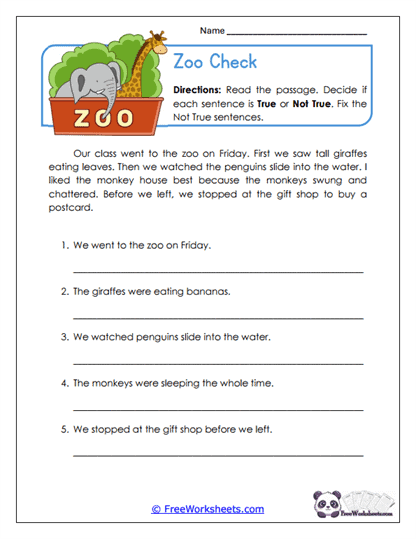
Zoo Check
• What Kids Do – Students decide if statements are true or false and correct them using the passage.
• Target Skill – Develops close reading and accuracy checking.