
Read-along Literary Texts Worksheets
Grade 2 Reading Read-along Literary Texts worksheets help young learners build fluency, comprehension, and confidence through engaging, structured stories. These free, ready-to-print PDF format worksheets are designed for immediate classroom use and easy implementation. Students strengthen skills like sequencing, main idea, and character understanding aligned to curriculum standards expectations.
About This Collection of Worksheets
This collection is carefully designed to support developing readers as they move from basic decoding into smoother, more confident reading. Each worksheet uses engaging, age-appropriate stories that help students stay focused while practicing essential literacy skills. The read-along format encourages students to actively track print, listen, and respond, making reading a more interactive experience.
You’ll find a strong balance between fluency practice and comprehension work throughout this set. Students are guided to think about what they read, not just how they read it. Activities such as echo reading, sequencing, and identifying main ideas help build deeper understanding while still supporting foundational reading development.
The structure of these worksheets also supports flexible instruction. They can be used for whole-group modeling, small-group practice, partner reading, or independent work. This makes them especially useful for differentiated instruction, allowing teachers to meet students where they are while steadily building essential Grade 2 reading skills.
Paul’s Teacher Tip
When using read-along texts, always model the reading first before asking students to try on their own. This gives them a clear example of pacing, expression, and accuracy. Encourage students to track with their finger or pencil to build strong one-to-one matching skills. Repeated readings are key-have students read the same passage more than once to build confidence and smoothness. You can also pair students for partner reading to increase engagement and provide extra support. Finally, always follow up with a quick discussion to connect fluency with comprehension.
Worksheet Collection Skill Spotlights
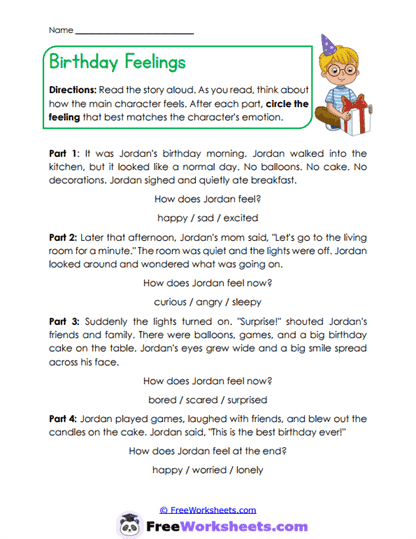
Birthday Feelings
- What Kids Do:
Students read a story in short, clearly defined parts and pause to think about how the character feels at each stage. They choose emotions that match the text and explain their thinking using clues from the story. This encourages careful reading and reflection instead of guessing, while helping students connect events to emotions in a meaningful way. - Target Skill:
This activity builds character analysis skills by helping students track emotional changes across a narrative. It aligns with Common Core standards for understanding characters and their responses to events, supporting deeper comprehension and encouraging students to use text evidence to justify their thinking.
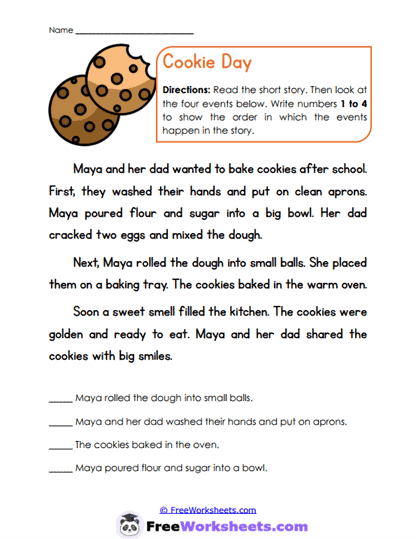
Cookie Day
- What Kids Do:
Students read a simple, engaging story about baking cookies and identify the correct order of events. They analyze sequence words like “first,” “next,” and “then,” and apply that understanding to organize events logically. This task helps students connect actions in the story to real-life experiences while strengthening comprehension. - Target Skill:
This worksheet targets sequencing skills, a critical component of reading comprehension. Students learn to identify how events unfold in a structured order, which aligns with Common Core expectations for understanding story structure and supports both reading comprehension and early writing organization.
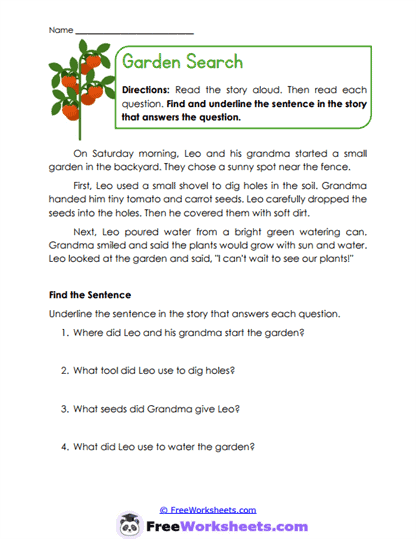
Garden Search
- What Kids Do:
Students read a short passage and answer questions by going back into the text to find supporting evidence. They underline or identify the exact sentence that proves their answer, reinforcing the habit of rereading and locating information directly from the story rather than relying on memory. - Target Skill:
This activity strengthens text evidence skills by teaching students to support answers with specific details. It aligns with Common Core standards focused on asking and answering questions about key details, helping students develop close reading habits essential for long-term academic success.
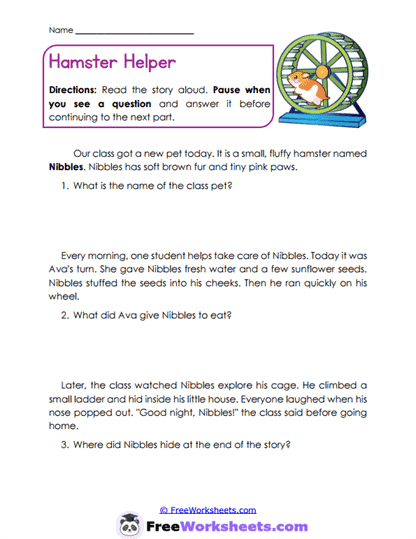
Hamster Helper
- What Kids Do:
Students read a story in small, manageable sections and stop after each part to answer questions. This structured approach keeps them engaged and encourages them to think about what they just read before moving on. It prevents rushing and supports better understanding of the story. - Target Skill:
This worksheet builds active reading and comprehension monitoring skills. Students learn to pause, reflect, and respond while reading, which aligns with Common Core expectations for understanding key details and improves their ability to retain and process information.
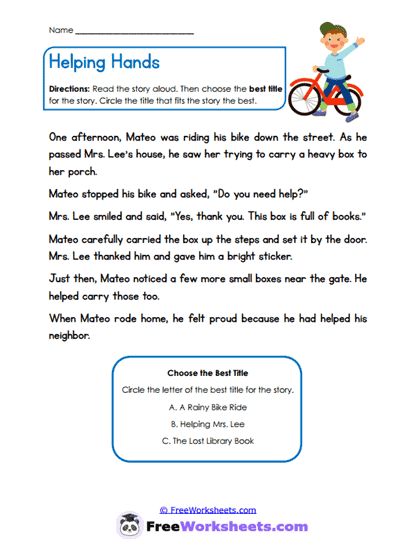
Helping Hands
- What Kids Do:
Students read a short story and choose the best title that represents the main idea. They compare answer choices and decide which one best captures what the entire story is mostly about, encouraging them to think beyond individual details and focus on the bigger message. - Target Skill:
This activity targets main idea identification, a key comprehension skill aligned with Common Core standards. Students learn to summarize and recognize central themes, which supports both reading comprehension and writing development.
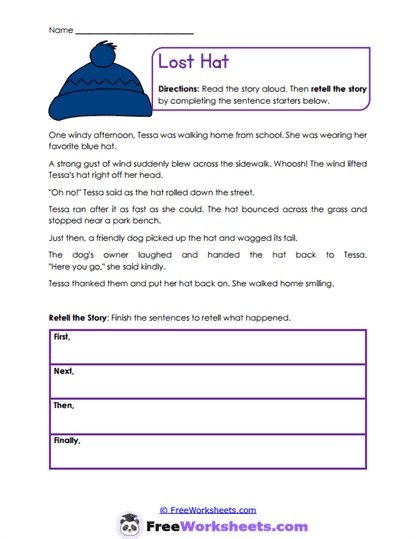
Lost Hat
- What Kids Do:
Students read a story and use sentence starters to retell events in the correct order. They organize their thoughts using words like “first,” “next,” “then,” and “finally,” helping them clearly communicate what happened from beginning to end. - Target Skill:
This worksheet focuses on retelling and sequencing, aligning with Common Core standards for recounting stories. It strengthens comprehension, organization, and communication skills, all of which are essential for both reading and writing success.
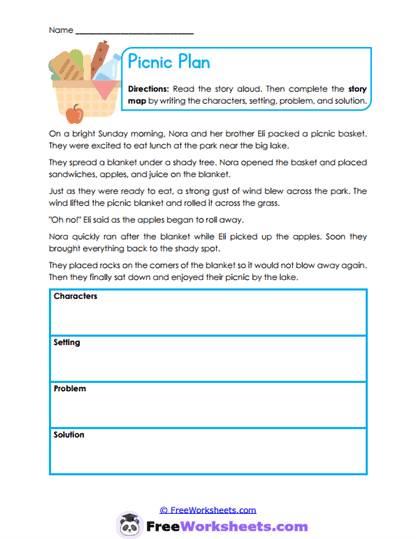
Picnic Plan
- What Kids Do:
Students read a story and complete a story map by identifying characters, setting, problem, and solution. They break the story into key parts, helping them better understand how narratives are structured and how events are connected. - Target Skill:
This activity develops story structure understanding, aligning with Common Core expectations for describing story elements. It supports comprehension and helps students build a foundation for organizing their own writing.
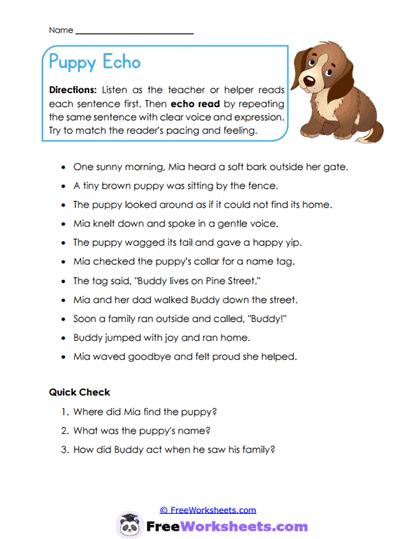
Puppy Echo
- What Kids Do:
Students listen to a sentence read aloud and then repeat it using the same tone and pacing. They practice echo reading with a short story, focusing on expression, clarity, and matching the model provided by the teacher or recording. - Target Skill:
This worksheet builds oral reading fluency and listening skills. It aligns with Common Core speaking and listening standards, helping students develop expression, accuracy, and confidence in their reading.
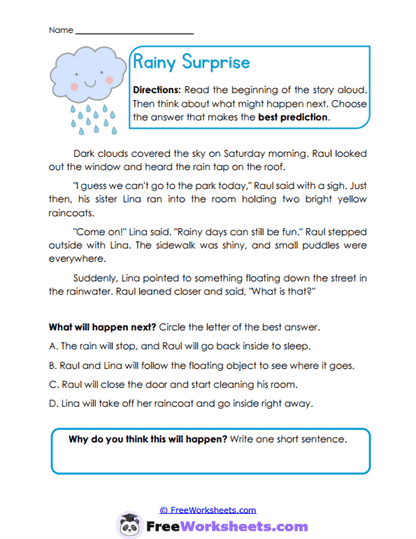
Rainy Surprise
- What Kids Do:
Students read part of a story and stop before the ending to make a prediction. They use clues from the text to choose what will most likely happen next and explain their reasoning, encouraging thoughtful and engaged reading. - Target Skill:
This activity targets prediction skills, a key component of comprehension. It aligns with Common Core standards for using text details to support thinking and helps students become more active and analytical readers.
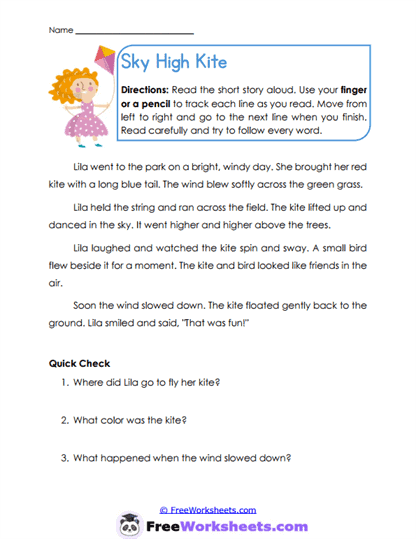
Sky High Kite
- What Kids Do:
Students read a complete story aloud while tracking each word with their finger or pencil. They focus on reading smoothly and accurately, then answer simple comprehension questions to show understanding of the text. - Target Skill:
This worksheet builds foundational fluency and tracking skills. It aligns with Common Core standards for reading with accuracy and understanding, helping students develop confidence and consistency in their reading.
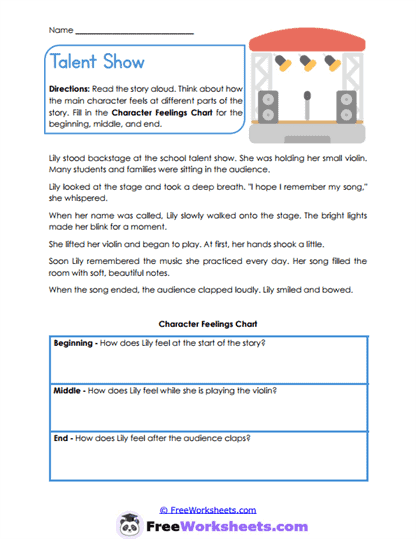
Talent Show
- What Kids Do:
Students read a story and complete a chart that shows how a character’s feelings change from the beginning to the end. They identify emotional shifts and connect them to events in the story, building deeper understanding. - Target Skill:
This activity strengthens character development analysis. It aligns with Common Core standards for describing how characters respond to events, supporting both comprehension and emotional awareness.
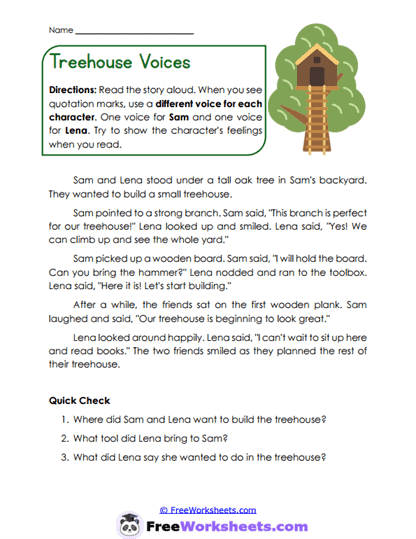
Treehouse Voices
- What Kids Do:
Students read a dialogue-based story and practice using different voices for each character. They pay attention to punctuation and context to decide how each character should sound, making reading more expressive and engaging. - Target Skill:
This worksheet targets expressive reading and character awareness. It aligns with Common Core fluency standards, helping students read with appropriate expression and understand how dialogue reveals character traits.