
Read-alone Informational Texts Worksheets
Grade 2 Reading Read-alone Informational Texts worksheets help students build independence and confidence when reading nonfiction passages. These free, ready-to-print PDF format worksheets are ideal for immediate classroom use or simple at-home practice. Students strengthen key skills like identifying main idea, understanding text structure, and using evidence to answer questions.
About This Collection of Worksheets
This collection is designed to help Grade 2 students become more confident, independent readers of informational text. Each worksheet provides a focused passage with clear questions that guide students to slow down, reread, and locate key details. These early habits are essential for building strong comprehension skills that carry across all subjects.
Students are also introduced to important nonfiction concepts such as main idea, sequencing, cause and effect, and comparing information. Rather than overwhelming learners, each worksheet isolates one or two skills at a time, allowing students to build understanding step by step. This makes the learning process feel manageable while still being meaningful.
The topics are engaging and often connected to science and real-world ideas, which helps students stay interested while learning. As students work through the collection, they begin to see patterns in how informational texts are organized, helping them read more efficiently and think more deeply about what they learn.
Paul’s Teacher Tip
When students begin working with informational texts, it’s important to teach them that the answers live in the passage-not just in their memory. Model how to go back into the text and point to the exact sentence that supports an answer. This simple habit builds accuracy and confidence.
Encourage students to read in small chunks instead of rushing through the entire passage. Stopping after each paragraph to ask, “What did we just learn?” helps improve understanding.
It’s also helpful to connect the content to real life whenever possible. If the passage is about animals, weather, or space, ask students what they already know-this activates prior knowledge and supports comprehension.
Finally, remind students that informational texts are meant to teach something. Keeping that purpose in mind helps them stay focused and engaged as they read.
Worksheet Collection Skill Spotlights
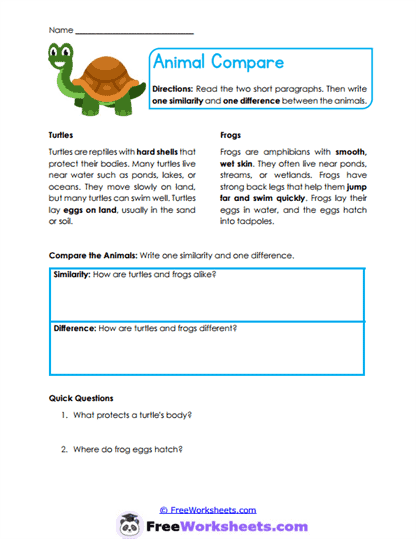
Animal Compare
- What Kids Do:
Students read two short informational passages and actively compare them by identifying one similarity and one difference. They organize their thinking using a clear structure, then answer follow-up questions that require careful reading of both texts and thoughtful comparison of details. - Target Skill:
This activity builds comparison and contrast skills across multiple texts, aligned with Common Core expectations. Students learn to analyze information from two sources, identify relationships between ideas, and support their thinking with details from each passage.
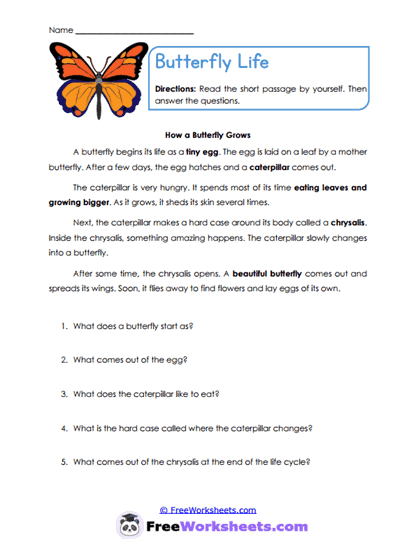
Butterfly Life
- What Kids Do:
Students read a passage about the butterfly life cycle and answer questions that require them to locate and recall specific facts. They follow the sequence of stages and practice returning to the text to confirm their answers instead of relying on memory alone. - Target Skill:
This worksheet strengthens skills in identifying key details and understanding sequence in informational text. It supports Common Core standards by encouraging students to ask and answer questions using evidence from the passage.
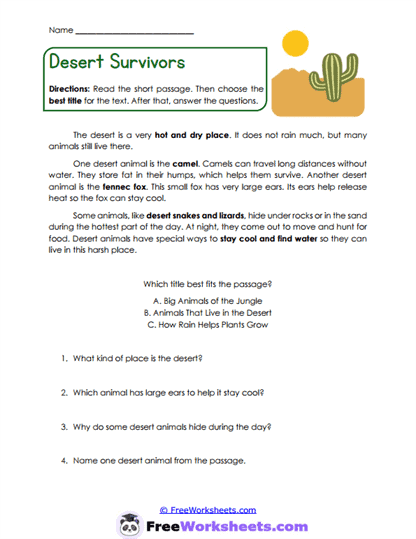
Desert Survivors
- What Kids Do:
Students read about how animals survive in the desert and choose the best title for the passage. They answer questions that guide them to think about the overall meaning while also locating supporting details throughout the text. - Target Skill:
This activity develops main idea identification by asking students to evaluate which title best represents the entire passage. It aligns with Common Core by reinforcing the connection between central ideas and supporting details.
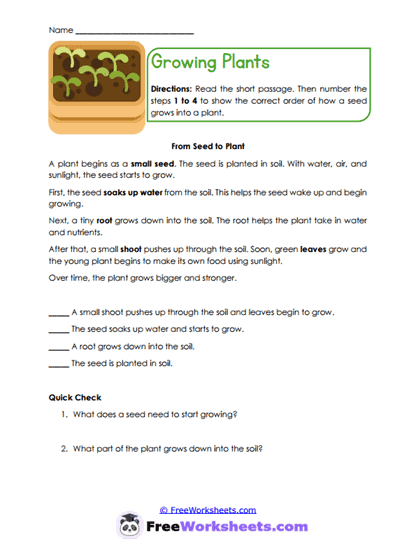
Growing Plants
- What Kids Do:
Students read a passage explaining how plants grow and then organize the steps in the correct order. They demonstrate understanding by sequencing events and answering questions that reinforce the process described in the text. - Target Skill:
This worksheet builds understanding of sequence and text structure. It supports Common Core standards by helping students describe how steps in a process are connected and presented in informational texts.
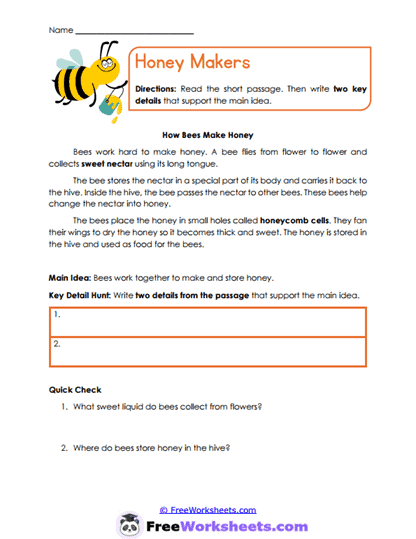
Honey Makers
- What Kids Do:
Students read about how bees make honey and focus on identifying details that support a given main idea. They go back into the passage to locate specific information that proves how bees work together. - Target Skill:
This activity strengthens the ability to connect supporting details to a central idea. It aligns with Common Core by reinforcing how key details contribute to understanding the main topic of a text.
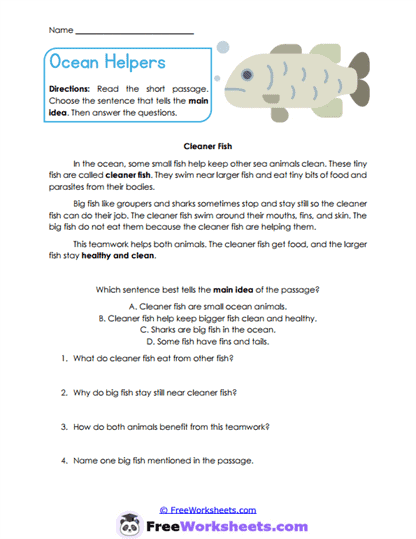
Ocean Helpers
- What Kids Do:
Students read a passage about cleaner fish and choose the best main idea from multiple options. They then answer additional questions that require them to understand how the animals interact and support each other. - Target Skill:
This worksheet develops main idea recognition and comprehension of relationships within a text. It supports Common Core by encouraging students to evaluate ideas and determine what the passage is mostly about.
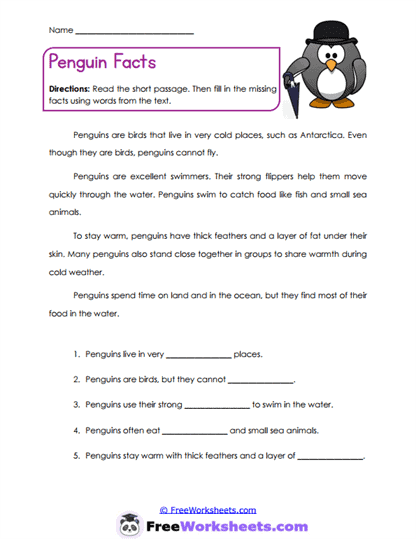
Penguin Facts
- What Kids Do:
Students read a passage and complete sentences using information from the text. They carefully match details to fill in blanks, requiring them to reread and understand how ideas are structured within sentences. - Target Skill:
This activity builds skills in using context and textual details to construct meaning. It aligns with Common Core by supporting vocabulary development and comprehension through accurate use of information.
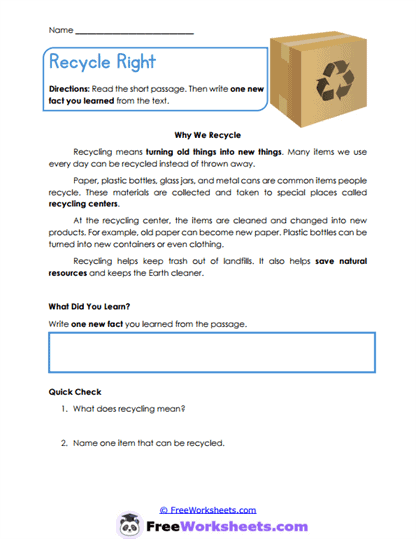
Recycling Facts
- What Kids Do:
Students read a passage about recycling and answer questions that focus on key ideas and important facts. They identify what the text is teaching and connect those ideas to real-world understanding. - Target Skill:
This worksheet strengthens comprehension of main ideas and key details in informational text. It supports Common Core by helping students identify central messages and explain important information.
Reptile Report
- What Kids Do:
Students read about reptiles and sort information into categories such as habitat, diet, and traits. This helps them organize details and better understand how information is grouped within nonfiction texts. - Target Skill:
This activity builds categorization and organization skills in reading. It aligns with Common Core by helping students identify key details and understand how informational texts are structured.
Space Words
- What Kids Do:
Students read a passage about space and use context clues to determine the meaning of unfamiliar words. They answer multiple-choice questions and explain how surrounding sentences helped them understand vocabulary. - Target Skill:
This worksheet develops vocabulary and context clue skills, aligned with Common Core language standards. Students learn to use surrounding text to determine meaning, improving independence in reading.
Volcano Facts
- What Kids Do:
Students read about volcanoes and identify cause-and-effect relationships within the passage. They answer questions that require them to understand how one event leads to another. - Target Skill:
This activity strengthens understanding of cause and effect in informational text. It supports Common Core by helping students explain connections between events and ideas.
Weather Watch
- What Kids Do:
Students read a passage about weather and determine whether statements are true or false based on the text. They must return to the passage to verify each answer and avoid relying on outside knowledge. - Target Skill:
This worksheet builds skills in identifying factual information and using text evidence. It aligns with Common Core by encouraging students to support answers with details found directly in the passage.