
Fluency Practice Worksheets
These Grade 2 Reading Fluency Practice worksheets help students improve how they read by building speed, accuracy, and expression. Each activity is free, ready-to-print, and provided in PDF format for immediate classroom use. Students develop essential skills like automaticity, phrasing, and reading with expression aligned to curriculum standards.
About This Collection of Worksheets
Fluency is a critical skill for Grade 2 students as they transition from decoding words to reading smoothly with understanding. These worksheets support this developmental stage by focusing on repeated reading, pacing, and expression, all aligned with Common Core standard RF.2.4. As students become more fluent, they are better able to focus on comprehension and meaning.
This collection is designed for flexible and consistent classroom use. Teachers can easily integrate these worksheets into daily fluency routines, literacy centers, small group instruction, homework, or RTI support. The variety of activities ensures students practice fluency in multiple ways, helping maintain engagement while reinforcing key reading behaviors.
Each worksheet features a clean, student-friendly layout that prints clearly while using minimal ink. The activities are low-prep and easy to implement, making them ideal for both classroom instruction and at-home practice.
Paul’s Teacher Tip
Fluency improves most when students hear what good reading sounds like, so always model before asking students to practice. Many students at this level read word-by-word, so focus on helping them group words into phrases and read with a natural rhythm. Encourage repeated reading, but remind students that smoothness and understanding matter more than speed. For struggling readers, try echo reading or choral reading to build confidence with support. For stronger readers, add expression challenges by asking them to match their voice to punctuation or character feelings. Over time, this consistent practice builds both confidence and comprehension.
Worksheet Collection Skill Spotlights
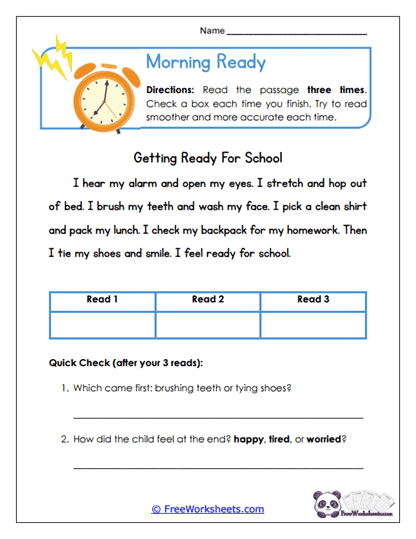
Morning Ready
- What Kids Do:
Students engage in structured repeated reading by reading the same passage multiple times, tracking progress, and refining pacing, accuracy, and vocal smoothness with each attempt. - Target Skill:
Strengthens reading automaticity and prosody through repeated exposure, enabling students to transition from decoding to fluent, expressive oral reading.
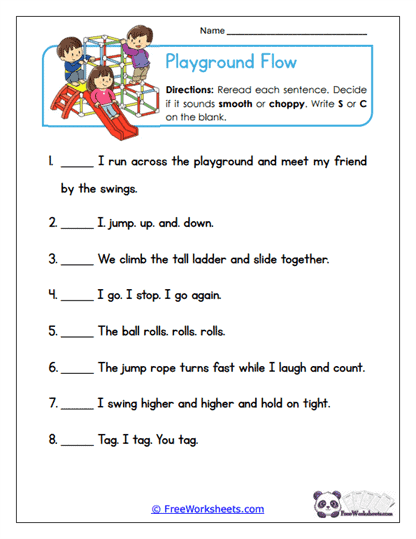
Playground Flow
- What Kids Do:
Students analyze short sentences aloud and evaluate whether the delivery reflects fluent phrasing or disjointed reading patterns, marking each accordingly. - Target Skill:
Develops metacognitive awareness of oral reading quality by distinguishing between fluent phrasing and choppy word-by-word delivery.
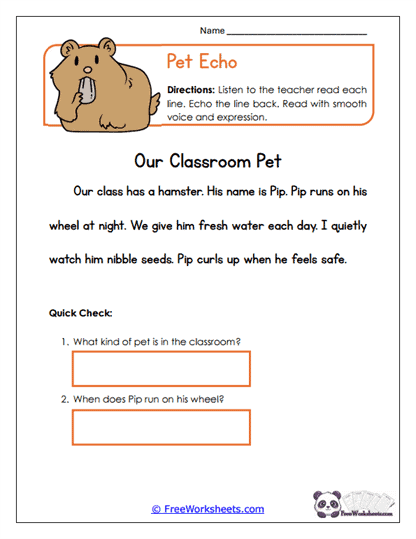
Pet Echo
- What Kids Do:
Students participate in guided echo reading by listening to modeled sentences and reproducing them with matched pacing, tone, and expression. - Target Skill:
Builds oral fluency through imitation of proficient reading models, reinforcing phrasing, intonation, and expressive delivery.
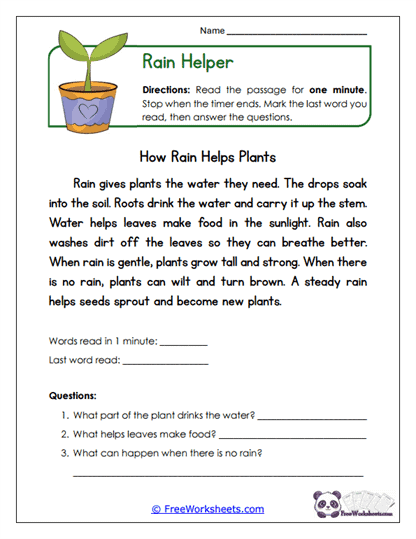
Rain Helper
- What Kids Do:
Students complete a timed one-minute reading, monitor how far they read, and then respond to comprehension prompts tied to the passage. - Target Skill:
Enhances reading stamina and rate control while maintaining comprehension accuracy under time-based conditions.
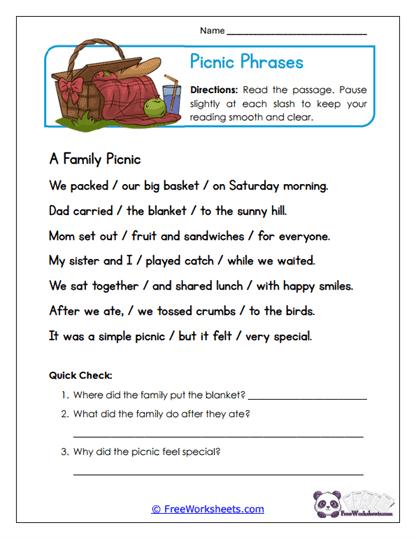
Picnic Phrases
- What Kids Do:
Students read passages marked with phrase boundaries and practice pausing appropriately to produce natural, speech-like reading patterns. - Target Skill:
Improves syntactic chunking and phrasing by training students to group words into meaningful units for smoother reading.
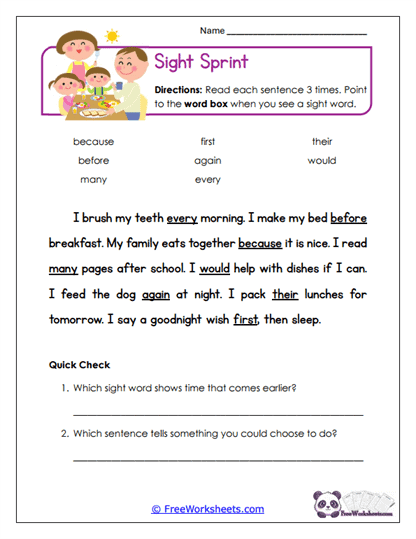
Sight Sprint
- What Kids Do:
Students repeatedly read a passage while actively identifying and recognizing high-frequency words to increase reading efficiency. - Target Skill:
Builds sight word automaticity, allowing for faster word recognition and freeing cognitive resources for comprehension.
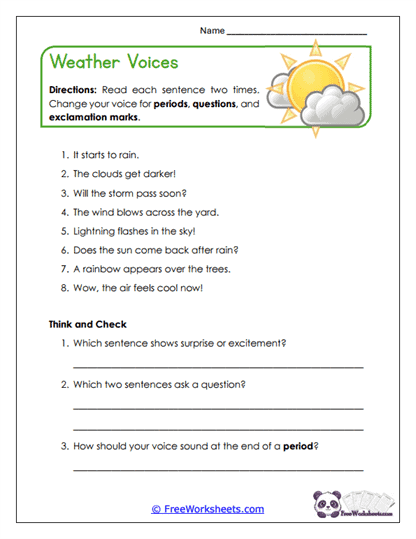
Weather Voices
- What Kids Do:
Students reread sentences and adjust vocal tone, pitch, and emphasis based on punctuation cues such as questions and exclamations. - Target Skill:
Strengthens expressive reading by applying punctuation-driven prosody to convey meaning and tone accurately.
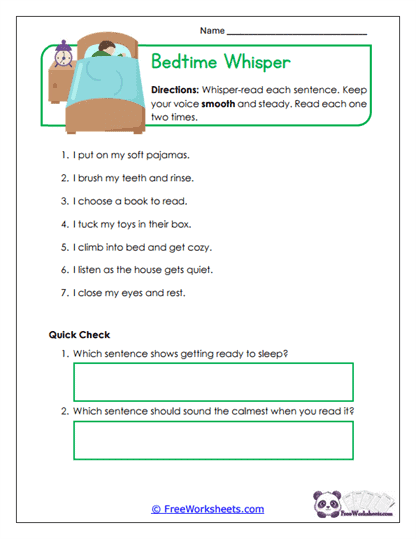
Bedtime Whisper
- What Kids Do:
Students practice controlled, quiet reading by rereading sentences with a steady, calm pace to reinforce smooth delivery. - Target Skill:
Develops pacing regulation and fluency control, helping students reduce hesitations and improve reading flow.
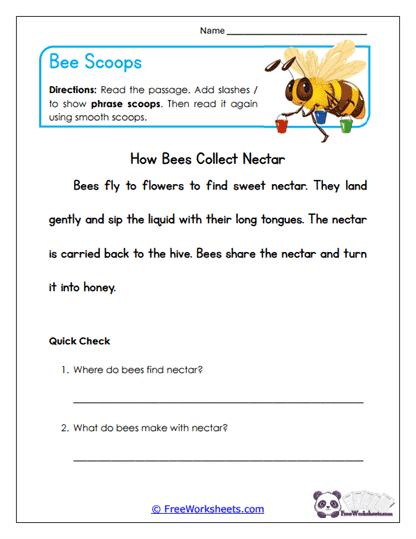
Bee Scoops
- What Kids Do:
Students actively mark phrase boundaries within a passage and then reread using those groupings to improve natural rhythm. - Target Skill:
Builds advanced phrasing skills by teaching students how to segment text into meaningful syntactic units.
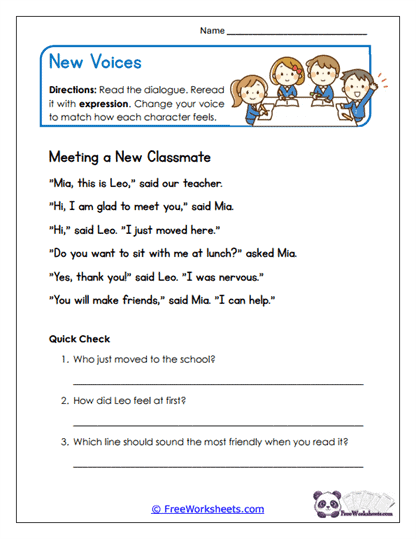
New Voices
- What Kids Do:
Students read dialogue passages and adjust their voice to reflect different characters’ emotions, tone, and intent. - Target Skill:
Enhances interpretive reading by integrating character analysis with expressive oral delivery.
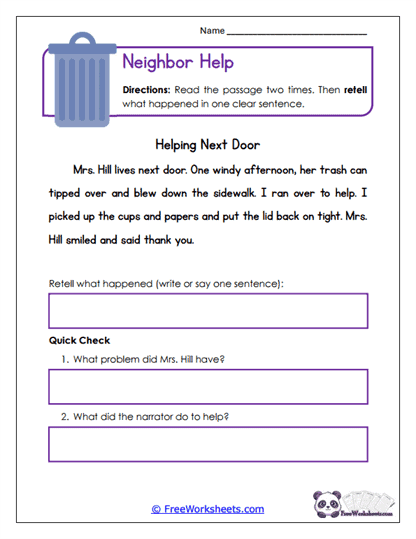
Neighbor Help
- What Kids Do:
Students perform repeated readings of a short story and then synthesize the main idea into a concise, single-sentence retell. - Target Skill:
Combines fluency and summarization by reinforcing smooth reading alongside concise idea extraction and expression.
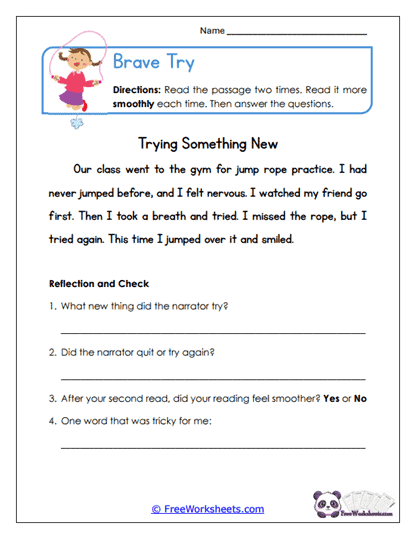
Brave Try
- What Kids Do:
Students reread a passage multiple times, reflect on improvements in fluency, and identify challenging words or sections. - Target Skill:
Promotes self-monitoring and reflective reading practices that support ongoing fluency growth and reading confidence.