
Decodable Texts Worksheets
These worksheets support accurate phonics-based reading in connected passages. These free, ready-to-print PDF activities are designed for immediate classroom use with low-prep routines and quick skill checks. Students practice decoding long vowels and vowel teams, building fluency through rereading, and strengthening comprehension with sequencing and text evidence.
About This Collection of Worksheets
Decodable reading is a pivotal bridge in Kindergarten-Grade 2 because it helps students apply phonics skills inside real sentences instead of isolated word lists. As students move from CVC patterns into silent e and vowel teams, they need controlled text that keeps cognitive load manageable while reinforcing automatic word recognition. This collection supports foundational standards by strengthening decoding accuracy, building fluency, and developing early comprehension habits through predictable structures.
Teachers can use these pages in phonics small groups, guided reading, literacy centers, and RTI blocks to target specific patterns and skills. Several activities support repeated reading and oral practice, while others reinforce comprehension through sequencing, story mapping, and simple nonfiction questions. The variety makes it easy to rotate worksheets as quick assessments, morning work, homework, or independent practice after explicit instruction.
Each printable is designed to be classroom-friendly with clear directions, ink-saving black-and-white formatting, and student-accessible layouts. Response spaces are structured to reduce frustration for emerging writers while still prompting complete, text-based answers. Whether used for skill reinforcement or progress monitoring, these worksheets keep routines consistent and expectations clear.
Paul’s Teacher Tip
With decodable texts, balance accuracy and meaning-don’t let students rush through just to “sound it out.” After reading, always ask a quick comprehension question to reinforce that reading is about understanding, not just decoding. Use repeated reading strategically: first for accuracy, second for fluency, and third for expression. For extra support, preview tricky words before reading so students don’t get stuck and lose confidence.
Worksheet Collection Skill Spotlights
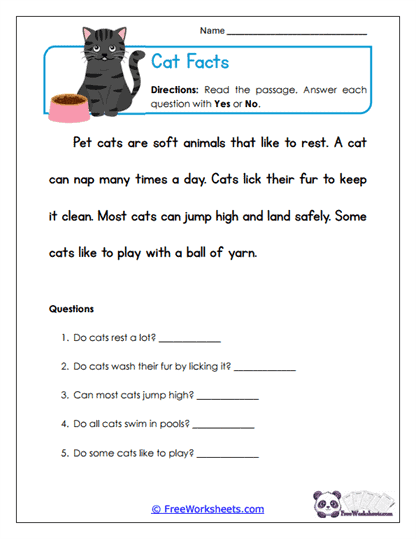
Cat Facts
• What Kids Do – Students read a short nonfiction passage and answer Yes/No questions using details from the text.
• Target Skill – Builds ability to answer questions using text evidence.
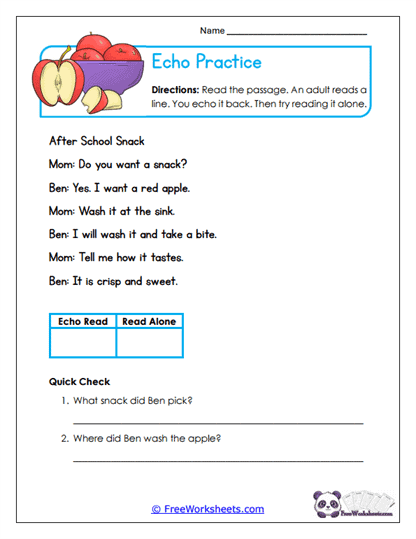
Echo Practice
• What Kids Do – Students listen, repeat, and reread a short dialogue to practice smooth, expressive reading.
• Target Skill – Develops fluency, phrasing, and expression.
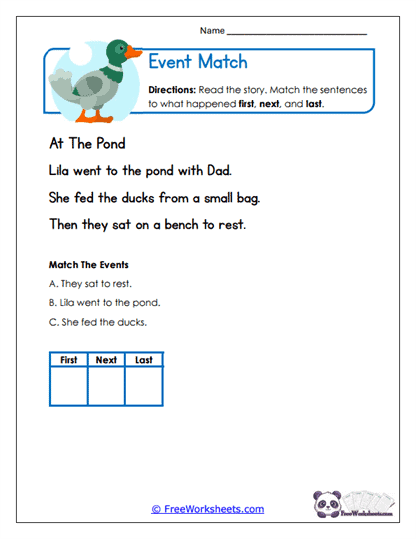
Event Match
• What Kids Do – Students read a story and match events to first, next, and last.
• Target Skill – Builds sequencing and understanding of story order.
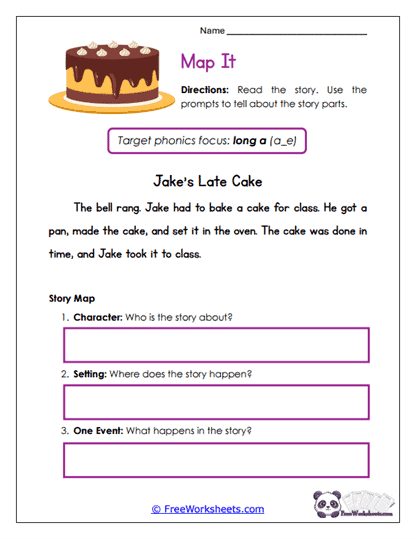
Map It
• What Kids Do – Students read a decodable story and fill in a story map (character, setting, event).
• Target Skill – Develops decoding of long vowel patterns and story element identification.
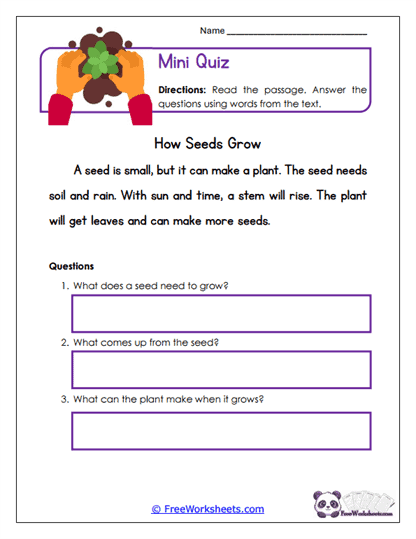
Mini Quiz
• What Kids Do – Students read a nonfiction passage and answer short questions using words from the text.
• Target Skill – Builds text-based answering and comprehension.
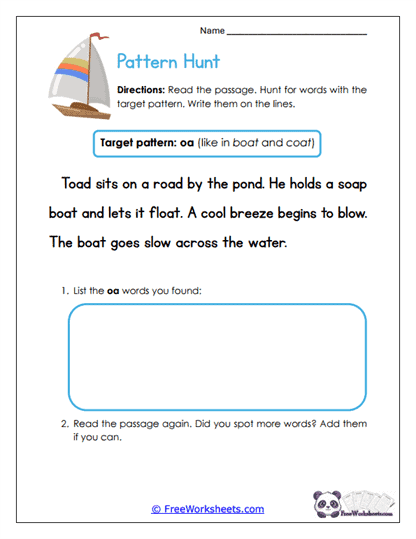
Pattern Hunt
• What Kids Do – Students read a passage and find words with a specific vowel team pattern.
• Target Skill – Strengthens recognition of vowel teams in connected text.
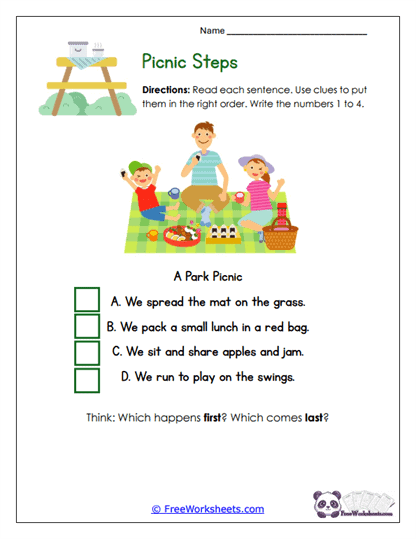
Picnic Steps
• What Kids Do – Students read simple sentences and number them in the correct order.
• Target Skill – Builds sequencing using text clues.
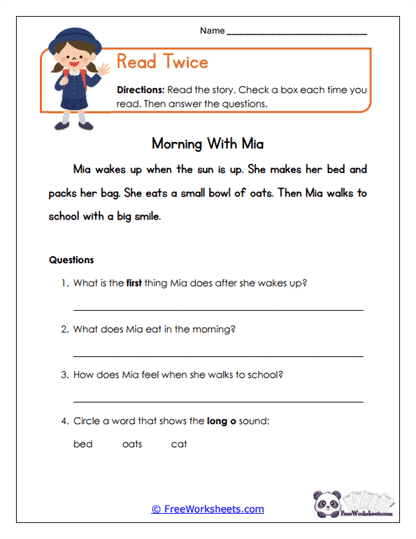
Read Twice
• What Kids Do – Students reread a passage multiple times and answer comprehension questions.
• Target Skill – Develops fluency and basic comprehension.
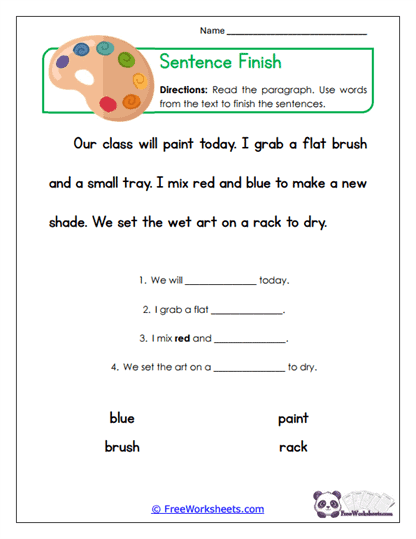
Sentence Finish
• What Kids Do – Students complete sentences using words from a passage and a word bank.
• Target Skill – Builds ability to locate and use text evidence.
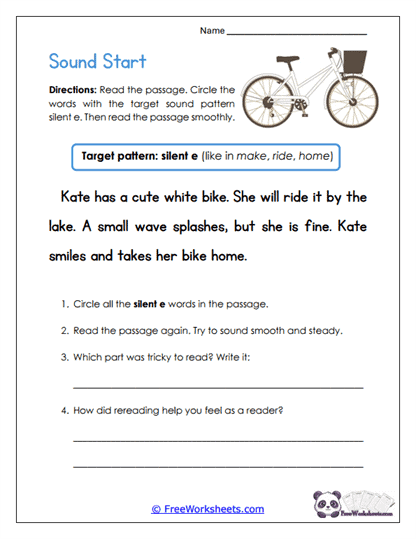
Sound Start
• What Kids Do – Students read a passage and circle silent e (VCe) words.
• Target Skill – Strengthens decoding of long vowel silent e patterns.
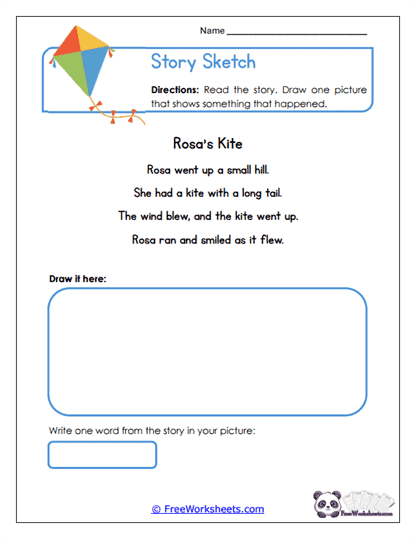
Story Sketch
• What Kids Do – Students draw a key event from the story and label it with a word from the text.
• Target Skill – Builds comprehension through visualization and text connection.
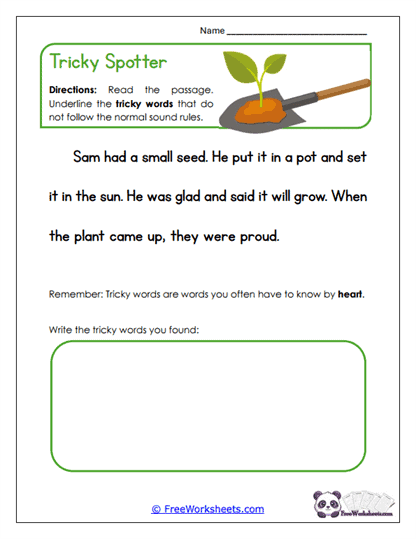
Tricky Spotter
• What Kids Do – Students find and write irregular “tricky” words from a passage.
• Target Skill – Develops recognition of high-frequency sight words.