
Inference and Theme Worksheets
Grade 2 Reading inference and theme worksheets help young learners move beyond basic recall and begin understanding deeper meaning in texts. These free, ready-to-print PDF format worksheets are perfect for immediate classroom use or at-home learning support. Students build essential skills like making inferences, identifying themes, and using text evidence aligned to curriculum standards.
About This Collection of Worksheets
This collection is designed to help Grade 2 students grow into thoughtful readers who can look beyond the words on the page. Each worksheet gently guides learners to combine what they read with what they already know, helping them make meaningful inferences about characters, events, and outcomes. This is a key step in moving from surface-level comprehension to deeper understanding.
You’ll also notice a strong focus on theme throughout the collection. Students begin to recognize that stories are not just about what happens-they carry lessons and messages. By working through these activities, learners practice identifying those lessons and connecting them to real-life situations, which strengthens both comprehension and critical thinking.
The worksheets include a variety of engaging formats such as charts, timelines, writing prompts, and evidence-based questions. This variety keeps students engaged while reinforcing the same core skills in multiple ways. As a result, students build confidence, improve their reasoning, and develop habits that support success across all areas of reading.
Paul’s Teacher Tip
When teaching inference and theme, slow down the process and model your thinking out loud. Show students how you notice a detail and then connect it to an idea, saying things like, “This makes me think…” or “This clue tells me…” This helps them understand that good readers are always thinking beyond the text.
Encourage students to point to evidence every time they answer a question. Even a simple prompt like “Show me where you found that” builds strong habits early.
It’s also helpful to connect themes to real life. Ask students if they’ve ever experienced something similar to the character-this makes the lesson more meaningful and easier to remember.
Finally, remind students that it’s okay if the answer isn’t directly stated. That’s the whole point of inference-they are learning to think, not just find.
Worksheet Collection Skill Spotlights
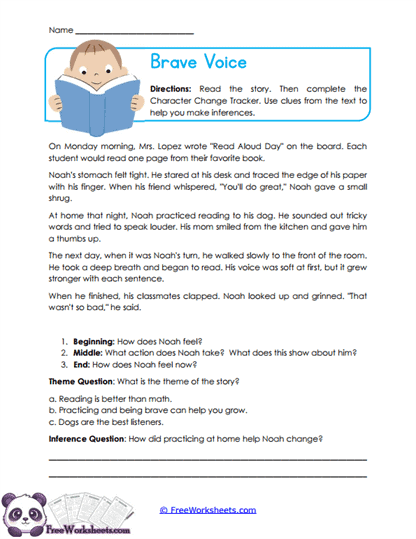
Brave Voice
- What Kids Do:
Students read a short passage and track how the main character’s feelings change from the beginning to the middle and end of the story. They answer guided questions that prompt them to notice subtle clues in the text, helping them explain emotional shifts and describe how the character grows over time. - Target Skill:
This activity strengthens students’ ability to analyze character development and make inferences using textual clues. It aligns with Common Core standards by encouraging students to describe how characters respond to events and to use evidence when explaining changes in feelings and behavior.
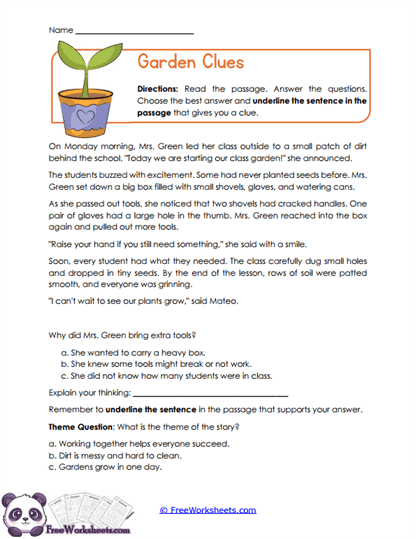
Garden Clues
- What Kids Do:
Students read a passage and answer a comprehension question, then return to the text to underline the exact sentence that supports their answer. This step encourages careful rereading and helps students connect their thinking directly to specific details in the story. - Target Skill:
This worksheet builds foundational skills in citing text evidence while making inferences. It supports Common Core expectations by teaching students to refer back to the text when explaining their answers, strengthening both comprehension and analytical thinking.
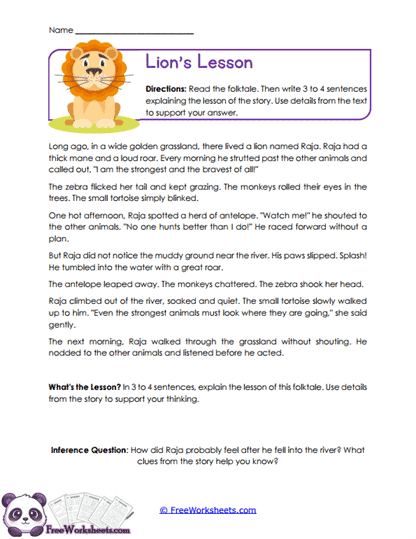
Lion’s Lesson
- What Kids Do:
Students read a folktale and write a short response explaining the lesson of the story in their own words. They also answer a question about how the character likely felt, using clues from the text to support their thinking. - Target Skill:
This activity develops students’ ability to identify and explain theme while incorporating supporting details. It aligns with Common Core by promoting written responses that demonstrate understanding of central messages and the use of evidence.
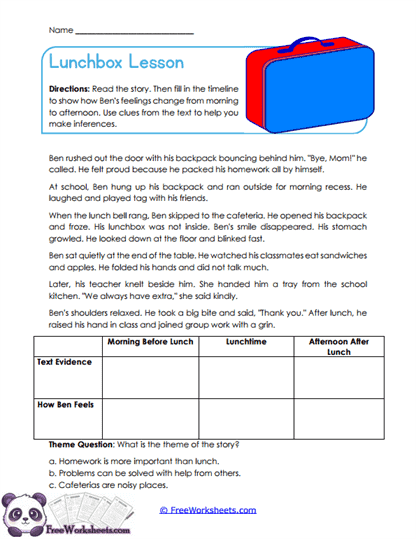
Lunchbox Lesson
- What Kids Do:
Students follow a character’s experience throughout a story and complete a timeline showing how the character feels at different points. They connect events to emotions and describe how those feelings change from beginning to end. - Target Skill:
This worksheet builds skills in tracking character development and making inferences about emotions. It supports Common Core standards by helping students describe how characters respond to major events and how those responses shape the story.
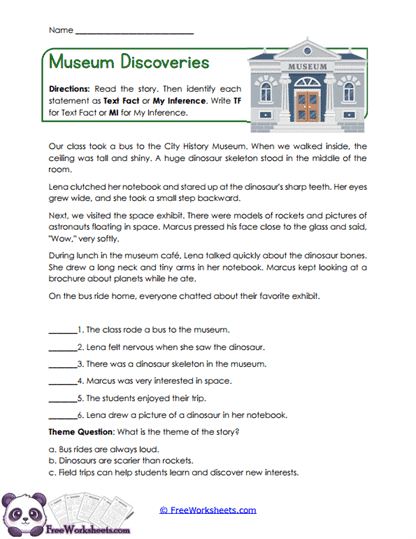
Museum Discoveries
- What Kids Do:
Students read a passage and sort statements into two categories: facts and inferences. They carefully decide whether each idea is directly stated or something they must figure out based on clues. - Target Skill:
This activity strengthens students’ ability to distinguish between explicit information and inferred meaning. It aligns with Common Core by developing critical thinking skills and encouraging students to base their ideas on evidence from the text.
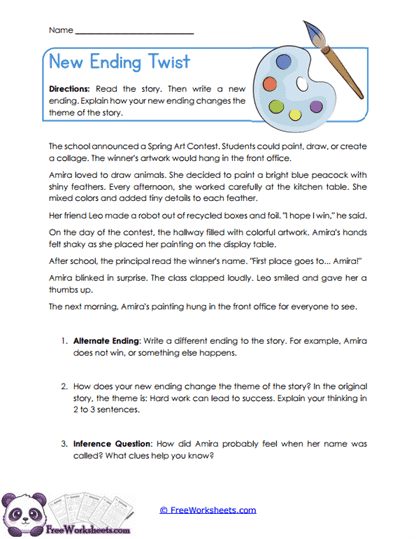
New Ending Twist
- What Kids Do:
Students read a story and create their own alternate ending. After writing their new conclusion, they explain how the change affects the message or lesson of the story. - Target Skill:
This worksheet develops deeper understanding of how theme is shaped by events in a story. It supports Common Core by encouraging students to analyze how changes in plot can influence meaning and to explain their thinking clearly.
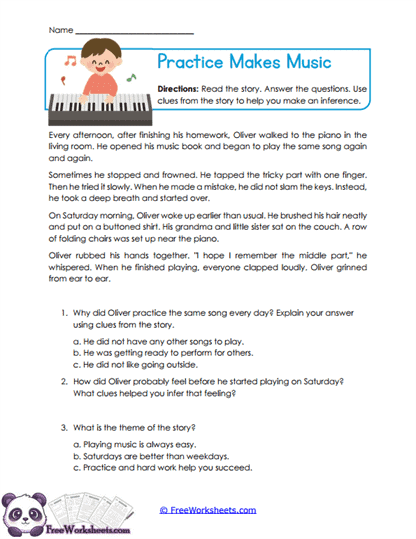
Practice Makes Music
- What Kids Do:
Students answer questions that require them to infer why a character acts a certain way and what motivates their decisions. They then identify the lesson the story teaches and connect it to the character’s actions. - Target Skill:
This activity builds inference and theme identification skills by focusing on character motivation. It aligns with Common Core by helping students determine central messages and use details to support their understanding.
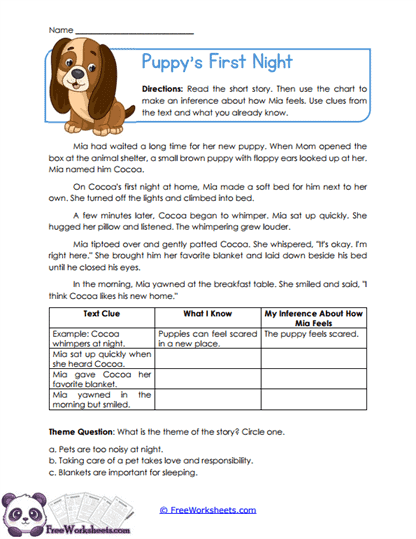
Puppy’s First Night
- What Kids Do:
Students read a story and complete a chart that combines text evidence with their own background knowledge. They use this process to infer how a character feels and why those feelings make sense. - Target Skill:
This worksheet strengthens foundational inference skills by guiding students to combine clues with prior knowledge. It supports Common Core standards by helping students ask and answer questions using details from the text.
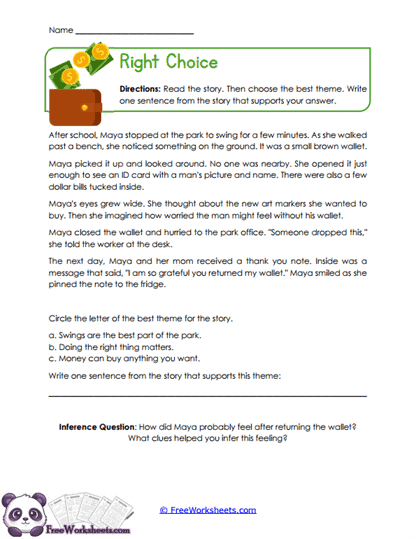
Right Choice
- What Kids Do:
Students read a scenario about a character making an important decision, then choose the best theme, find a sentence that supports it, and infer how the character likely felt afterward. - Target Skill:
This activity builds skills in identifying theme, supporting answers with evidence, and making emotional inferences. It aligns with Common Core by emphasizing text-based responses and thoughtful interpretation.
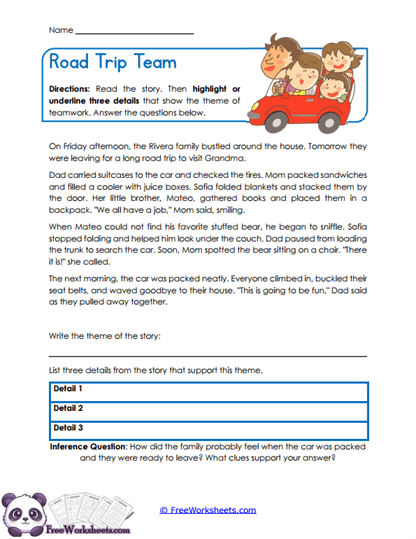
Road Trip Team
- What Kids Do:
Students identify the theme of a story and list multiple details that support it. They also answer an inference question that asks them to think about how the characters felt during the experience. - Target Skill:
This worksheet develops the ability to connect details to a central message. It supports Common Core by helping students determine themes and explain how specific events and actions support those ideas.
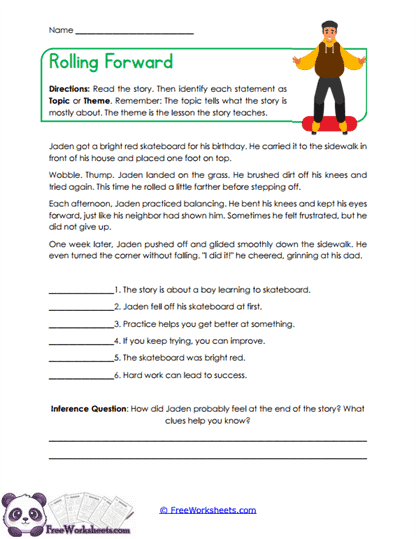
Rolling Forward
- What Kids Do:
Students read a story and label statements as either the topic or the theme. They also answer a question that requires them to infer how the character felt at the end of the story. - Target Skill:
This activity helps students distinguish between what a story is about and what it teaches. It aligns with Common Core by reinforcing understanding of theme and encouraging inference-based thinking.
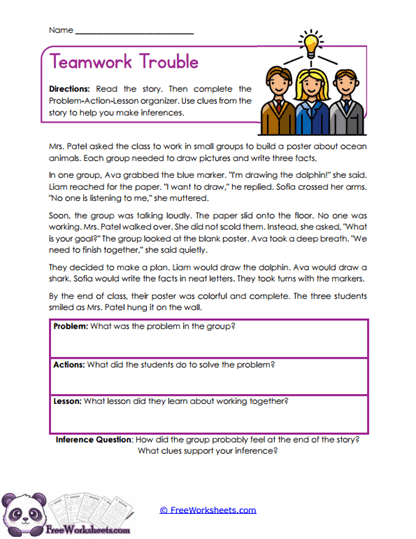
Teamwork Trouble
- What Kids Do:
Students read a story and complete an organizer that breaks the story into problem, actions, and lesson learned. They also infer how the characters likely felt after resolving the issue. - Target Skill:
This worksheet builds comprehension by connecting story structure to theme. It supports Common Core by helping students describe key events, understand lessons, and make inferences based on character experiences.