
Reading Passages Worksheets
Grade 2 reading Reading Passages worksheets help students build comprehension skills through engaging fiction and nonfiction texts designed for young learners. These free, ready-to-print worksheets in PDF format are created for immediate classroom use and at-home practice. Students strengthen skills such as identifying main ideas, analyzing text structure, and interpreting supporting details.
About This Collection of Worksheets
At the Grade 2 level, students begin transitioning from decoding words to truly understanding what they read, making structured reading passages essential for developing comprehension. These worksheets are designed to align with Common Core standards by helping students identify key ideas, analyze details, and understand both narrative and informational texts in meaningful ways.
Teachers can use these worksheets across a variety of instructional settings, including morning work, homework, RTI support, literacy centers, small group instruction, and formative assessments. Each worksheet provides targeted skill practice while keeping students engaged through relatable topics and clear, structured reading tasks.
The worksheets are designed with high-quality, ink-efficient layouts that are easy to print and accessible for both classroom and home use. With minimal preparation required, educators and parents can quickly implement these resources to reinforce essential reading skills without additional planning.
Paul’s Teacher Tip
At the Grade 2 level, one of the most important shifts is helping students move from simply reading words to actively thinking about what they read. Encourage students to pause frequently and ask themselves questions like, “What is this mostly about?” or “What details help explain this idea?” Many students benefit from visual supports such as underlining key details or circling unfamiliar words to stay engaged with the text. If students struggle, model your thinking out loud so they can hear how strong readers process information. For more advanced learners, ask them to explain their thinking or provide evidence from the text to support their answers.
Worksheet Collection Skill Spotlights
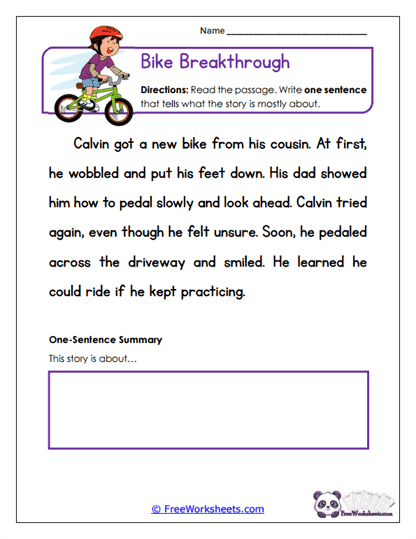
Bike Breakthrough
- What Kids Do:
Students read a short narrative passage about a child learning to ride a bike, then identify the overall meaning by writing a one-sentence summary that captures the central message while distinguishing between important events and smaller supporting details. - Target Skill:
Students develop summarization and main idea skills by synthesizing narrative information, strengthening their ability to condense multiple events into a coherent central idea while applying foundational Common Core comprehension strategies.
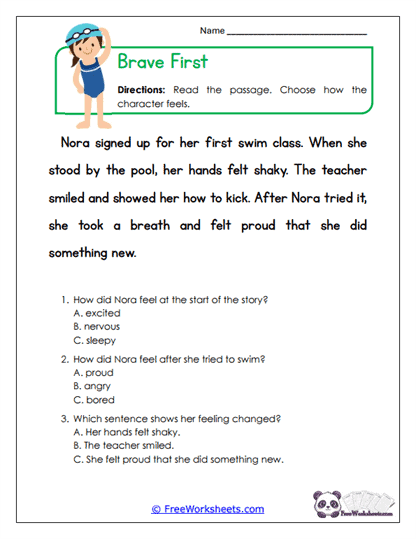
Brave First
- What Kids Do:
Students read a relatable story about a character experiencing nervousness and growth, then answer questions that require them to track emotional changes across the passage and identify specific sentences that reveal how feelings evolve over time. - Target Skill:
Students strengthen their ability to analyze character development by identifying emotional shifts and supporting evidence, building comprehension skills related to narrative interpretation and understanding internal character responses.
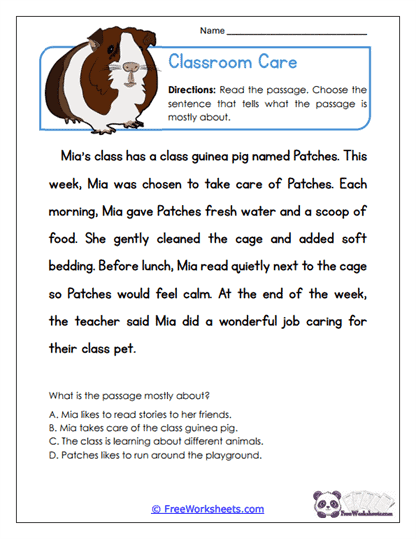
Classroom Care
- What Kids Do:
Students read a short passage about caring for a classroom pet and select the sentence that best represents what the text is mostly about, requiring them to evaluate multiple answer choices and focus on the overall meaning rather than isolated details. - Target Skill:
Students build main idea identification skills by distinguishing between central ideas and supporting details, improving their ability to analyze informational and narrative texts using Common Core-aligned comprehension strategies.
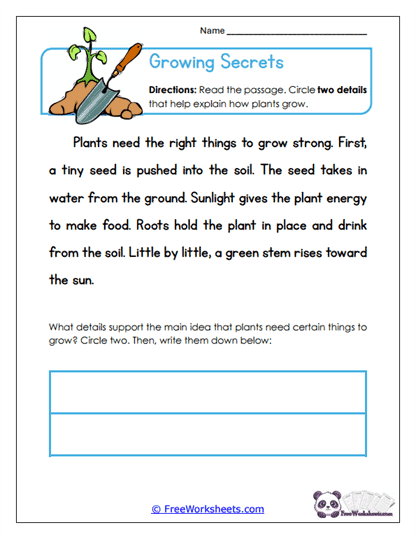
Growing Secrets
- What Kids Do:
Students read an informational passage about plant growth and identify multiple supporting details that explain the main idea, then record those details to demonstrate their understanding of how evidence strengthens comprehension. - Target Skill:
Students enhance their ability to locate and analyze supporting details, strengthening evidence-based reading skills and improving their understanding of how key information supports central ideas within informational texts.
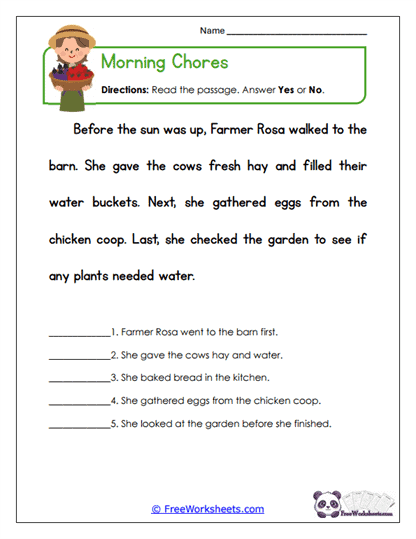
Morning Chores
- What Kids Do:
Students read a passage and evaluate a series of statements by marking whether each one is true or false based on the text, requiring them to reread and verify details rather than relying on assumptions or prior knowledge. - Target Skill:
Students develop accuracy in reading comprehension by verifying information against text evidence, strengthening their ability to distinguish between correct and incorrect interpretations using close reading strategies.
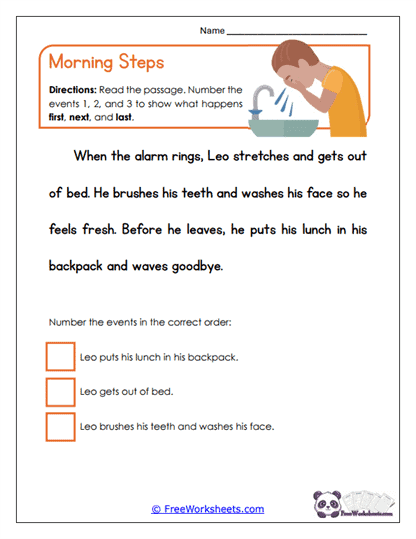
Morning Steps
- What Kids Do:
Students read a passage describing a daily routine and then organize events in the correct sequence by numbering them, requiring careful tracking of order and attention to transition words within the text. - Target Skill:
Students improve sequencing and organizational comprehension skills by identifying chronological order, supporting their ability to understand structured information and narrative flow in both fiction and nonfiction texts.
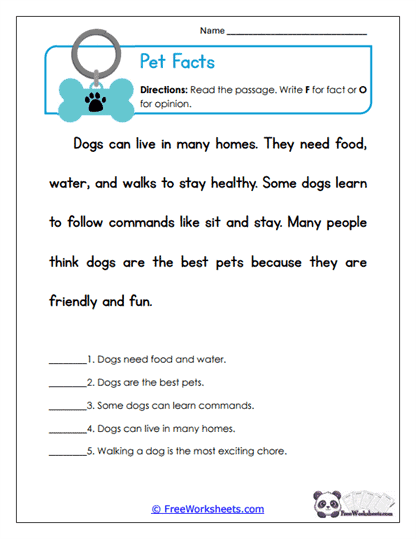
Pet Facts
- What Kids Do:
Students read an informational passage and determine whether each statement is a fact or an opinion, requiring them to analyze language carefully and distinguish between verifiable information and personal beliefs. - Target Skill:
Students strengthen critical thinking and text analysis skills by differentiating fact from opinion, supporting their ability to evaluate informational content and understand author intent in Common Core-aligned reading tasks.
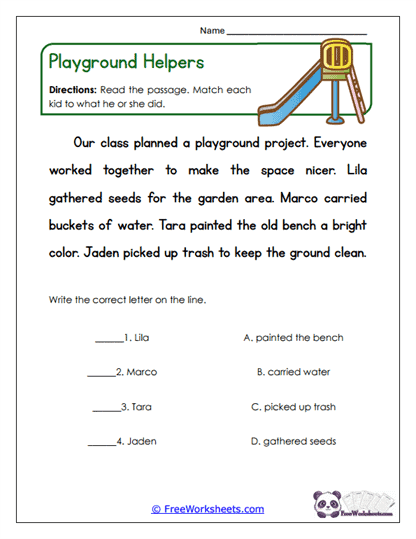
Playground Helpers
- What Kids Do:
Students read a passage and match each character to their corresponding action, requiring them to track details across the text and accurately connect individuals with specific events described in the story. - Target Skill:
Students build detail-tracking and comprehension accuracy by identifying relationships between characters and actions, strengthening their ability to retain and organize information within narrative texts.
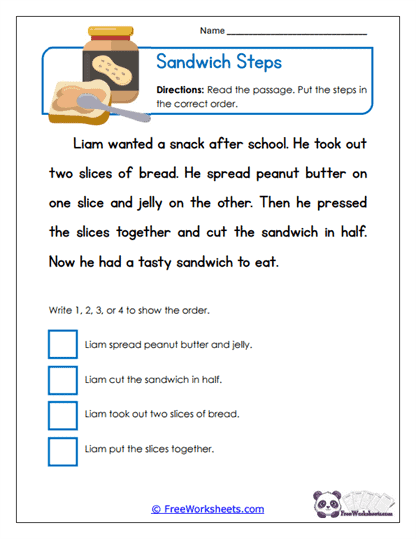
Sandwich Steps
- What Kids Do:
Students read a step-by-step passage about making a sandwich and arrange the steps in the correct order, applying their understanding of sequence while connecting the text to a familiar real-world process. - Target Skill:
Students enhance procedural comprehension and sequencing skills by organizing informational steps logically, supporting their ability to interpret and follow structured texts aligned to Common Core expectations.
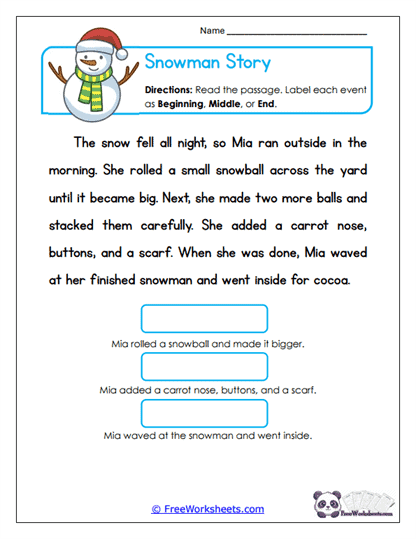
Snowman Story
- What Kids Do:
Students read a narrative passage and identify which events belong to the beginning, middle, and end of the story, requiring them to break down the text into structured parts for better understanding. - Target Skill:
Students develop story structure comprehension by analyzing narrative organization, improving their ability to recognize how events are arranged and how structure supports meaning in literary texts.
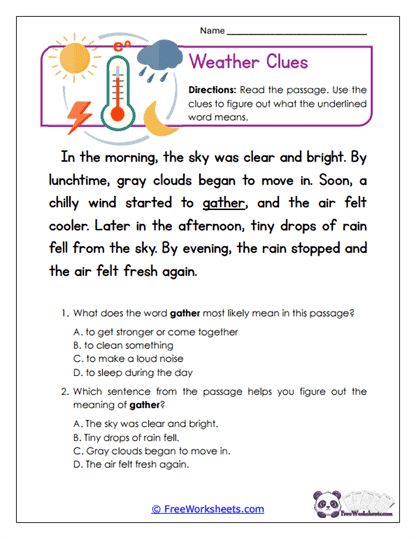
Weather Clues
- What Kids Do:
Students read a passage containing an unfamiliar word and use surrounding context clues to determine its meaning, then identify the specific sentence that helped them infer the correct definition. - Target Skill:
Students strengthen vocabulary and inference skills by using context to determine word meaning, supporting independent reading and deeper comprehension of unfamiliar language in informational texts.
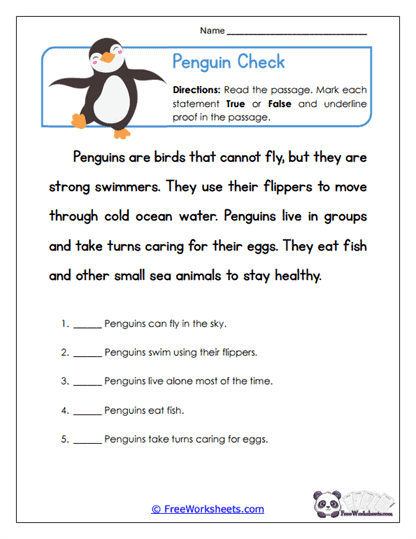
Penguin Check
- What Kids Do:
Students read an informational passage about penguins and determine whether each statement is true or false, then locate and underline evidence in the text that supports their answers. - Target Skill:
Students build evidence-based comprehension skills by verifying statements with textual support, strengthening their ability to analyze informational texts and justify answers using explicit details.