
About This Worksheet
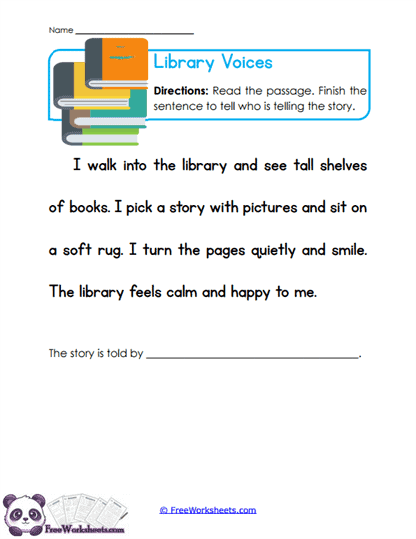
This 1st grade reading worksheet helps children identify who is telling a short library story. Students read about walking into the library, seeing books, choosing a picture story, sitting on a rug, and turning pages quietly. They then complete one sentence explaining who the narrator is. The simple format keeps the focus on recognizing first-person point of view from clear pronoun clues.
Learning Goals
The main goal is to help students identify a narrator who is speaking from inside the story. Children practice noticing first-person words such as I and connecting those words with the person carrying out the actions. They also strengthen their understanding that the narrator may be a character even when the character is not given a name. These skills support point-of-view recognition and comprehension.
Student Tasks
Children read the short library passage carefully and think about who is doing the actions. They then finish the sentence, “The story is told by ______,” using information from the passage. Students can circle each I before writing their response to make the narrator clues easier to see.
Common Challenges
Some children may look for a character name and become unsure because none is provided. Others may write “the author” even though the repeated I shows that the speaker is participating in the story. A parent or teacher can ask, “Who is walking, picking the book, and sitting on the rug?” to guide the answer.
Teaching Suggestions
Teachers can remind students that a narrator does not need to have a name. Parents and homeschool educators can ask the child to replace I with the child and notice how the sentence changes from first person to third person. It may help to have students explain orally why I is an important clue before completing the sentence. Keep the focus on who is experiencing the events.
Worksheet Features
The worksheet includes one short first-person library passage and one open-response narrator question. The uncluttered design makes it easy for children to focus on the passage and the repeated pronoun clues. The open-ended response also gives students practice putting their understanding into words. This printable works well for guided reading, homework, literacy centers, or point-of-view assessment.