
Inference Worksheets
Inference activities in 1st grade reading help children combine story clues with what they already know to figure out ideas that are not stated directly. These free, ready-to-print PDF worksheets are prepared for immediate classroom use, literacy centers, homeschool lessons, guided reading, homework, or independent practice. Students strengthen evidence use, prediction, and character reasoning while working toward important 1st grade reading curriculum goals.
About This Collection of Worksheets
Making inferences helps 1st grade readers move beyond simply recalling what a passage says. Children learn to notice clues, connect those details with background knowledge, and make a reasonable conclusion about feelings, actions, causes, events, or what might happen next. This kind of thinking supports deeper comprehension because students begin explaining not only what they know, but how they know it.
This collection introduces inference through several approachable formats. Children infer weather from clues, determine character feelings and thoughts, use picture evidence, figure out what happened before an event, make predictions, separate stated facts from inferred ideas, solve mystery-object clues, explain character actions, reason from informational text, and solve simple story mysteries. Pasted text
Teachers can use these worksheets during 1st grade guided reading, comprehension centers, small groups, inference mini-lessons, homework, or intervention. Parents and homeschool educators can encourage children to point to the clue that supports an answer before they explain their thinking. Because the pages gradually move from concrete visual clues toward more complex text-based reasoning, students get repeated practice building evidence-based conclusions.
Paul’s Teacher Tip
A simple inference frame can make this skill much easier for young readers: “The text says…, I know…, so I think…”. Encourage children to identify at least one clue before giving an answer, especially when a response feels like a guess. If they are struggling, ask what happened right before an action or what a certain clue usually means in real life. Picture-based inference activities are a good place to start because children can point directly to visible evidence. As confidence grows, move toward passages where the clues are spread across several sentences.
Worksheet Collection Skill Spotlights
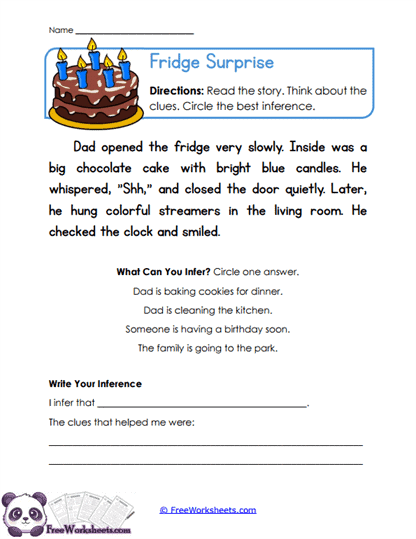
Birthday Clues
What Kids Do:
Children read a short passage about a chocolate cake, blue candles, colorful streamers, quiet preparations, and someone checking the clock. They choose the event these clues most likely point to and then explain which details helped them make that inference.
Target Skill:
This activity strengthens the ability to combine several related clues into one logical conclusion. Students practice prediction, evidence use, and recognizing that multiple details can work together to suggest an event that the passage never states directly.
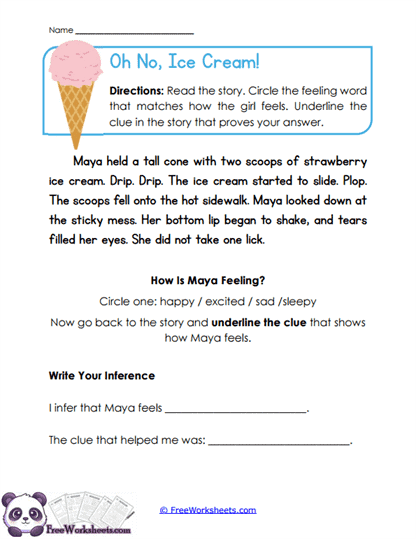
Feeling Clues
What Kids Do:
Children read about Maya dropping her ice cream, watching it melt, shaking, and getting tears in her eyes. They choose the feeling that best matches the story, underline the supporting clue, and explain why that evidence led them to the answer.
Target Skill:
The worksheet develops character inference by helping students connect actions and physical reactions with emotions. Children strengthen emotional vocabulary, close reading, and the ability to support a feeling inference with evidence rather than personal opinion alone.
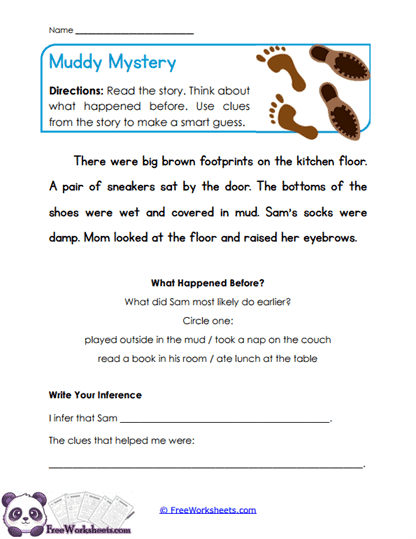
Muddy Clues
What Kids Do:
Children read clues involving muddy footprints, wet shoes, damp socks, and a surprised parent. They decide what most likely happened before the scene began and then write an inference explaining which clues support their conclusion.
Target Skill:
This activity builds cause-and-effect reasoning and backward inference. Students practice using several present details to reconstruct an earlier event, strengthening logical thinking, evidence use, and understanding of how clues can reveal something that happened before the text begins.
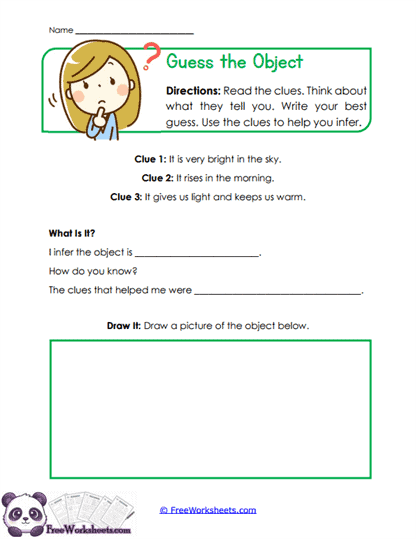
Mystery Object
What Kids Do:
Children read three clues describing something that is bright in the sky, rises in the morning, and gives light and warmth. They infer the mystery object, explain which clues helped them decide, and draw a picture of their answer.
Target Skill:
The worksheet strengthens clue integration and background-knowledge reasoning. Students practice checking that one answer fits all of the clues, then supporting their conclusion with evidence instead of choosing an object that matches only one detail.
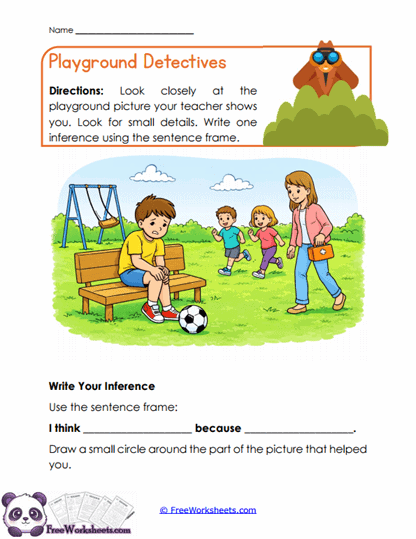
Picture Inference
What Kids Do:
Children study a detailed playground scene and decide what they think is happening beyond what is immediately obvious. They complete the sentence “I think ______ because ______” and circle the visual detail that supports their inference.
Target Skill:
This activity develops visual inference and evidence-based explanation. Students practice distinguishing between simple observation and a reasonable conclusion, then linking their idea directly to something they can see in the picture.
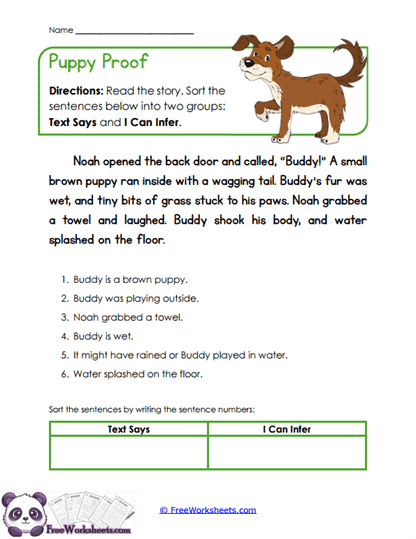
Puppy Evidence
What Kids Do:
Children read a passage about Buddy coming inside with wet fur, grass on his paws, and water splashing on the floor. They sort six statements into “Text Says” and “I Can Infer” to decide which ideas are stated directly and which must be figured out.
Target Skill:
The worksheet teaches the important difference between explicit information and inference. Students practice asking whether a statement appears directly in the text or must be concluded from clues, building stronger evidence awareness and reading comprehension.
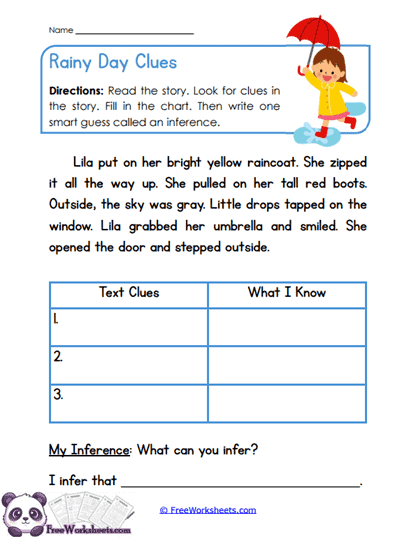
Rainy Inference
What Kids Do:
Children read about Lila wearing a raincoat and boots, seeing a gray sky, hearing drops, and grabbing an umbrella. They record story clues, connect them with what they already know, and complete the sentence “I infer that ______.”
Target Skill:
This activity introduces the full inference process in a structured way. Students practice identifying evidence, activating background knowledge, and combining both to form a reasonable conclusion that goes beyond simply repeating a sentence from the passage.
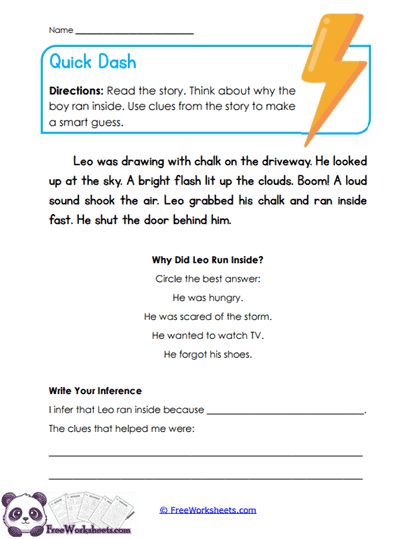
Storm Escape
What Kids Do:
Children read about Leo seeing a bright flash, hearing a loud sound, and quickly running inside. They choose the most likely reason for his action, complete an inference sentence, and identify the clues that support their explanation.
Target Skill:
The worksheet strengthens cause-and-effect inference by connecting surrounding events with a character’s response. Students practice looking at what happens immediately before an action and using those clues to explain why the character likely behaved that way.
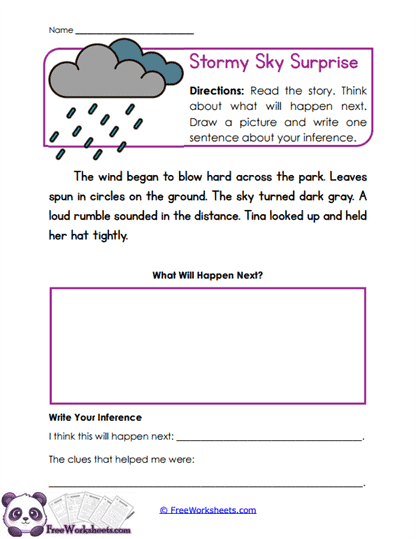
Storm Prediction
What Kids Do:
Children read about strong wind, spinning leaves, a dark gray sky, distant thunder, and Mia holding her hat. They draw what they think will happen next, write a prediction sentence, and identify the clues that support their idea.
Target Skill:
This activity develops prediction based on evidence rather than imagination alone. Students practice connecting weather clues with prior knowledge, anticipating a likely next event, and explaining how the passage supports their prediction.
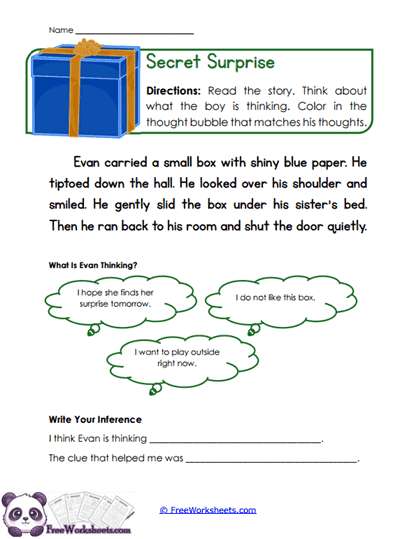
Surprise Clues
What Kids Do:
Children read about Evan carrying a shiny wrapped box, hiding it under his sister’s bed, smiling, and quietly leaving the room. They choose the thought bubble that best matches his likely thinking and explain which clue led them there.
Target Skill:
The worksheet develops inference about character thoughts and intentions. Students practice using actions as evidence for what a character may be planning or thinking, strengthening character understanding and evidence-based comprehension.
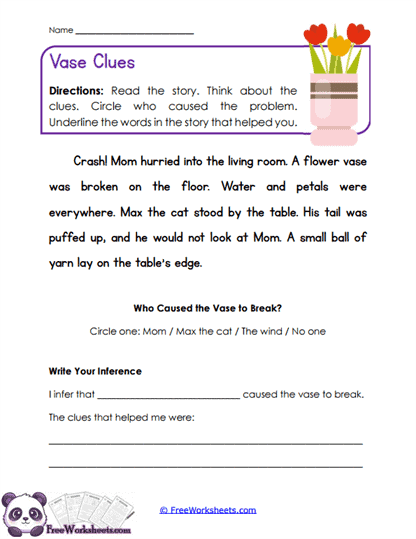
Vase Mystery
What Kids Do:
Children read about a broken flower vase, spilled water, petals, Max the cat standing nearby with a puffed tail, and yarn near the edge of the table. They decide what most likely caused the vase to break and explain the supporting clues.
Target Skill:
This activity strengthens logical inference and cause-and-effect reasoning. Students compare possible explanations, look for evidence that supports or weakens each choice, and build a conclusion from several connected story details.
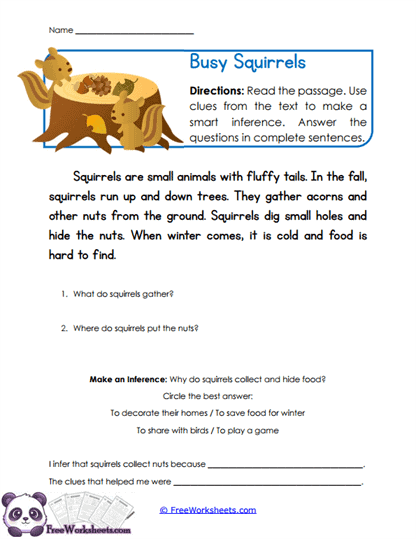
Winter Reasoning
What Kids Do:
Children read an informational passage about squirrels collecting and hiding nuts before winter. They answer direct questions about the facts and then infer why squirrels prepare food ahead of time, using the passage clues in their explanation.
Target Skill:
The worksheet combines literal comprehension with inferential thinking in nonfiction. Students practice moving from stated facts about seasons and food availability to a logical conclusion about animal behavior, supporting the inference with more than one detail.