
Grade 1 Reading Fluency Practice Worksheets
Grade 1 reading fluency practice in 1st grade reading helps children develop smoother, more accurate, and more expressive oral reading. These free, ready-to-print PDF worksheets are prepared for immediate classroom use, literacy centers, homeschool lessons, intervention, homework, or independent practice. Students strengthen automatic word recognition, phrasing, and reading expression while working toward important 1st grade curriculum goals.
About This Collection of Worksheets
Reading fluency develops when children can recognize words accurately, move through sentences smoothly, group words into meaningful phrases, and use expression that matches the text. In 1st grade, these skills help students shift from sounding out nearly every word toward reading connected text with greater confidence and understanding. Fluency practice also supports comprehension because children can devote more attention to meaning when word reading becomes more automatic.
This collection approaches fluency through repeated reading, sight-word practice, phrasing, echo reading, partner reading, decodable sentences, expression, whisper reading, punctuation, finger tracking, and patterned stories. Children work with individual words, sentences, poems, and short passages so they can practice pace, accuracy, expression, and smoothness in several different ways. Pasted text
Teachers can use these worksheets during 1st grade guided reading, fluency centers, small groups, intervention, partner work, or take-home reading practice. Parents and homeschool educators can listen to a first reading, choose one specific area to improve, and then have the child reread the same material rather than constantly moving to a new passage. The varied formats also make it easier to target a particular fluency need, such as tracking, sight-word automaticity, phrasing, pacing, or expressive reading.
Paul’s Teacher Tip
Fluency practice should sound smooth and meaningful, not simply fast. Before timing or counting anything, listen for whether the child is reading accurately, grouping words naturally, and responding to punctuation. When a word causes repeated hesitation, practice that word separately and then return to the full sentence so the child can experience a smoother reread. Modeling one sentence first can also give children a clear example of appropriate pace and expression. Two or three thoughtful re-readings are usually more useful than asking a child to race through a passage again and again.
Worksheet Collection Skill Spotlights
CVC Fluency
What Kids Do:
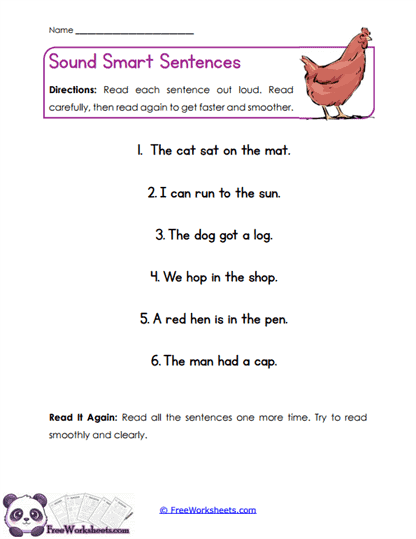
Children read six short sentences built from familiar CVC words and common sight words, including sentences such as “The cat sat on the mat.” They decode difficult words, reread each sentence more smoothly, and then complete another full reading of the set.
Target Skill:
This activity connects phonics with oral reading fluency. Students strengthen decoding accuracy, automatic recognition of short-vowel words, and smoother sentence reading by moving from careful sounding out toward more confident and continuous phrasing.
Echo Reading
What Kids Do:
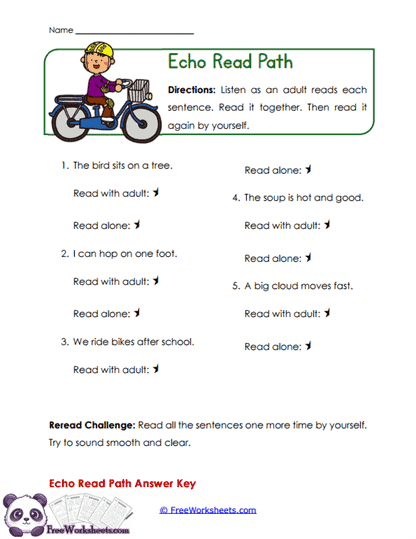
Children listen while an adult reads each sentence with natural pacing and expression, read the same sentence together with the adult, and then read it independently. They finish by rereading all of the sentences alone and trying to maintain the modeled fluency.
Target Skill:
The worksheet develops oral reading through imitation of a fluent model. Students strengthen pacing, accuracy, phrasing, expression, and confidence while gradually reducing adult support and taking more responsibility for reading each sentence independently.
Finger Tracking
What Kids Do:
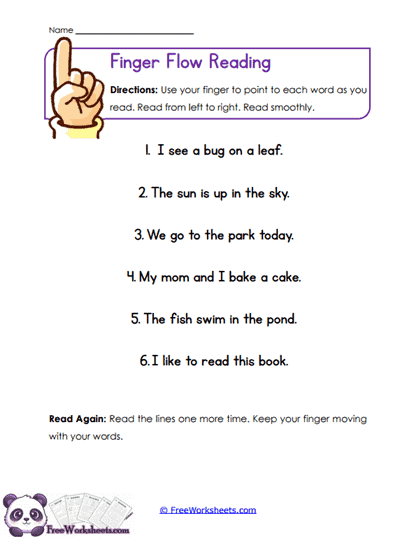
Children place a finger beneath the first word of each sentence and move it from left to right as they read aloud. They keep the finger aligned with the spoken words, finish six sentences, and then reread them with smoother tracking.
Target Skill:
This activity strengthens visual tracking and one-to-one matching between spoken and printed words. Students practice maintaining their place, avoiding skipped words, and developing a steadier left-to-right reading rhythm that can eventually continue without finger support.
Partner Reading
What Kids Do:
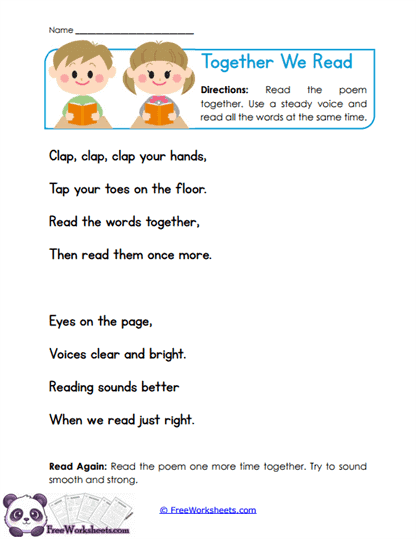
Children read a short rhythmic poem aloud with a partner, parent, or teacher. They try to keep their voices together, follow the same pace from line to line, and reread the poem so the second performance sounds smoother and more confident.
Target Skill:
The worksheet develops pacing, rhythm, phrasing, and oral reading confidence through supported group reading. Repeated language gives students opportunities to recognize familiar words automatically while learning how connected text should flow aloud.
Pattern Story
What Kids Do:
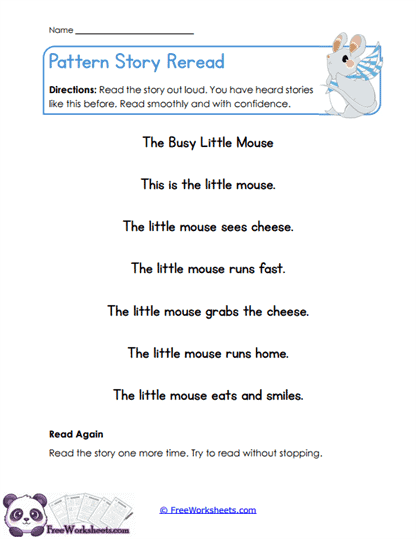
Children read “The Busy Little Mouse,” a short story that repeatedly uses the phrase “The little mouse.” They rely on the predictable sentence opening while carefully reading the changing words around it, then reread the full story with fewer pauses.
Target Skill:
This activity builds automatic phrase recognition and fluency within connected text. Students practice using repeated sentence structures as support while maintaining attention to new words, helping them improve phrasing, confidence, and overall reading flow.
Punctuation Voices
What Kids Do:
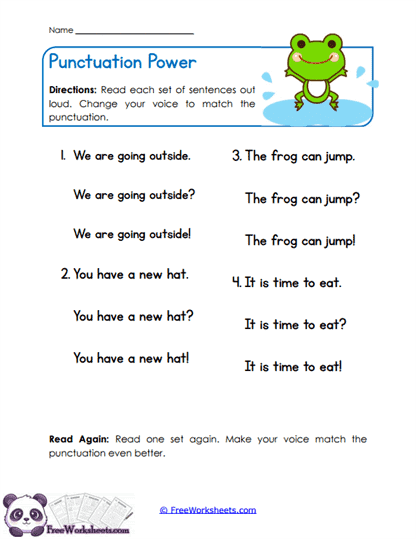
Children read groups of similar sentences that end with periods, question marks, or exclamation marks. They change their voice to match each punctuation mark and then reread one set while making the differences in tone clear and natural.
Target Skill:
The worksheet strengthens prosody by teaching students to use punctuation as a clue for oral expression. Children practice calm statement voices, questioning intonation, and excited expression while connecting sentence meaning with how the text should sound aloud.
Sentence Phrasing
What Kids Do:
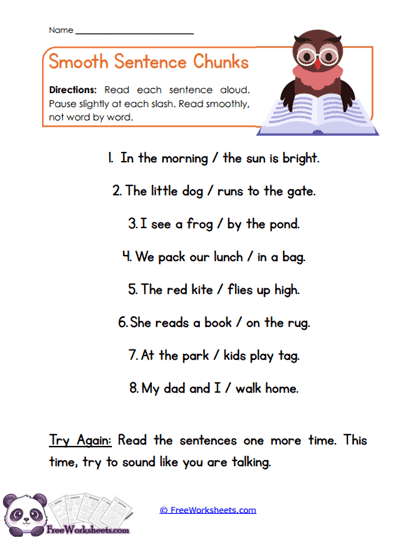
Children read eight simple sentences containing slashes that mark natural phrase breaks. They pause briefly at each slash, keep the words within each chunk together, and reread the sentences so they sound more like natural spoken language.
Target Skill:
This activity develops meaningful phrasing rather than choppy word-by-word reading. Students strengthen fluency and comprehension by learning which words belong together and using brief pauses that preserve the meaning and rhythm of each sentence.
Sight Sentences
What Kids Do:
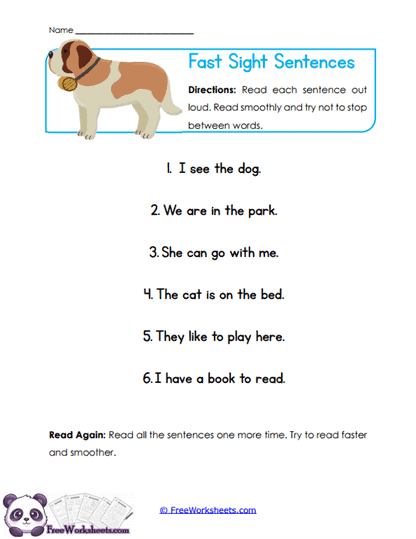
Children read six short sentences containing common sight words such as see, we, are, she, can, the, they, like, have, and read. They complete the sentences once for accuracy and then reread them with fewer hesitations.
Target Skill:
The worksheet builds automatic sight-word recognition within connected text. Students practice moving beyond flashcard-style word recognition and using familiar words fluently inside sentences, which supports smoother pacing, accuracy, and reading confidence.
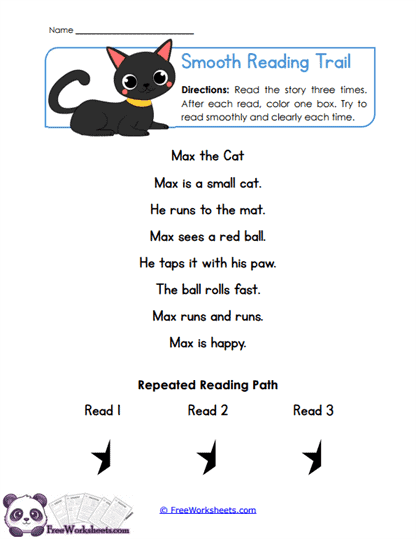
Smooth Story
What Kids Do:
Children read the short story “Max the Cat” three times and mark their progress after each reading. They focus on making every new attempt smoother and clearer, with fewer pauses on familiar words and more natural reading from sentence to sentence.
Target Skill:
This repeated-reading activity strengthens fluency through purposeful rereading of the same passage. Students build word automaticity, accuracy, pacing, expression, and confidence while experiencing how familiar text becomes easier to read with practice.
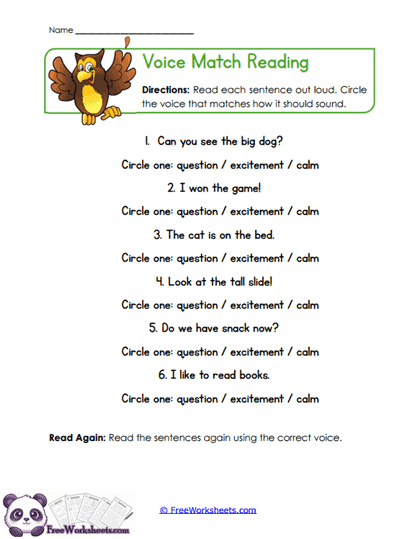
Voice Matching
What Kids Do:
Children read six sentences and decide whether each should sound like a question, an excited statement, or a calm statement. They circle the matching voice and then reread the sentences using the expression they selected.
Target Skill:
The worksheet develops expressive reading and awareness of how punctuation and meaning affect tone. Students strengthen prosody by changing pitch, rhythm, and feeling rather than reading every sentence with the same flat delivery.
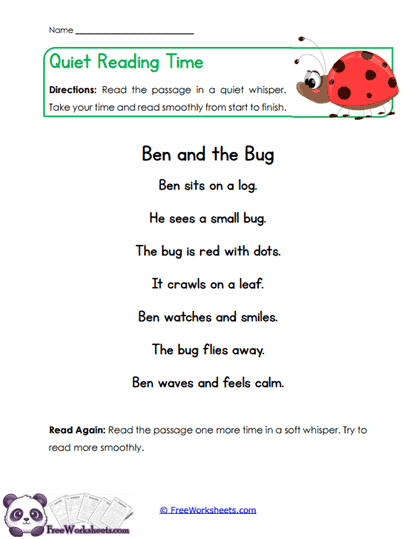
Whisper Reading
What Kids Do:
Children read the short passage “Ben and the Bug” in a quiet but audible whisper from beginning to end. They concentrate on keeping a steady pace, then reread the passage and try to make the second reading smoother and more continuous.
Target Skill:
This activity supports self-monitoring, concentration, and connected-text fluency. The quiet voice encourages students to listen to themselves, notice choppy reading, and maintain steady phrasing without becoming distracted by speed or performance pressure.
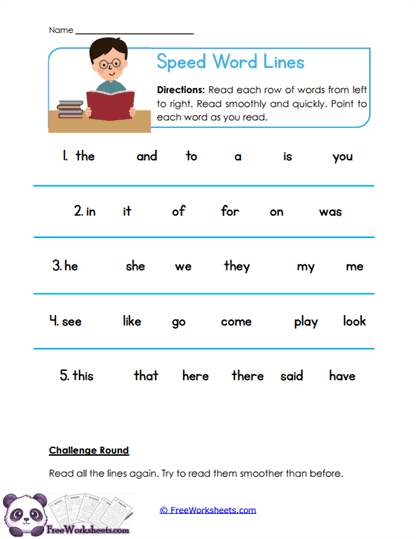
Word Speed
What Kids Do:
Children read five rows of common high-frequency words from left to right, including words such as the, and, to, is, you, he, she, see, like, go, this, that, and said. They reread the rows and work toward fewer hesitations while maintaining accuracy.
Target Skill:
The worksheet strengthens automatic recognition of frequently encountered words. Students practice left-to-right tracking, accurate whole-word reading, and smoother transitions between words so familiar vocabulary requires less decoding effort during later sentence and passage reading.