
About This Worksheet
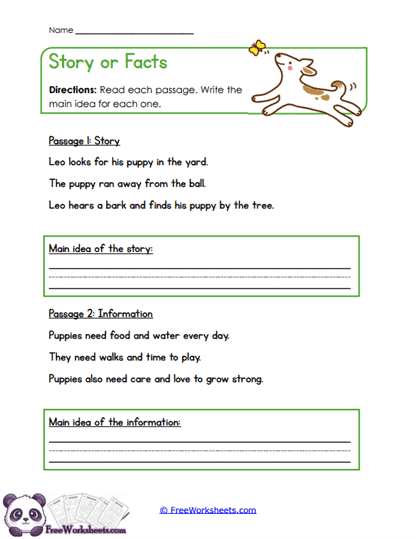
This Grade 1 reading worksheet helps children find the main idea in two different kinds of passages. The first passage is a short story about Leo looking for his puppy, and the second is an informational passage about what puppies need to stay healthy. Students read both and write the main idea for each one. This helps them see that main ideas can be found in both stories and nonfiction.
Learning Goals
The main goal is to help children identify the big idea in different types of text. Students practice thinking about what all the details are mostly about instead of choosing one small fact. They also begin to notice the difference between a story main idea and an informational main idea. These skills support comprehension, summarizing, and flexible reading.
Student Tasks
Children read the first passage and write what the story is mostly about. Then they read the second passage and write the main idea of the information. Each response should explain the overall message rather than copy one detail. Students can reread the passages as needed before writing.
Common Challenges
Some children may write one event from the story instead of the main idea. Others may list a puppy need from the informational passage rather than explain the bigger point. A parent or teacher can ask, “What do all these sentences tell us together?” to help the child move beyond one detail.
Teaching Suggestions
Teachers can compare the two passage types before students begin. Parents and homeschool educators can use the frame, “This story is mostly about…” for the first passage and “This information is mostly about…” for the second. It may help to underline the repeated topic words in each passage before writing the main idea.
Worksheet Features
The worksheet includes one short story passage, one informational passage, and separate spaces for writing the main idea of each. The side-by-side practice helps children understand that the same comprehension skill works across different text types. This printable works well for guided reading, main-idea review, homework, or literacy centers.
Extension Activities
After completing the worksheet, have children become main idea detectives by looking for clues that support each answer. Ask them to return to the story about Leo and his puppy and circle two details that help explain what the story is mostly about. Then, have them underline two facts in the informational passage that support its main idea. Encourage children to explain how their chosen details connect to the bigger message. For an added challenge, ask students to give each passage a new title that captures its main idea. This activity helps young readers understand that supporting details work together to communicate one central thought.
To extend learning beyond the worksheet, invite children to create their own short story and informational passage about a familiar animal, such as a cat, bird, or rabbit. They can draw a picture and write two or three sentences telling a story about the animal, then write a few facts explaining what that animal needs to stay healthy. Once finished, have children share their work with a partner or family member and ask them to identify the main idea of each passage. Discuss how the story tells what happens while the informational passage teaches facts about a topic. This hands-on activity strengthens reading comprehension, writing, and the ability to recognize main ideas in different types of texts.