
About This Worksheet
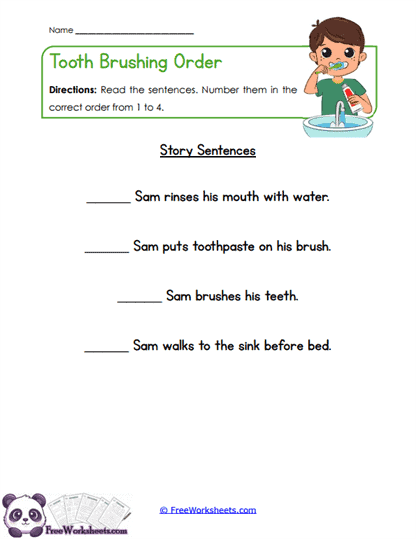
This Grade 1 reading worksheet helps children put story events in the correct order. Students read four sentences about Sam getting ready to brush his teeth, from walking to the sink to rinsing his mouth. They then number the sentences from 1 to 4 to show what happens first, next, and last. This gives children simple practice with sequencing, which is an important part of understanding stories and routines.
Learning Goals
The main goal is to help children recognize the order of events in a short passage. Students practice thinking about which action must happen first and which actions follow after it. They also learn to use everyday logic along with the information in the sentences. These skills support reading comprehension, retelling, sequencing, and understanding cause and order.
Student Tasks
Children read all four sentences about Sam’s tooth-brushing routine. They decide which event happens first and write 1 beside it, then continue numbering the remaining events through 4. After ordering the sentences, students can read them again from first to last to check whether the routine makes sense.
Common Challenges
Some children may number the sentences in the order they appear on the page instead of thinking about the actual sequence. Others may know the routine but overlook a detail such as putting toothpaste on the brush before brushing. A parent or teacher can ask, “Could this happen before that?” to help the child think through the order.
Teaching Suggestions
Teachers can model sequencing with a familiar classroom routine before students begin. Parents and homeschool educators can have children act out the tooth-brushing steps or say them aloud in order. It may help to identify the obvious first and last events first, then work out the middle steps. Rereading the completed sequence is a good final check.
Worksheet Features
The worksheet includes four short story sentences and blank spaces for numbering them in order. The familiar daily routine makes the sequencing task easy for Grade 1 readers to understand. The simple format keeps attention on comprehension rather than writing a long response. This printable works well for literacy centers, homework, guided reading, or sequencing practice.