
About This Worksheet
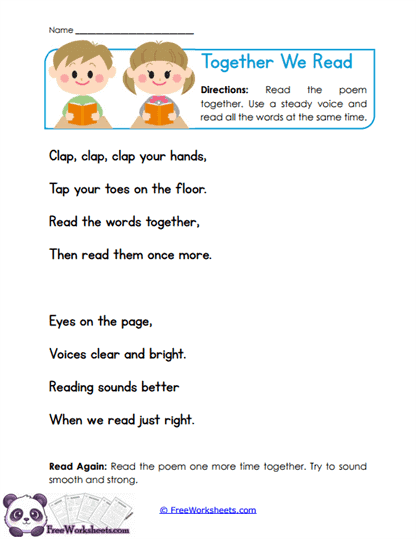
This Grade 1 worksheet helps children practice fluent reading by reading a short poem together. The poem uses simple, repeated language about clapping, tapping, reading, and using a clear voice. Students are encouraged to read at the same pace and keep their voices together. This makes fluency practice feel more social and less like a test.
Learning Goals
The main goal is to help children build rhythm, pacing, and expression while reading aloud. Reading together gives students a chance to hear how words flow naturally in connected text. The repeated lines also help them recognize familiar words more quickly. These skills support confidence, phrasing, and smoother reading overall.
Student Tasks
Children read the poem aloud with a partner, teacher, or parent. They try to keep their voices together and follow the same pace from line to line. After finishing once, they read the poem again and try to sound even smoother and stronger. The repeated reading helps the language become more automatic.
Common Challenges
Some children may read much faster or slower than their partner. Others may focus so much on matching the other voice that they stop looking at the words. A teacher or parent can slow the pace and point to each line while reading. The goal is to stay together while still paying attention to the print.
Teaching Suggestions
Teachers can model the poem once before asking students to read it together. Parents and homeschool educators can use a finger to track the lines and help keep the pace steady. It may also help to clap softly to the rhythm before reading. On the second read, encourage children to sound more natural and less choppy.
Worksheet Features
The worksheet includes one short, rhythmic poem with repeated and familiar Grade 1 words. The simple layout keeps the focus on reading together rather than answering questions. A final prompt asks students to reread for smoother fluency. This page works well for partner reading, small groups, homework, or repeated reading practice.