
About This Worksheet
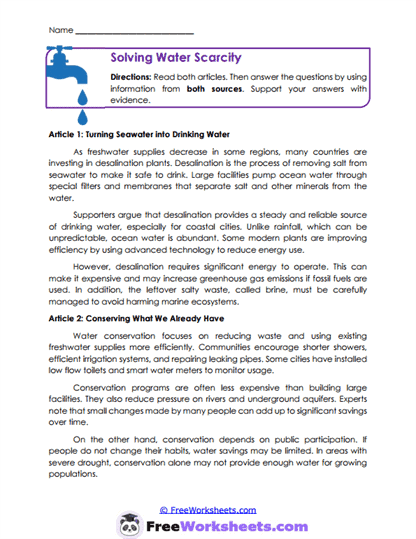
This Grade 7 reading activity teaches students how to combine information from two sources about the same problem. One article explains how desalination turns seawater into drinking water, while the other describes ways communities can conserve the water they already have. Students compare the benefits and limits of both approaches before answering questions with evidence. For example, desalination offers a dependable supply, while conservation often costs less and reduces waste.
Learning Goals
The main goal is for students to synthesize information, which means bringing ideas from more than one text together to form a fuller understanding. Readers should already know how to identify central ideas and supporting details in a single article. This lesson moves them toward comparing sources, noticing where they agree or differ, and building answers that use both. It aligns with CCSS.ELA-LITERACY.RI.7.9, which asks students to analyze how different authors present information on the same topic.
Student Tasks
On this worksheet, students will read two articles about ways to address water scarcity. They will identify the main approach described in each source and compare the advantages and drawbacks of desalination and conservation. Students must answer questions by using information from both texts rather than treating each article separately. Their written responses should include clear evidence and explain how the two solutions could work alone or together.
Common Challenges
Some students may summarize both articles without actually connecting their ideas. Others may rely heavily on one source and forget to include evidence from the second. Encourage readers to use linking words such as “both,” “however,” and “while” to show comparison. A two-column chart can also help students keep each solution’s strengths and weaknesses organized.
Teaching Suggestions
A teacher can assign one article to each half of the class and let students teach the main ideas to a partner who read the other source. After that exchange, pairs can work together to decide which solution is more practical under different conditions. Parents can support the same thinking by asking which approach would help fastest and which might work best over many years. This keeps the discussion focused on evidence rather than personal preference alone.
Worksheet Features
The page includes two clearly labeled informational texts that address one shared environmental problem. Each article presents both benefits and limitations, giving students useful material for a balanced comparison. Directions clearly state that answers must draw from both sources and include evidence. The worksheet is well suited for paired reading, environmental science lessons, test preparation, or written response practice.