
About This Worksheet
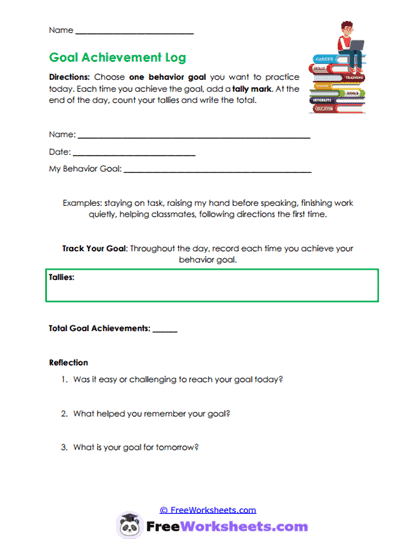
This worksheet is a daily behavior-goal tracker that helps students count every time they achieve one chosen goal. It works well for students in grades 2 through 5 who benefit from seeing their progress as it happens. Children select a goal such as staying on task, raising a hand, finishing work quietly, helping classmates, or following directions the first time. For example, “I worked on my goal today” becomes “I followed directions the first time eight times.”
Curriculum and Grade Alignment
The main goal is to help students turn a general behavior goal into a clear action that can be counted. Students should already know what their chosen goal looks like and how to record tally marks. The next skill is using the total and reflection answers to decide whether the goal should stay the same or become more challenging. This worksheet supports CASEL self-management and responsible decision-making because students track success, recognize useful supports, and plan continued growth.
Student Tasks
On this worksheet, students will write one behavior goal they want to practice during the day. They add a tally mark every time they successfully achieve that goal. At the end of the day, students count all of the marks and record the total number of goal achievements. The reflection questions ask whether the goal felt easy or challenging, what helped them remember it, and what goal they want to work on tomorrow.
Common Challenges and Misconceptions
Some students may write a goal that cannot be counted, such as “have a better attitude.” Others may record a tally when they only partly completed the expected behavior. Children can also become focused on earning a large number instead of using the skill in the right situation. Teachers can help by choosing an observable goal and explaining exactly when one tally should be added.
Implementation Guidance
Teachers can introduce the goal during a morning check-in and review the tally box at the end of the day. The worksheet may be used for a new behavior or for practicing a skill that has already been taught. Parents and homeschool educators can use it for homework routines, respectful communication, chores, or staying focused during lessons. Adults should praise the specific action and help the child decide whether tomorrow’s goal should continue or change.
Details and Features
The worksheet includes spaces for the student’s name, date, and personal behavior goal. Several goal examples help children choose an action that is clear and school appropriate. A large tally area provides plenty of room for tracking throughout the day. The total line and three reflection questions connect the count with difficulty, helpful reminders, and future planning.