
About This Worksheet
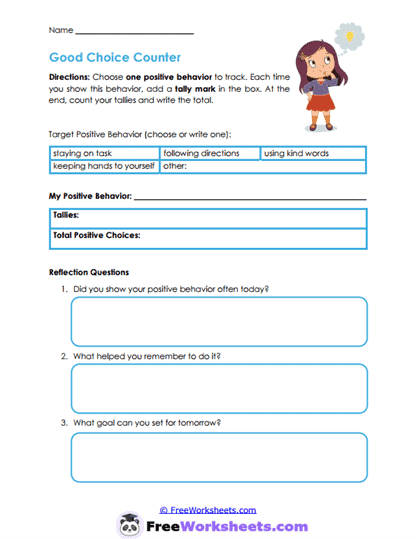
This worksheet is a positive-behavior frequency tracker that helps students count how often they make a helpful classroom choice. It is designed for students in grades 2 through 5 who are working on focus, directions, kindness, or safe behavior. Children choose one positive action, record a tally each time they show it, and then count the total. For example, “I stayed focused today” becomes “I stayed on task six times when I could have become distracted.”
Curriculum and Grade Alignment
The main goal is to help students notice and repeat positive behavior instead of focusing only on mistakes. Students should already understand the listed choices, including staying on task, following directions, using kind words, and keeping hands to themselves. The next skill is identifying what helped the behavior happen and setting a goal for another day. This worksheet supports CASEL self-management and responsible decision-making because students track success, recognize supports, and plan continued growth.
Student Tasks
On this worksheet, students will choose or write one positive behavior they want to monitor. They add one tally mark every time they demonstrate the behavior during the activity or day. Students count the tallies and record their total positive choices. The reflection questions ask whether the behavior happened often, what helped them remember it, and what goal they can set for tomorrow.
Common Challenges and Misconceptions
Some students may count the same positive action more than once because they want a larger total. Others may choose a behavior without understanding exactly what it looks like. Children can also believe a lower count means the day was unsuccessful. Teachers can help by defining the behavior clearly and reminding students that honest tracking is more important than earning a high number.
Implementation Guidance
Teachers can use this worksheet as part of a positive behavior plan or short daily check-in. It works especially well when the student is trying to replace a difficult behavior with a more helpful one. Parents and homeschool educators can use it for learning routines, sibling interactions, chores, or respectful communication. Adults should praise the specific behavior and discuss the strategy that helped the student remember it.
Details and Features
The worksheet includes four suggested positive behaviors and space for students to write another choice. A separate line allows the selected behavior to be stated clearly before tracking begins. Large boxes provide room for tallies, a final total, and written reflections. Three reflection questions connect the number of positive choices with memory supports and tomorrow’s goal.