
About This Worksheet
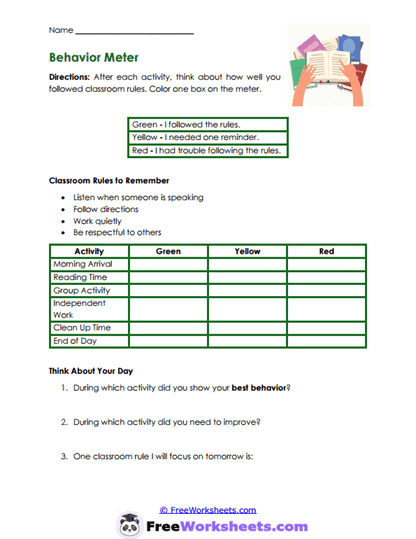
This worksheet is a color-based behavior chart that helps students review how well they followed classroom rules during different activities. It is a good fit for students in grades 1 through 4 who understand simple visual signals such as green, yellow, and red. Children color one box after each activity to show whether they followed the rules, needed a reminder, or had trouble meeting expectations. For example, “Reading time was hard” becomes “I marked reading time yellow because I needed one reminder to stay focused.”
Curriculum and Grade Alignment
The main goal is to help students connect their behavior with the activity or part of the day when it happened. Students should already understand basic classroom rules such as listening, following directions, working quietly, and showing respect. The next skill is noticing which settings bring the most success and which ones need a better plan. This worksheet supports CASEL self-awareness and self-management because students review their choices, notice patterns, and choose one rule to practice.
Student Tasks
On this worksheet, students will color one box green, yellow, or red after each of six daily activities. They review their behavior during morning arrival, reading, group work, independent work, cleanup, and the end of the day. Students then identify the activity where they showed their best behavior and the one that was most difficult. The final question asks them to choose one classroom rule to focus on tomorrow.
Common Challenges and Misconceptions
Some students may choose a color based on how they felt instead of how well they followed the rules. Others may see red as a punishment rather than a signal that more support is needed. Children can also forget what happened earlier in the day and guess when completing the chart later. Teachers can help by reviewing the color key before use and asking students to complete each row soon after the activity ends.
Implementation Guidance
Teachers can keep this worksheet on a clipboard or in a daily behavior folder and review it at natural transition points. The color system works especially well for younger students who are not ready for longer written reflections. Parents and homeschool educators can adapt the activity labels for lessons, chores, meals, or playtime at home. Adults should talk about one green success first and then help the child plan for one yellow or red area.
Details and Features
The worksheet includes a clear three-color key that explains green, yellow, and red behavior ratings. Six daily activities appear in a large chart with one column for each color. A short list reminds students of the classroom rules they are reviewing. Three reflection questions help children connect the chart with strengths, challenges, and tomorrow’s goal.