
About This Worksheet
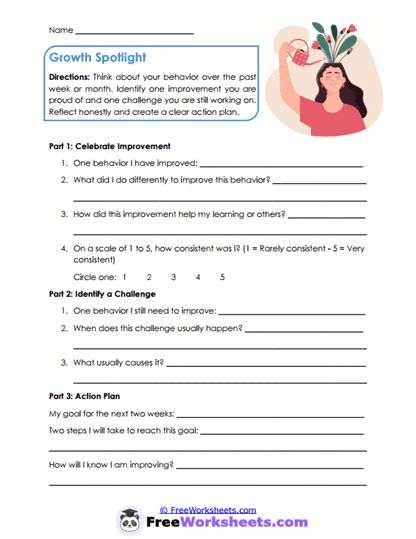
This worksheet is a behavior-growth reflection that helps students celebrate one improvement while honestly naming one challenge that remains. It is designed for students in grades 5 through 8 who are ready to think about progress across a week or month. Children explain what they changed, what they did differently, and how the improvement affected learning or other people. For example, “I got better at behavior” becomes “I began following directions the first time, which helped me start work more quickly.”
Curriculum and Grade Alignment
The main goal is to help students see behavior growth as a process that includes success, continued challenges, and planning. Students should already be able to identify one specific behavior and describe when it happens. The next skill is creating a short-term goal with clear actions and a way to measure progress. This worksheet supports CASEL self-awareness, self-management, and responsible decision-making because students evaluate growth and take ownership of the next step.
Student Tasks
On this worksheet, students will identify one behavior they have improved and explain what they did differently. They describe how the change helped their learning or affected others and rate how consistent the improvement has been. Students then name one behavior that still needs work, explain when it happens, and identify what usually causes it. The final section asks them to create a two-week goal, list two action steps, and explain how they will know progress is happening.
Common Challenges and Misconceptions
Some students may write a broad improvement such as “I was nicer” without giving a clear example. Others may focus only on the remaining challenge and overlook the progress they have already made. Children can also create a goal that cannot be measured or completed within two weeks. Teachers can help by asking for one observable behavior, two realistic actions, and one clear sign of improvement.
Implementation Guidance
Teachers can use this worksheet at the end of a month, grading period, behavior plan, or counseling cycle. It works well during a private conference because the student may need help turning a general idea into a clear goal. Parents and homeschool educators can use it to review growth in routines, emotional control, homework habits, or respectful communication. Adults should celebrate the improvement first and then help the child build a hopeful and realistic action plan.
Details and Features
The worksheet is divided into three sections covering improvement, continued challenge, and future action. A five-point consistency scale helps students judge whether the new behavior has become steady. Guided questions encourage learners to explain causes, timing, effects, and personal effort. The action-plan section includes space for a two-week goal, two steps, and a way to measure success.