
About This Worksheet
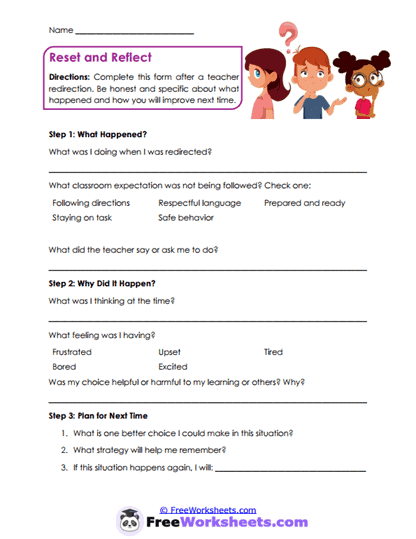
This worksheet is a behavior-redirection reflection that helps students understand why they were corrected and how they can respond better next time. It is a good fit for students in grades 3 through 7 who are learning to take responsibility without feeling that one mistake defines the whole day. Children describe what they were doing, identify the missed expectation, name their thoughts and feelings, and make a new plan. For example, “The teacher got me in trouble” becomes “I was talking during directions and can stop, listen, and ask what I missed.”
Curriculum and Grade Alignment
The main goal is to help students turn a teacher redirection into a chance to reset their behavior. Students should already understand common classroom expectations such as staying on task, following directions, and using respectful language. The next skill is recognizing an early warning sign and using a strategy before another reminder is needed. This worksheet supports CASEL self-awareness, self-management, and responsible decision-making because students examine the cause, effect, and better choice connected with their behavior.
Student Tasks
On this worksheet, students will explain what they were doing when the teacher redirected them. They select the classroom expectation that was not being followed and record what the teacher asked them to do. Students then describe their thoughts, choose the feeling they were having, and decide whether their behavior helped or hurt learning. The final section asks them to name a better choice, select a reminder strategy, and complete a sentence explaining what they will do if the situation happens again.
Common Challenges and Misconceptions
Some students may use the worksheet only to explain why the teacher was wrong. Others may write that they “do not know” what happened because they feel embarrassed or defensive. Children can also choose a plan that is too vague, such as saying they will simply “be better.” Teachers can help by using a calm tone, focusing on observable actions, and helping the student write one specific replacement behavior.
Implementation Guidance
Teachers can give this worksheet after a redirection once the student is calm and ready to reflect. It should not be used as a rushed punishment in the middle of a strong emotional reaction. Parents and homeschool educators can use the same process after reminders about homework, chores, respectful speech, or staying focused. Adults should review the plan briefly, make sure the student understands the next step, and allow the child to return to learning with a fresh start.
Details and Features
The worksheet is divided into three sections covering the event, the reason behind it, and the plan for next time. Common classroom expectations and feelings are listed to support students who need help finding the right words. Open lines give children space to explain the teacher’s request and the effect of their behavior. The final sentence frame turns the reflection into a clear response plan that can be used in a similar situation.