
About This Worksheet
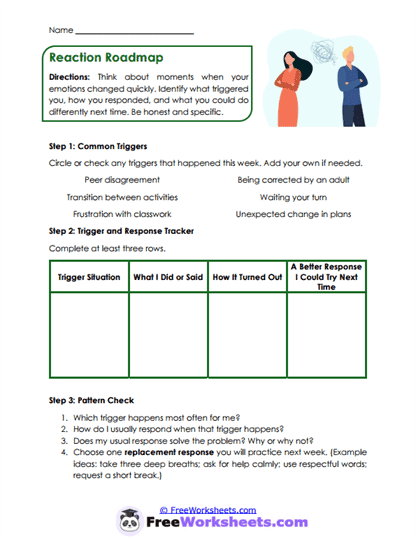
This worksheet is a behavior-trigger tracker that helps students notice what causes strong reactions and what happens next. It is best for students in grades 4 through 8 who are learning to slow down, recognize patterns, and choose a calmer response. Children identify common triggers, record three real situations, and compare their first reaction with a better choice they could make next time. For example, “I yelled when I was corrected” becomes “I can pause, breathe, and ask what I need to fix.”
Curriculum and Grade Alignment
The main goal is to help students understand that reactions often follow patterns that can be recognized and changed. Students should already be able to describe a recent situation and name what they said or did. The next skill is choosing a replacement response that fits the trigger and can be practiced ahead of time. This worksheet supports CASEL self-awareness, self-management, and responsible decision-making because students identify triggers, review outcomes, and plan more controlled actions.
Student Tasks
On this worksheet, students will review common triggers such as peer disagreement, waiting for a turn, changes in plans, and frustration with classwork. They select the triggers that affected them and add another example when needed. Students then complete a chart for three situations by describing the trigger, their reaction, the result, and a better response. The final questions ask them to find the most common pattern and choose one replacement action to practice during the next week.
Common Challenges and Misconceptions
Some students may write a broad trigger such as “school” instead of naming the exact event that happened. Others may describe only what another person did and leave out their own words or actions. Children can also choose a better response that is unrealistic in the moment, such as promising they will never feel upset again. Teachers can help by guiding students toward one small action they can use while the feeling is still manageable.
Implementation Guidance
Teachers can use this worksheet during counseling, advisory, social-emotional lessons, or after a repeated classroom concern has appeared. It works best when students complete it after they are calm and able to think clearly about several situations. Parents and homeschool educators can use it to study reactions during homework, sibling conflicts, chores, or unexpected changes. Adults should treat the page as a planning tool and practice the chosen replacement response with the child before the next difficult moment.
Details and Features
The worksheet begins with a list of common school-based triggers that students can circle or check. A four-column tracker organizes the trigger, response, outcome, and better future choice. Space is provided for three separate situations so students can compare repeated patterns. Four closing questions help learners identify the strongest trigger and build a clear practice plan.