
About This Worksheet
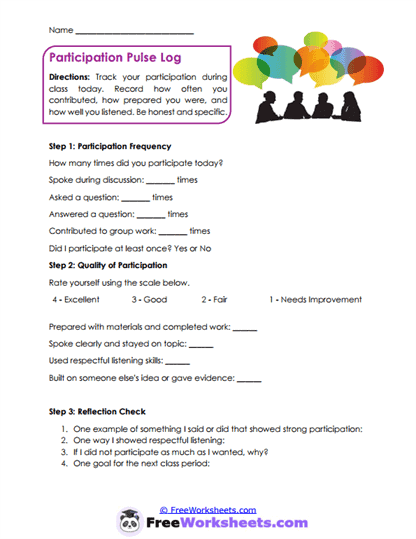
This worksheet is a class-participation log that helps students review both how often and how well they took part in a lesson. It is intended for students in grades 4 through 8 who are developing stronger speaking, listening, and preparation habits. Children count several types of contributions and then rate the quality of their participation. For example, “I participated three times” becomes “I asked one question, answered once, and contributed once during group work.”
Curriculum and Grade Alignment
The main goal is to teach students that meaningful participation includes preparation, listening, speaking clearly, and using evidence. Students should already understand classroom discussion rules and know how to take turns appropriately. The next skill is making contributions that are more thoughtful, relevant, and connected to the lesson. This worksheet supports CASEL self-awareness, self-management, and relationship skills because students examine how their preparation and communication affect classroom learning.
Student Tasks
On this worksheet, students will record how many times they spoke during discussion, asked a question, answered a question, and contributed to group work. They also indicate whether they participated at least once during the lesson. Students rate their preparation, clarity, respectful listening, and use of examples or evidence on a four-point scale. The reflection section asks them to identify a strong contribution, explain how they listened respectfully, consider why participation was limited, and set a goal for the next class.
Common Challenges and Misconceptions
Some students may believe that speaking often automatically means they participated well. Others may count off-topic comments or interruptions as helpful contributions. Quiet students may rate themselves poorly even when they listened closely, came prepared, and made one thoughtful comment. Teachers can help by explaining that the quality, timing, and respectfulness of participation matter as much as the total number of times a student speaks.
Implementation Guidance
Teachers can use this worksheet after discussions, seminars, group tasks, or lessons that require student responses. It may be completed at the end of class while the student can still remember specific contributions. Parents and homeschool educators can adapt it for shared reading, oral lessons, group classes, or family learning conversations. Reviewing the page with the student can reveal whether the next goal should focus on speaking, preparation, listening, or confidence.
Details and Features
The worksheet separates participation frequency from participation quality so students can study both areas. Four counting prompts record different ways a student may contribute during class. A four-point rating scale measures preparation, clear speaking, respectful listening, and the use of supporting evidence. Four reflection questions help students recognize strengths, explain challenges, and choose a practical next step.